The interview was held via email during the summer months of 2011;
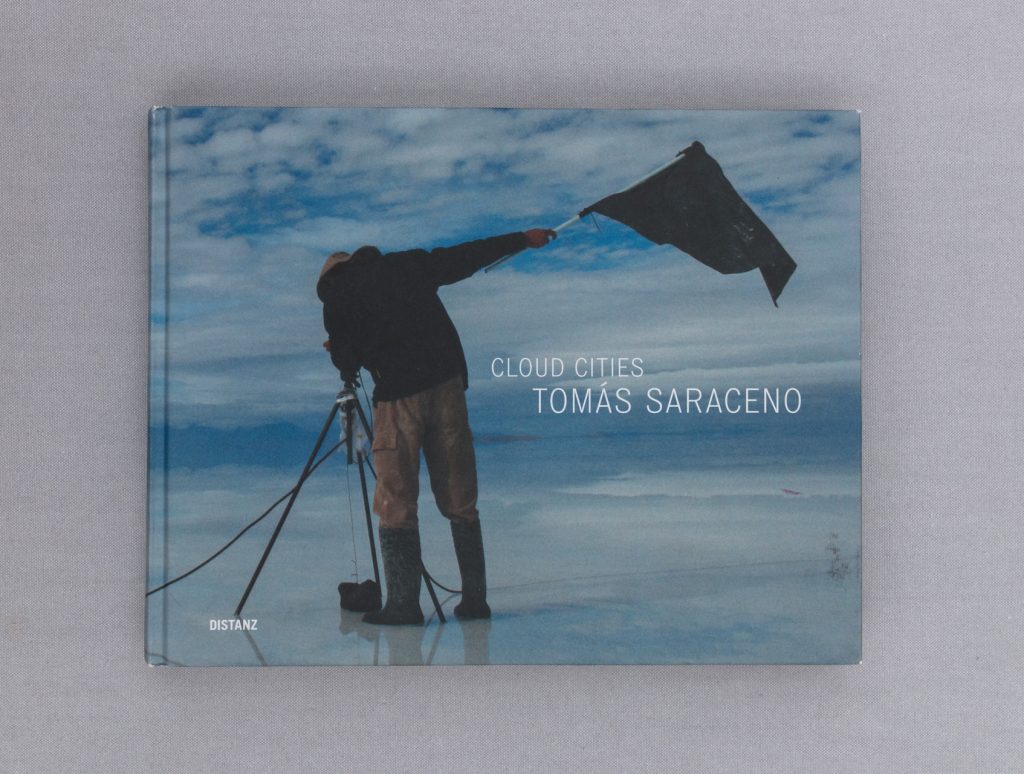
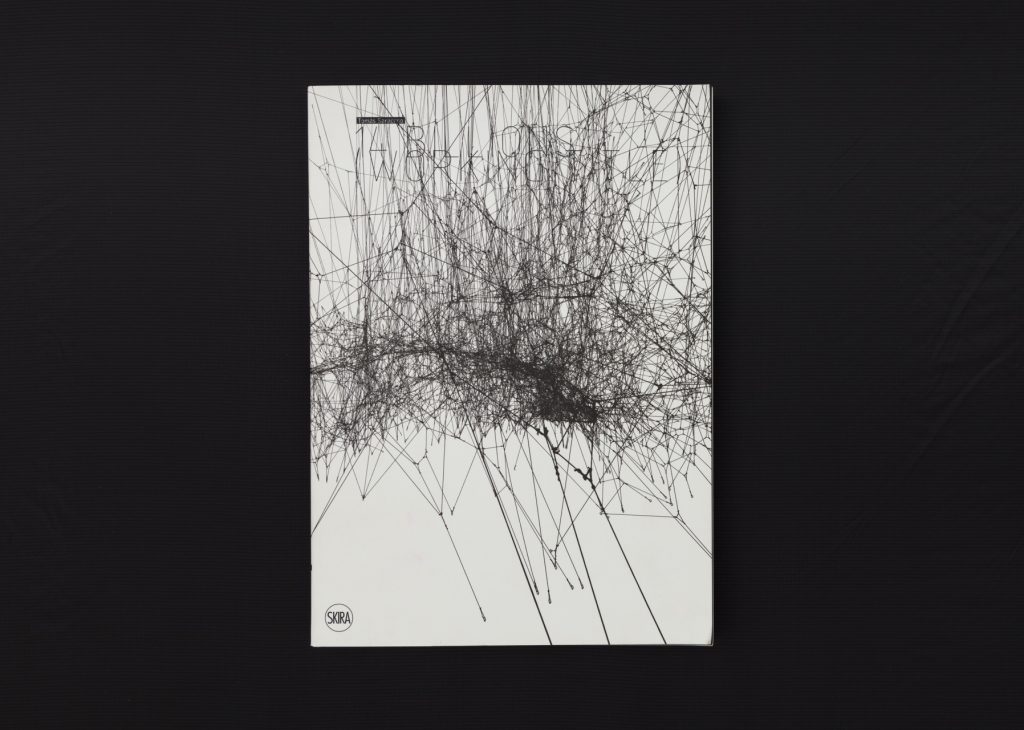
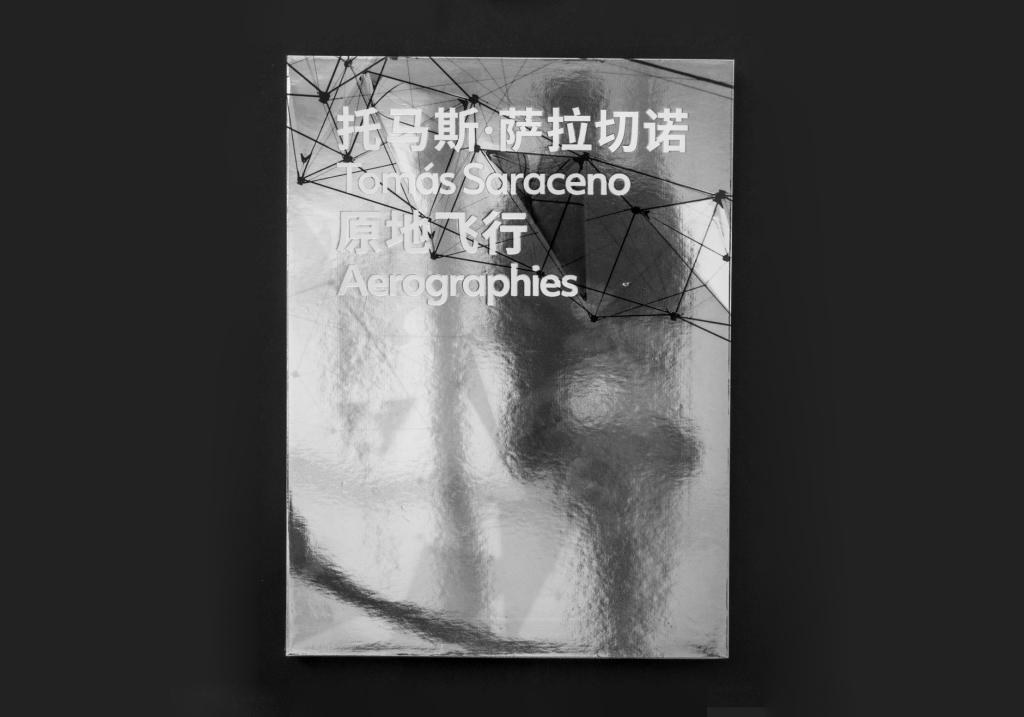
The interview was published in the exhibition catalogue:
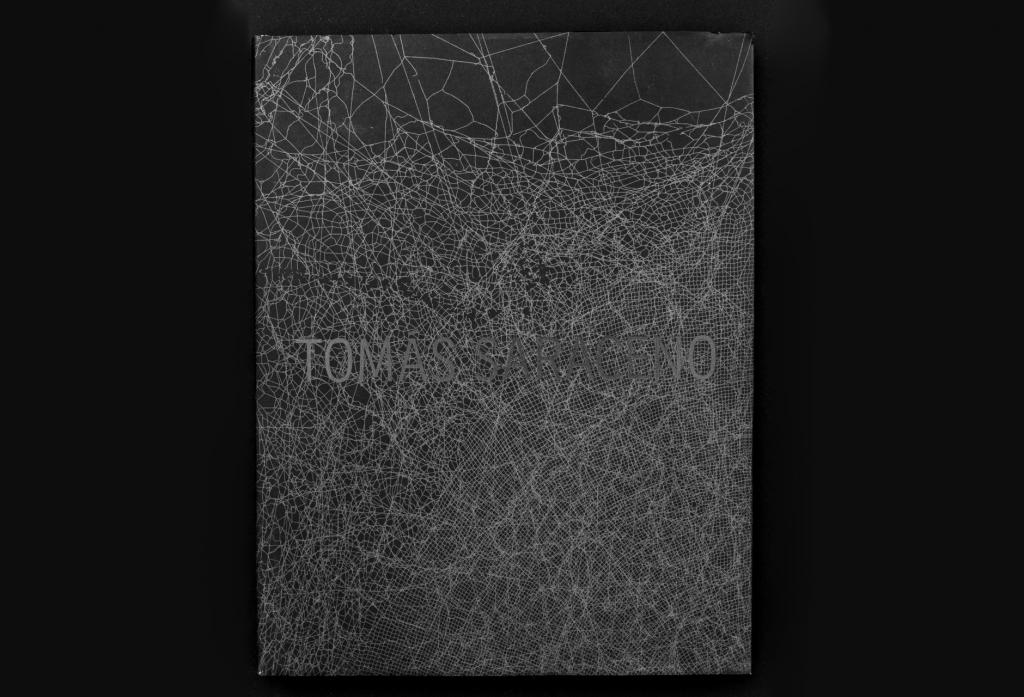
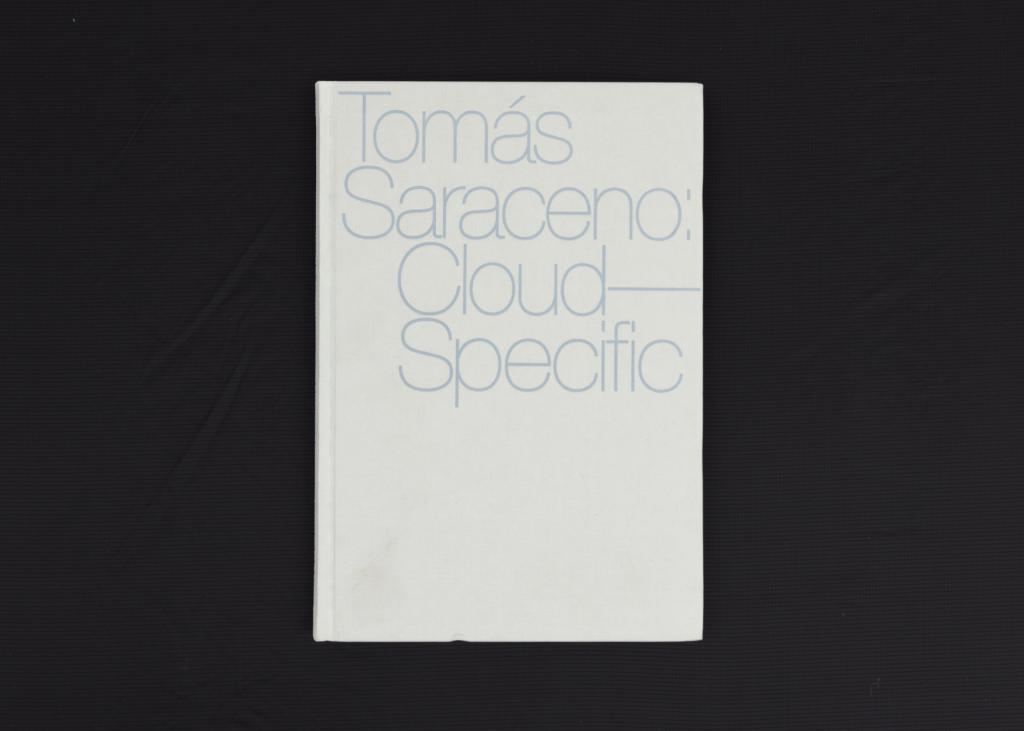
Tomás Saraceno. Cloud Cities,
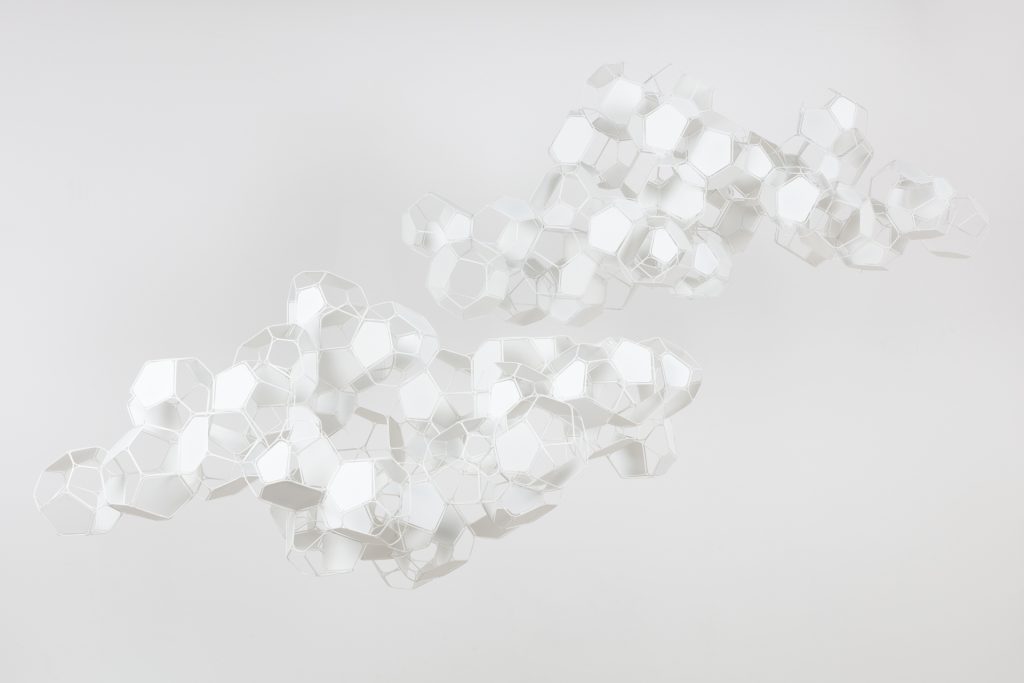
DISTANZ Verlag Berlin, 2011,
256 Seiten, deu/eng, etwa 180 Farbabbildungen, ISBN: 978-3-942405-37-9
-
Marion Ackermann: Architects of the 20th century have conceived flying cities, floating cities, and walking cities. Although none of them have been realized, we know them through drawings and view them as utopian projects. For your Cloud Cities you also create fascinating drawings and models that capture the viewer's imagination, but then you go a step further and try to realize these projects in real space despite the considerable difficulties they present in the production. How important is the physical realization of your concepts to you?
Tomás Saraceno: If we manage to maintain creative multiple feedback loops by actually making use of every step interchangeably and regardless of chronological sequencing from conception to construction and subsequent usage, everything becomes far more unexpected … Imagine constructing a musical instrument after a vision of people dancing. Before even recognizing or understanding the pitch, you set to work on the instrument, learning how to play through improvisation. People are dancing and you are reinventing the composition.
Before we go any further, forget what is written here, all my answers should resonate rather than be interpreted, timber of colors, deaf composer, attuning vibrations, not sounds :-)
The "physical" realization plays as significant a role as the mental, social, and digital realization of it … it is a learning process experience, a network of social relations that make it real in space, inside your subjective brain, as well as out there walking upon it … in a full immersion, diving inside and above these cosmic digital tangible livable cloud networks … embedded in all your senses … on eleven dimensions … of happiness and more … I cannot wait to see its next dimension … between the humor of people and planets, objects, animals, plants, planetary dust … my senses now enlarge, become rebuilt in this and other solar systems … toward a mental ecology, a social ecology and environmental ecology … in "The Three Ecologies," Félix Guattari extends the definition of ecology to encompass social relations and human subjectivity as well as environmental concerns.
"Faith is much better than belief. Belief is when someone else does the thinking," said Buckminster Fuller.In each discipline, I see another universe—and I keep getting lost every time I try to dive into a new one … struggling with how many I can't even see or read, invisible to my eyes and so relevant to yours, I need more senses to perceive this, that, and your reality … the Cloud Cities should help to facilitate a dialogue and are therefore real on Earth or in orbit … in the way that stars become more real to someone who uses them for navigation, this model for reality is capable of a perception that becomes tangible as we construct it through dialogue … the medium is the message many times … and I have no preconfigured medium for expressing ideas. For the project at K21 … we could not find a computer program, or institution with the necessary knowledge to help predict the exact behavior of the net, or whether the force applied to the net could damage the existing building. The conclusion we arrived at with the engineers was that a 1:1 real model presents the most cost-effective means to test these real forces … this is interesting from a variety of perspectives … and it is the direction I am interested in pursuing with the construction of Cloud Cities. When you acknowledge that the process is not just a part of the project, but the project itself … then changes, expands, gets smaller again, rebuilds … hibernates, reproduces, and mutates … dynamic systems in feedback loops … the rest is unknown. It turns out that roughly 95 % of the universe is dark energy and dark matter, the rest—everything on Earth, everything ever observed—planets, plants, water, humans, hydrogen, helium … everything that is known adds up to less than 5 % of the universe.
MA: The concept of utopia has supposedly returned within the context of contemporary art. Do you also see the utopian idea as a reemerging theme?
TS: Yes, I view it as a re-emergency, with a nod to Slavoj Žižek who commented as follows: "30–40 years ago, we were debating what the future will be like … Today, nobody even debates these issues. We all silently accept: global capitalism is here to stay … The paradox of today is that it's much easier to imagine the end of all life on Earth than radical changes in capitalism, which would be far more modest. That means that we should reinvent utopia, but in what sense? There are two false meanings of utopia: one is this image of an ideal society that never will be realized, and the other is a capitalist utopia that you have to strive for, but are not allowed to. The true utopia is when the situation is so hopeless and impossible to resolve within the coordinates of the possible that you have to invent a new space purely for survival. Utopia is not a matter of imagination—it's an emergency one is forced to imagine as the only way out, and this is what we need today." (from a transcribed lecture)
Utopia, extropia, atopia, utopies réalisables, dystopia, and more … I need them all, a place and a non-place … I encounter the possible impossibilities every night in my dreams, the best possible scenarios and nightmares, as well—necessary states … But I also wake up, at least I hope so sometimes … Utopian dreams drive us towards the impossible. Jules Verne commented that "all that is impossible remains to be achieved." If we don't set our aims high, how do we expect to move forward? … Utopia needs to include everyone and everything, and we all need the courage to dream, to share the responsibility of not only one, but many possible futures.
The arts, as with any other discipline, can play a role in this, within a network of correlations and interrelated ecosystems of where I, you, we live. Once we wish for something, everything else can be achieved. The problem lies in stimulating these wishes. Many ideas are in a latent state, needing to be translated, interpreted … but nothing is more real than our engagement in a dialogue …
We could point to the crew of the ISS (International Space Station)*, which has passed over our heads almost 16 times a day, every day, for the past 13 years … we could also say that nobody had ever flown on a plane 100 years ago, but today millions fly every day. We are all riding on a small speck of cosmic dust on board this planet Earth with its many cities flying along with it! With the ongoing project for interplanetary Internet and the accelerated rate of genetic engineering, we may even encounter it sooner and might even experience other spaceship Earths on cosmic clouds! Dust from spiral filaments of galactic clouds … from homo sapiens to homo evolutis? (according to Juan Enrique)
* The International Space Station (ISS) is the first internationally developed research facility assembled in low Earth orbit and is the largest space station ever constructed. The ownership and use of the space station is established in intergovernmental treaties and agreements.
MA: It is very important for you that people are able to "use" your works: to walk on, to crawl in, or to lie in. But just as the history of flying is connected to the overcoming of gravity and of human fear, something also happens to the visitors of your works as they step on a net 30 meters high: they have to overcome their fear and dare to climb on the installation in order to experience the safety of the net. Do your works have an effect on people's behavior?
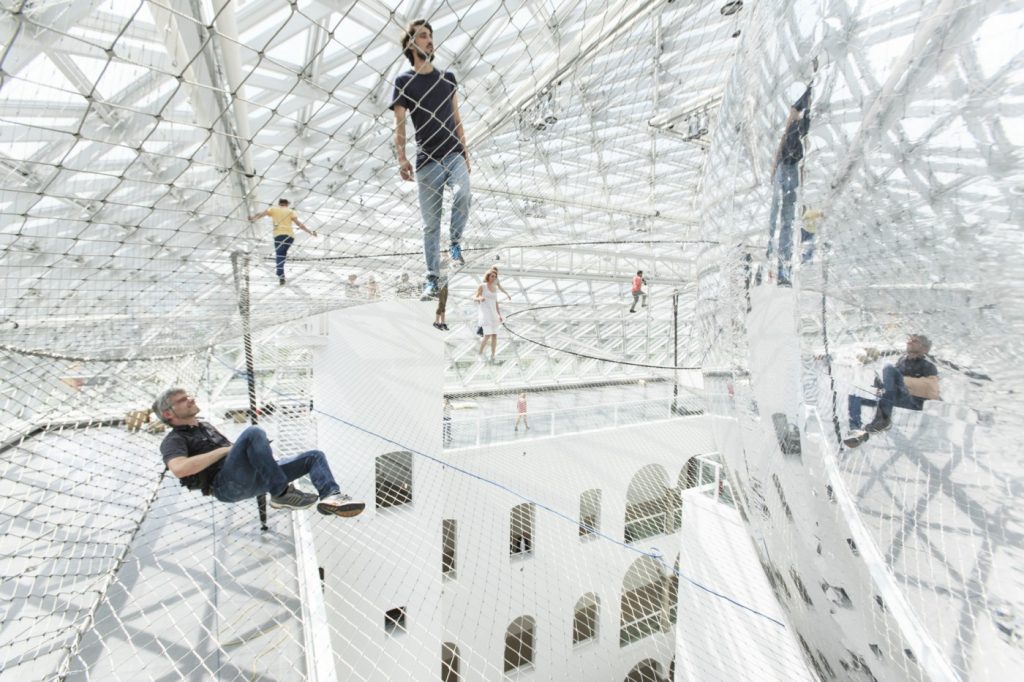
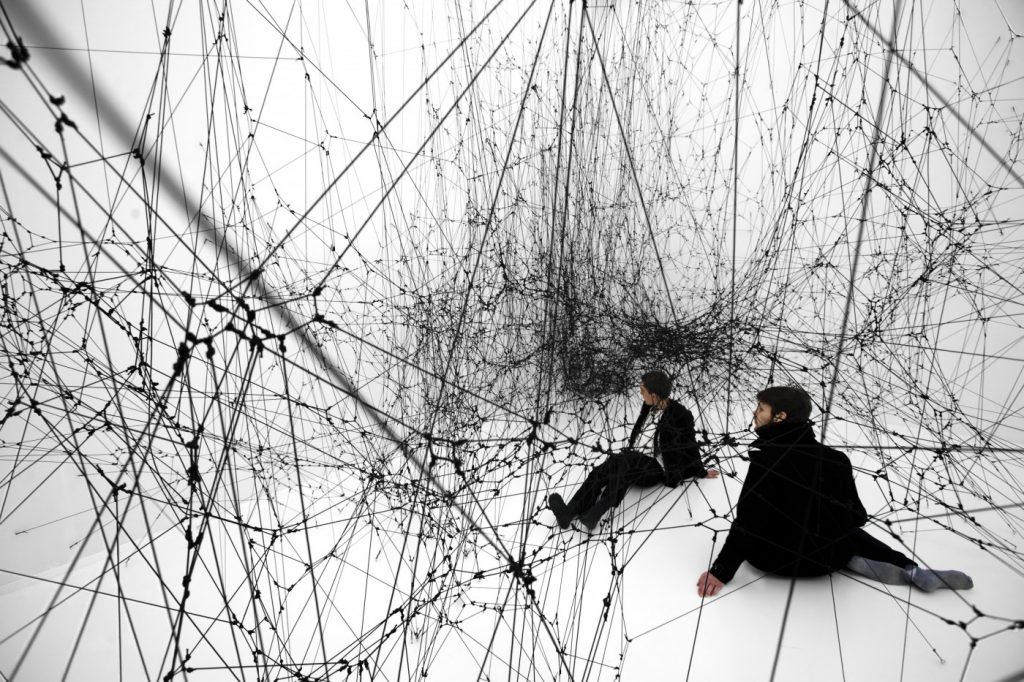
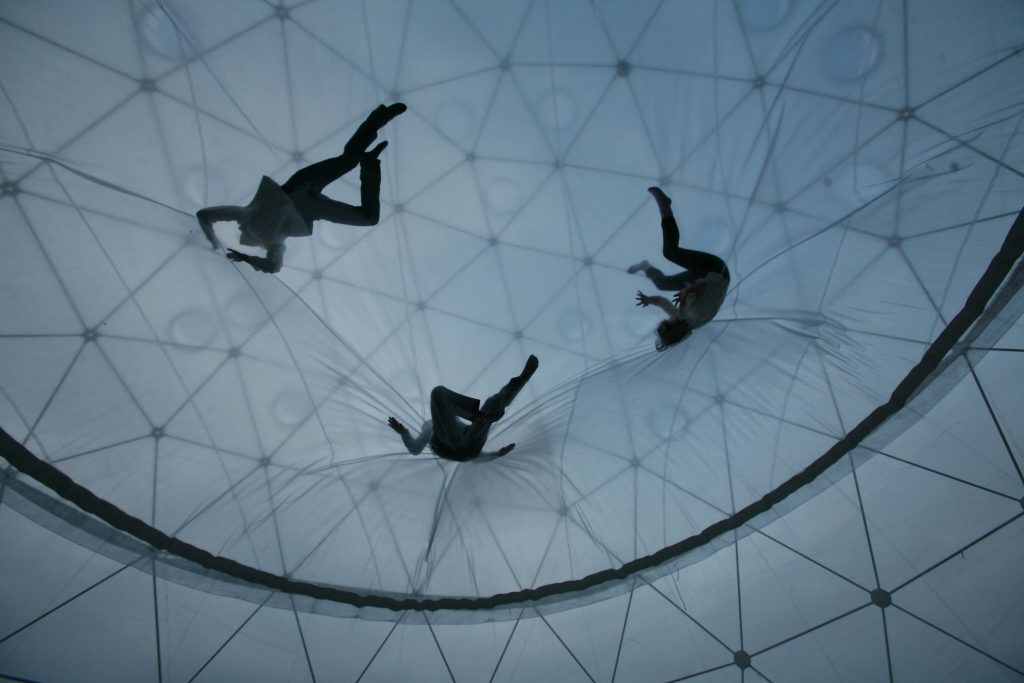
TS: I really don't like to inspire fear, as I tend to think of my work more in terms of enjoying space with others while sharing in a new experience … Although there's some truth to it that works such as In Orbit at K21, as well as others at the Hamburger Bahnhof, are catalysts for many differing responses and feelings. Over time, we may experience confidence, hesitation, joy, fear, happiness, and suspense ... and you can see facial expressions begin to change when first one person, and then another enters and the surface shifts beneath them … Some, like my mom, prefer to experience the piece from the outside, witnessing the complete ecosystem of experiences that are happening simultaneously with the work. I like the immediacy of how fast your ideas help to change your position when your body participates … ideas, emotions ... and meaning can be reached by moving together in the work.
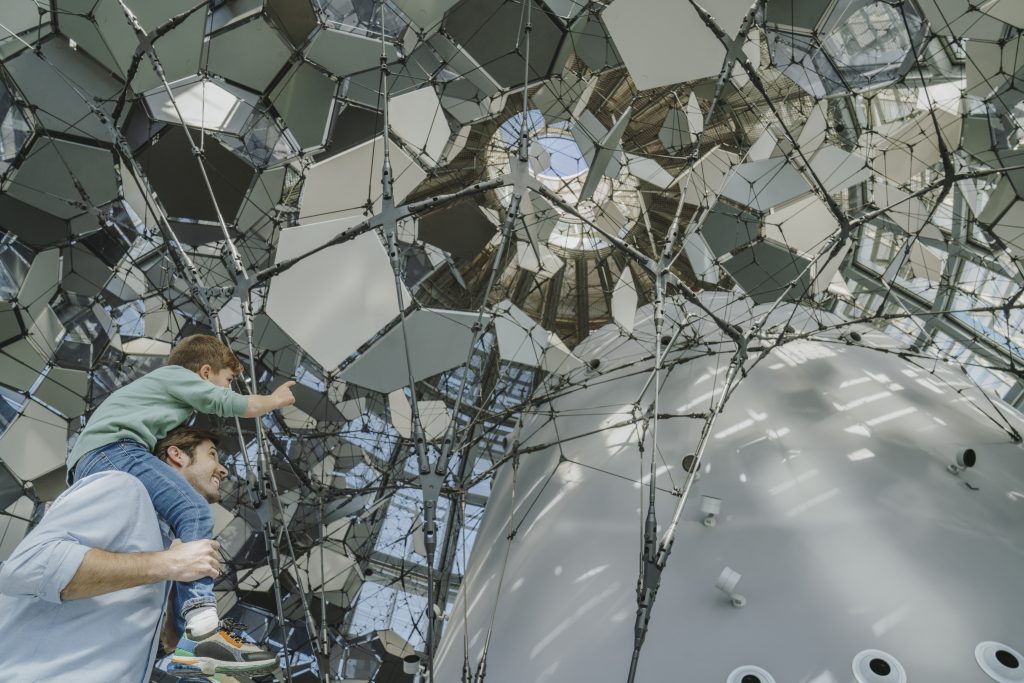
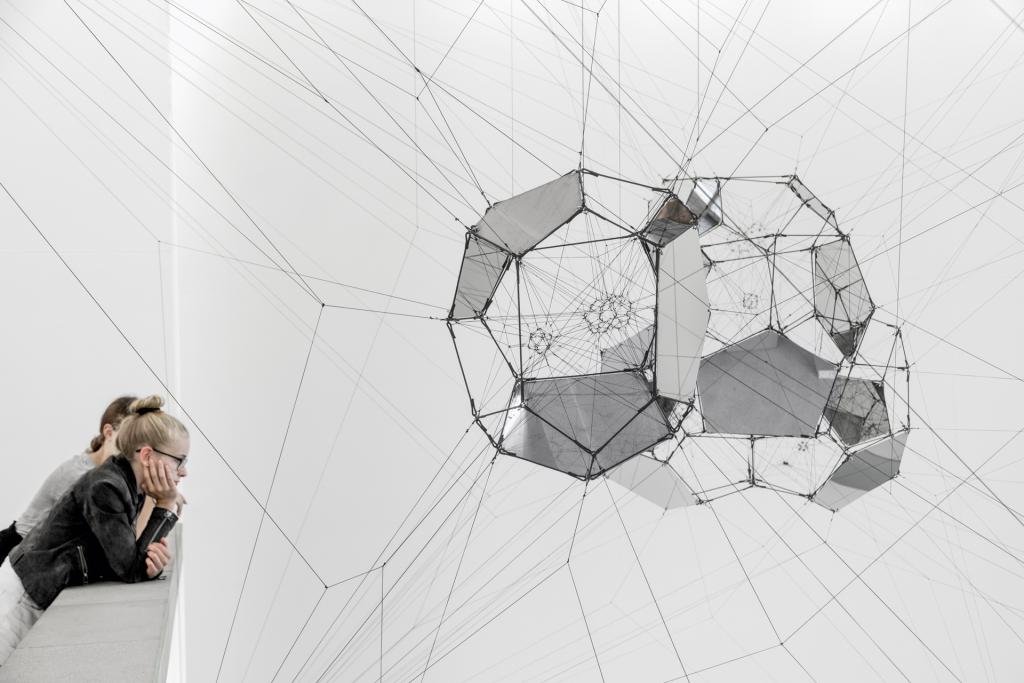
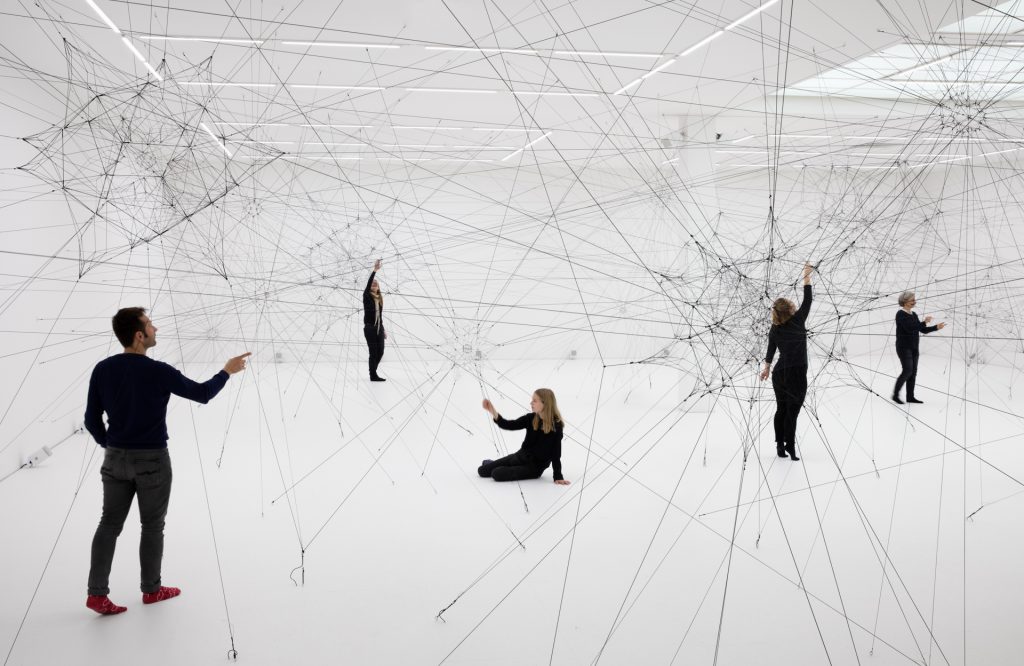
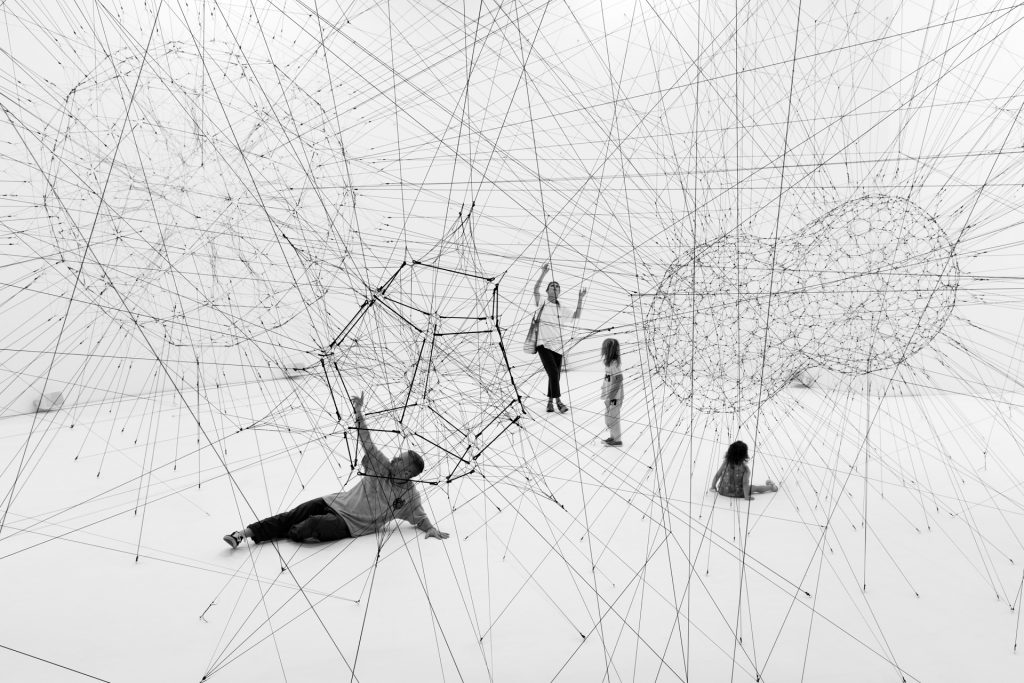
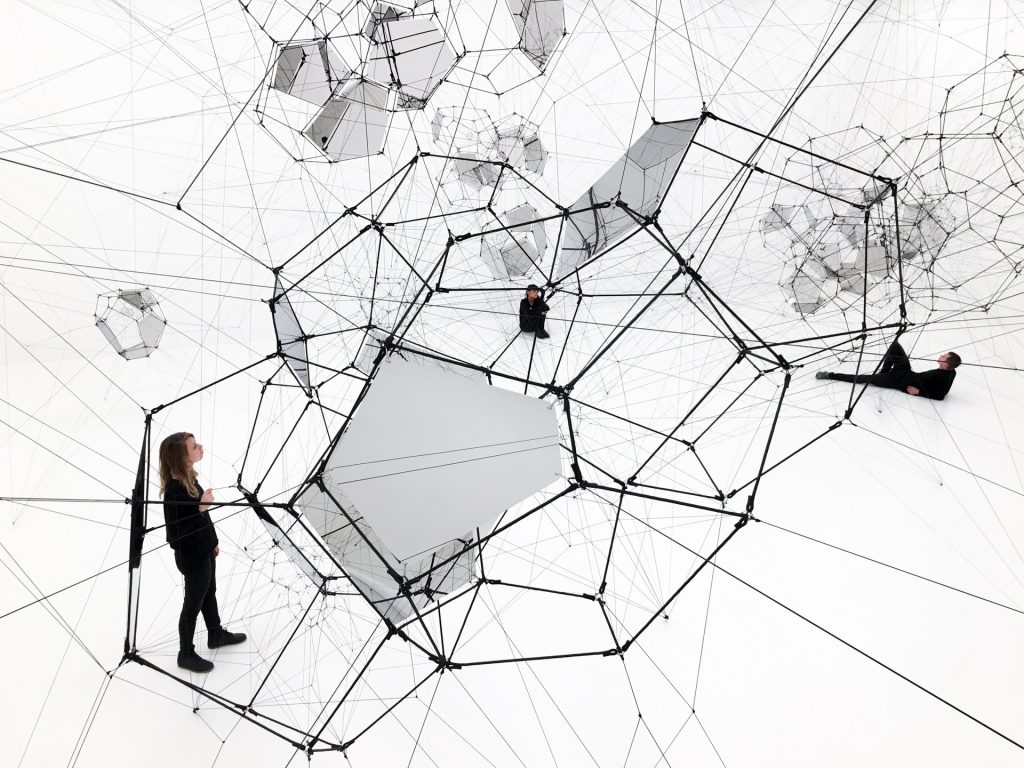
For example, a person entering the upper level of the 3-tiered network slightly compresses the other two accessible layers of the netting underneath. Two people do this even more, and I would estimate that five people standing in the same spot would temporarily make the other two layers seem to disappear, making it impossible to walk under the lowest tier of netting. The undulations produced in the nets by the weight and number of visitors shifts the network, pulling other visitors towards certain points like a vortex as their bodily weights become added together. Your ability to move from point A to B becomes affected as the critical mass deforms space and time, spaces disappear underfoot, a black hole that's not yet there!
This is what I enjoy the most—seeing this new language emerge, speechless, instinctive bodily basics that are common to all living humans, animals, and inanimate objects, where movement drives one towards a certain synchronicity with others in this socially, mentally, physically dynamic environment until a common pattern emerges. We begin to share responsibility; we witness how our behavior affects the behavior of others. How this network of interrelatedness stems from a single string perpetuated along a whole network of strings, forming the net you are walking on … listening to the air on the membrane of your ear, the rhythm and level of co-dependence vibrate, hopefully toward this planet and outer space. The butterfly effect on the shared space … Cloud Cities are almost there, minor event resulting in two significantly different outcomes.MA: There are many architectural photos of workers standing on roof, tent, or dome constructions, for example pictures of the construction of the Zeiss buildings in Jena, or Frei Otto's model for the Olympic Games. Have these images inspired you?
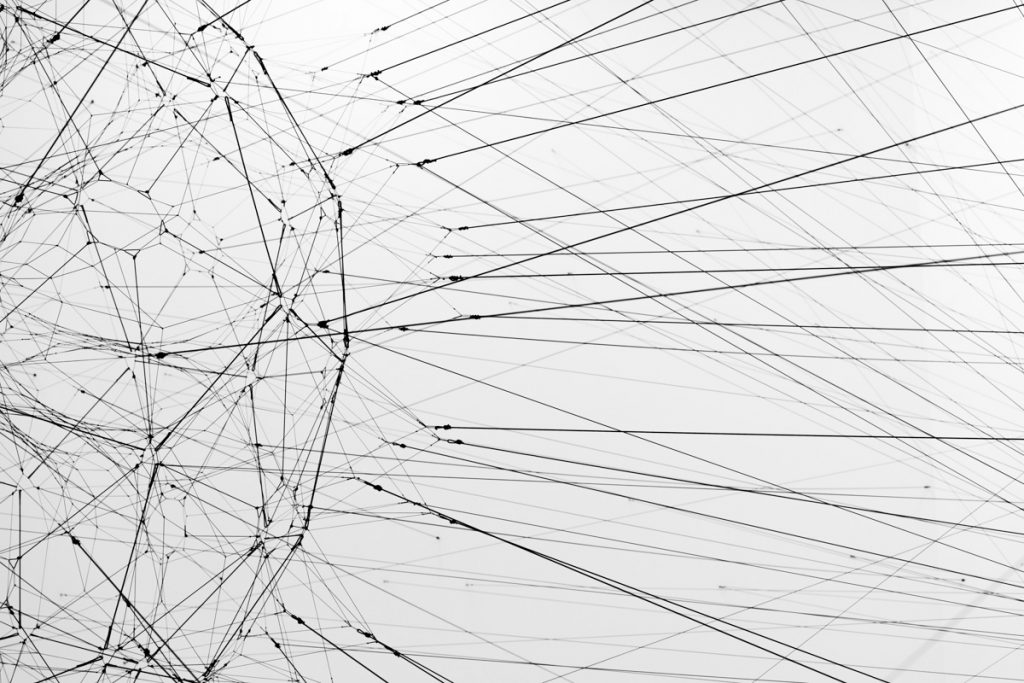
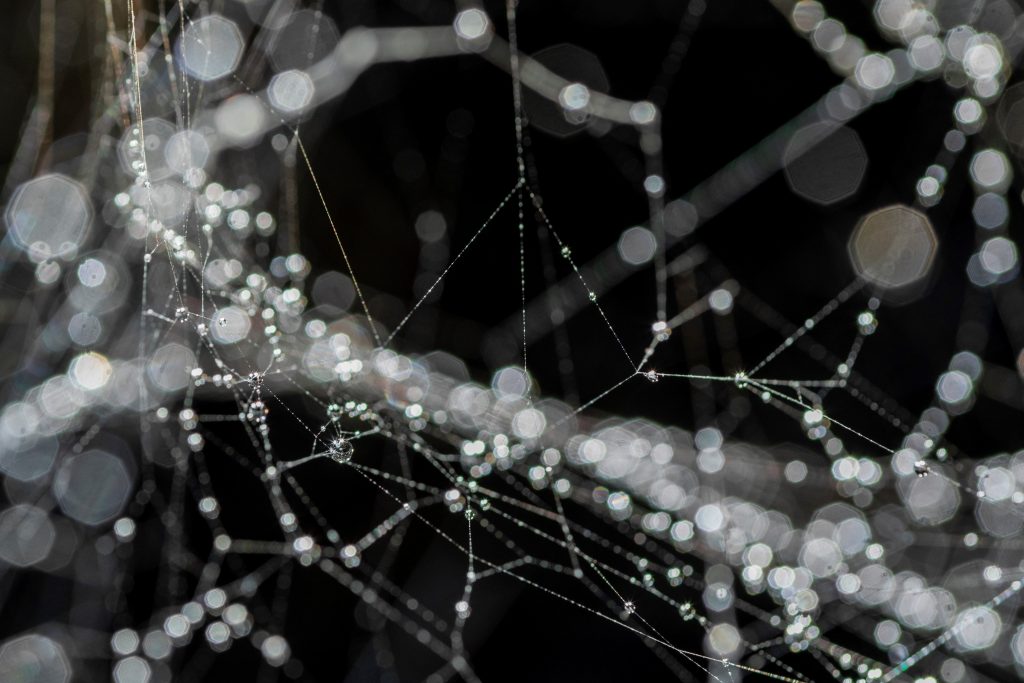
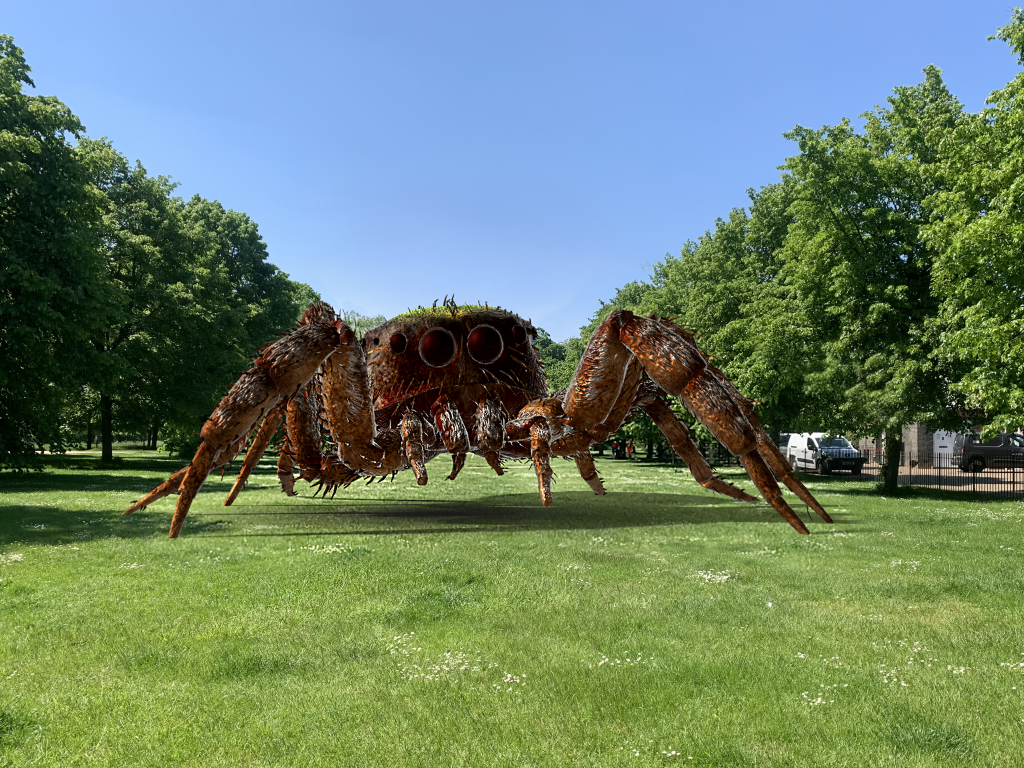
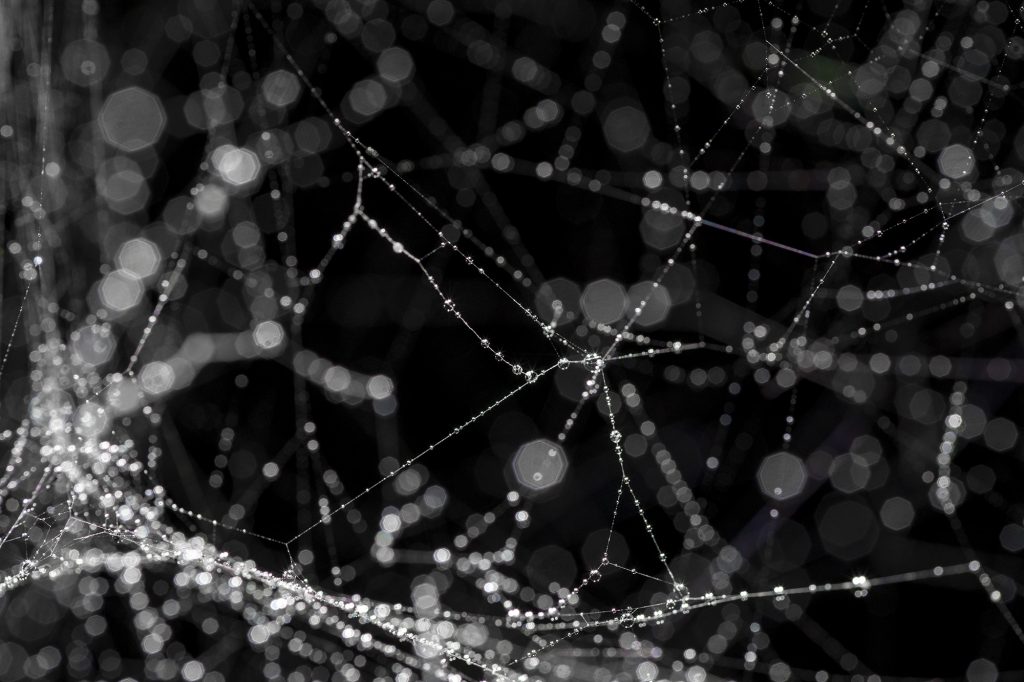
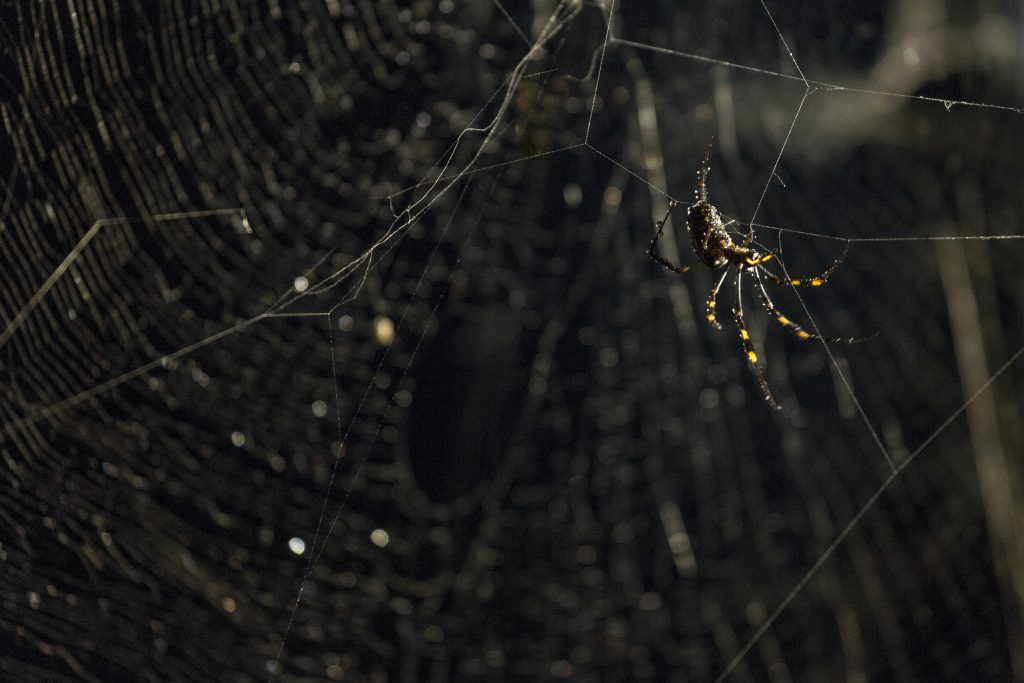
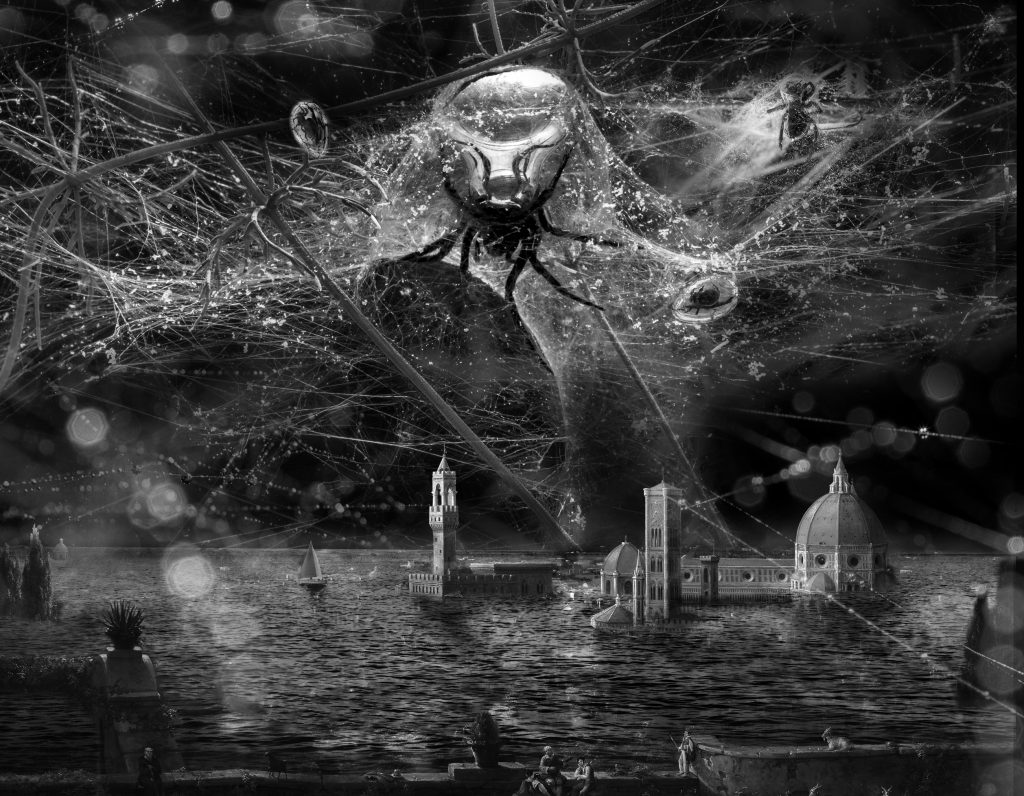
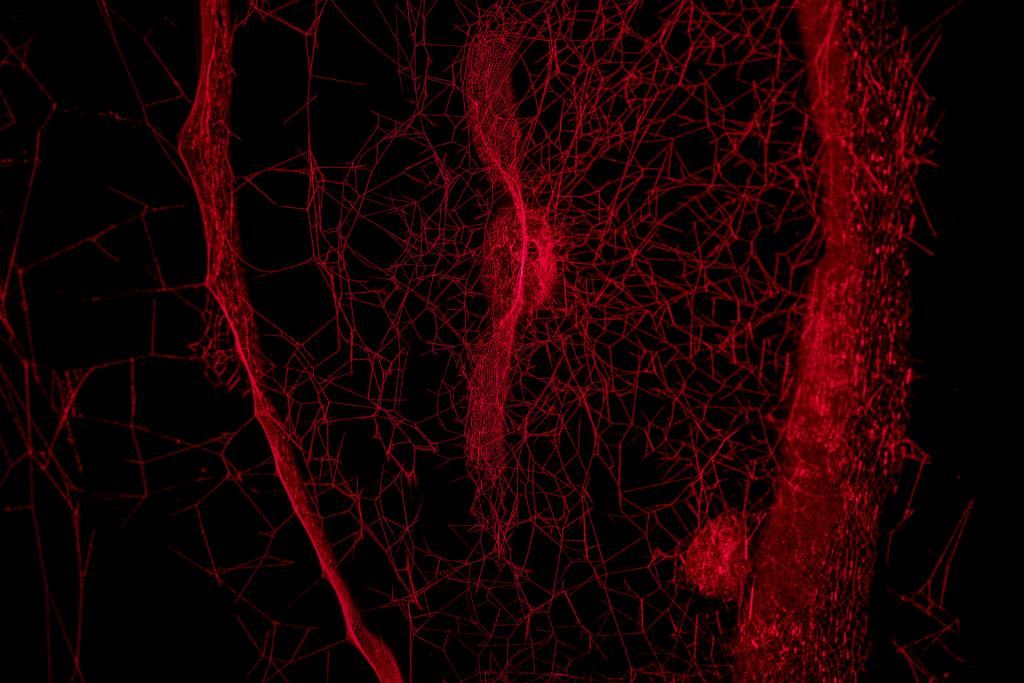
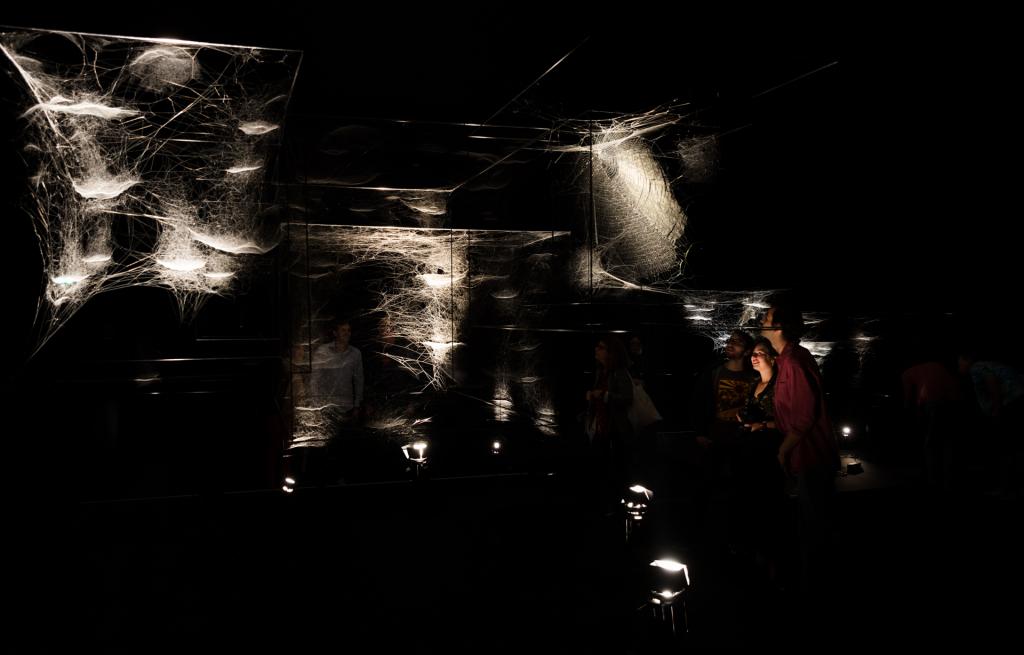
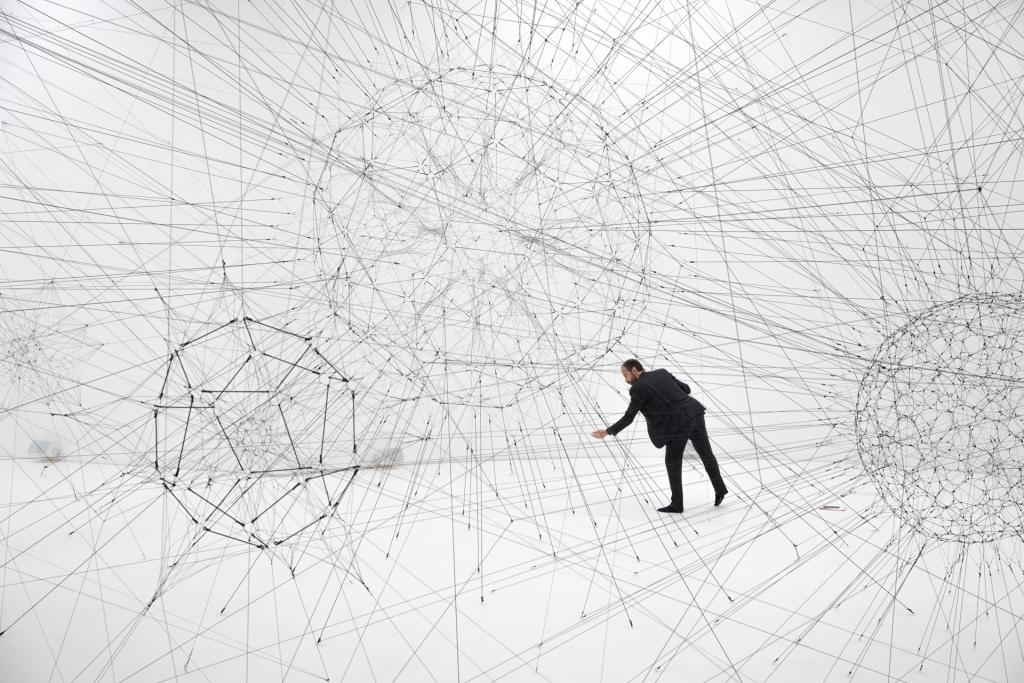
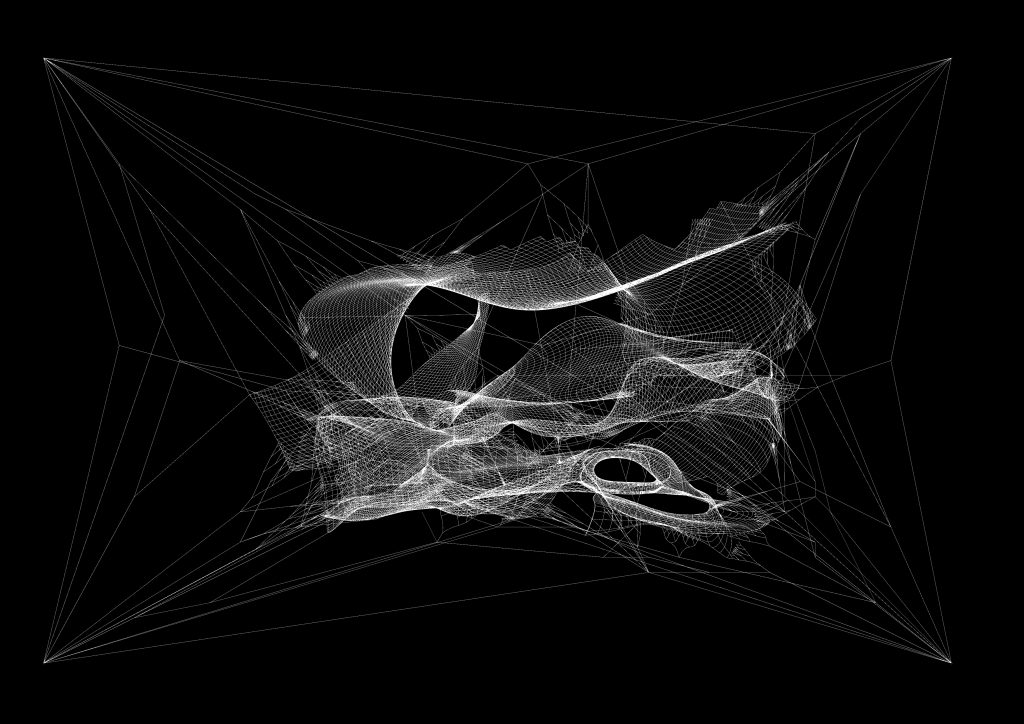
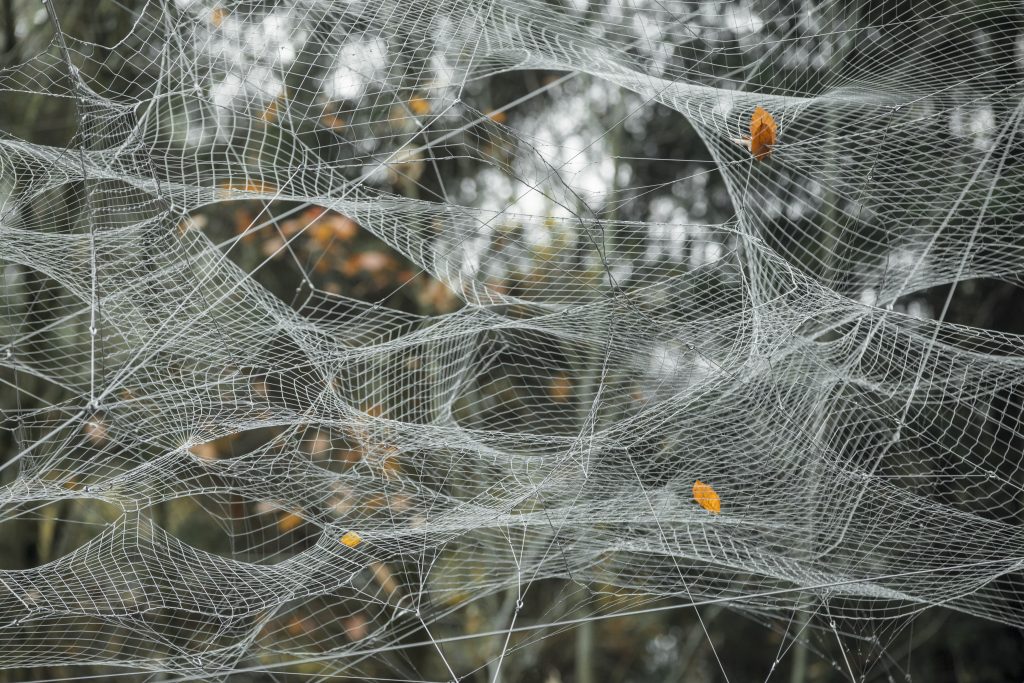
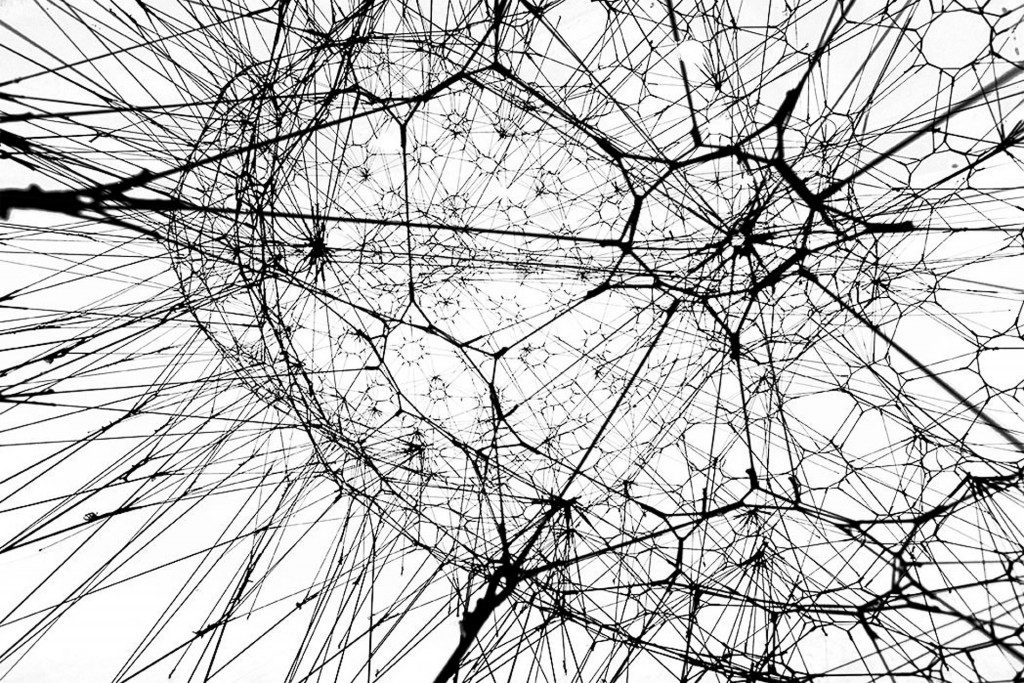
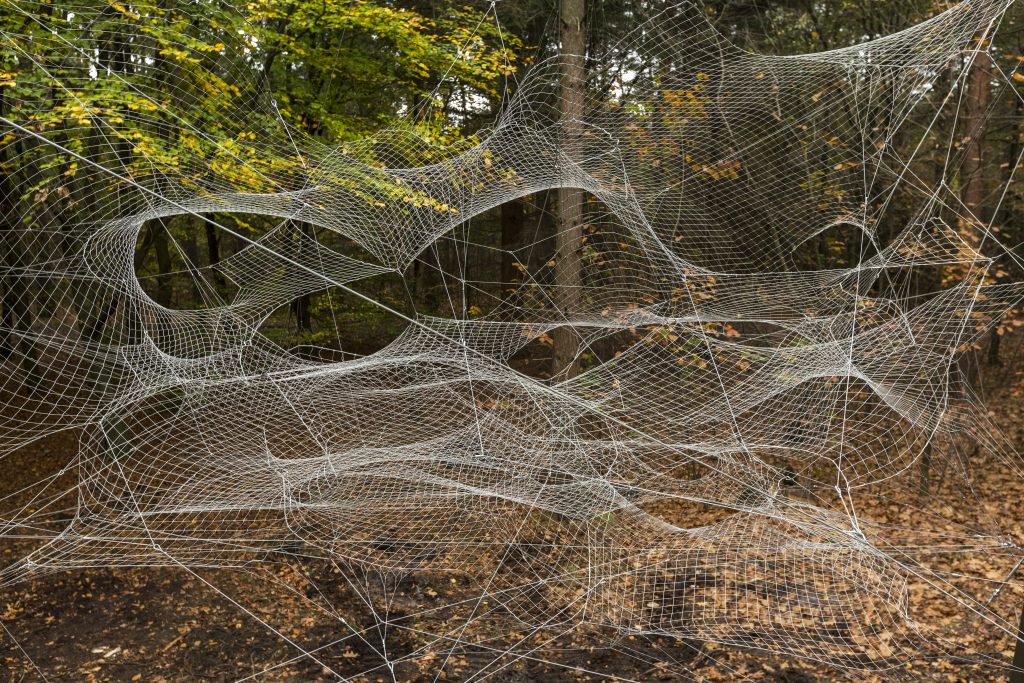
TS: Yes, I love Frei Otto … I was walking badly for over three months after illegally climbing (and falling) from the roof of the Olympic Stadium one night in Munich! I'd say that his buildings need to be navigated and accessible in more dimensions—become an ant or a spider or an astronaut and the world becomes another ... In Orbit at K21 is similar to his aviary at Munich's Tierpark Hellabrunn, but now open to the human-spiders willing to walk along it everywhere … Every time I observe webs, I still cannot believe how spiders make such amazing work and wonder how they would look built without gravity … In 2009, at the Space University at NASA Ames I partook in twenty parabolas, each of which simulates about thirty seconds of weightlessness.
The first parabola I was with lunar gravity (one-sixth your weight), then Martian gravity (one-third your weight), then zero gravity! … Walls are floors, ceilings are … aahahaa … there is no weight up there! Push yourself with your fingertip and you smash against the other side … Once you experience weightlessness, you want to walk everywhere …
MA: Your mother is a biologist. The connection of forms, structures, and natural processes has always been important in your work. For your current project at the Kunstsammlung Nordrhein- Westfalen, the central motif of the installation at K21 is a spider net. In the laboratory section of the K20, you plan on presenting living spiders that produce different types of nets. How many types of spiders and nets exist or are known to you?
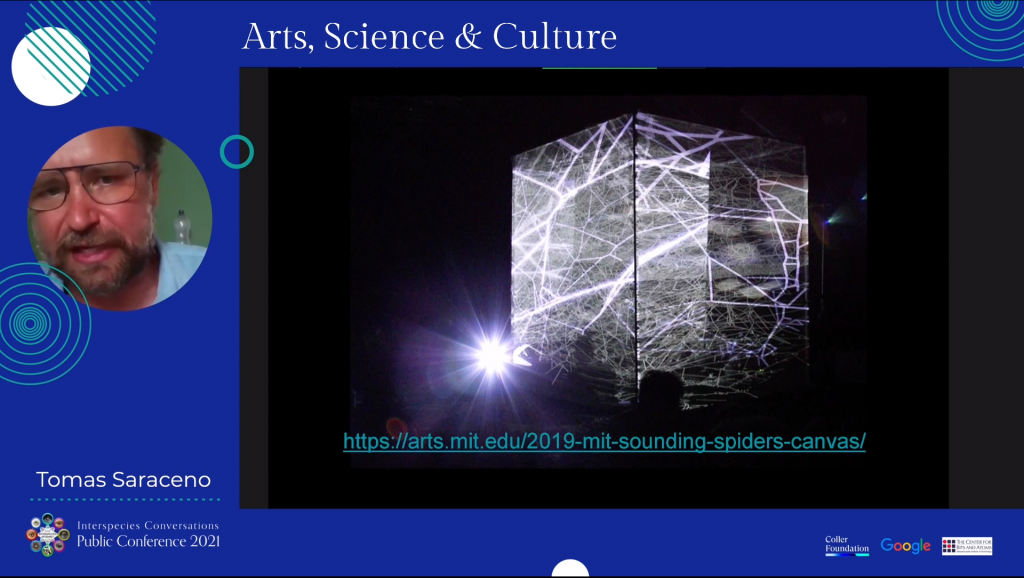
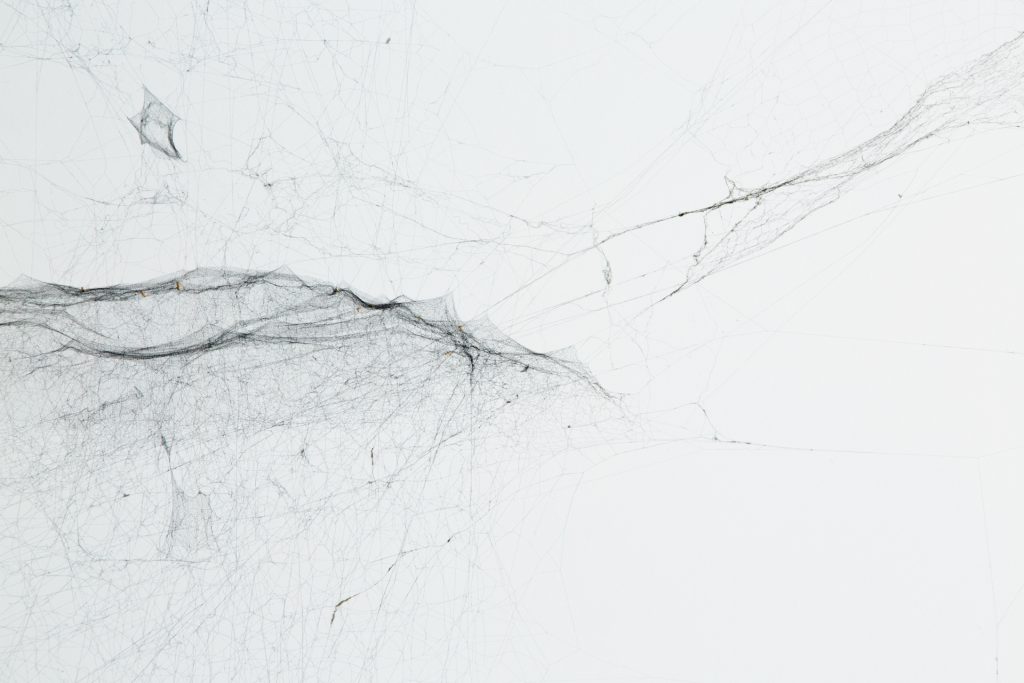
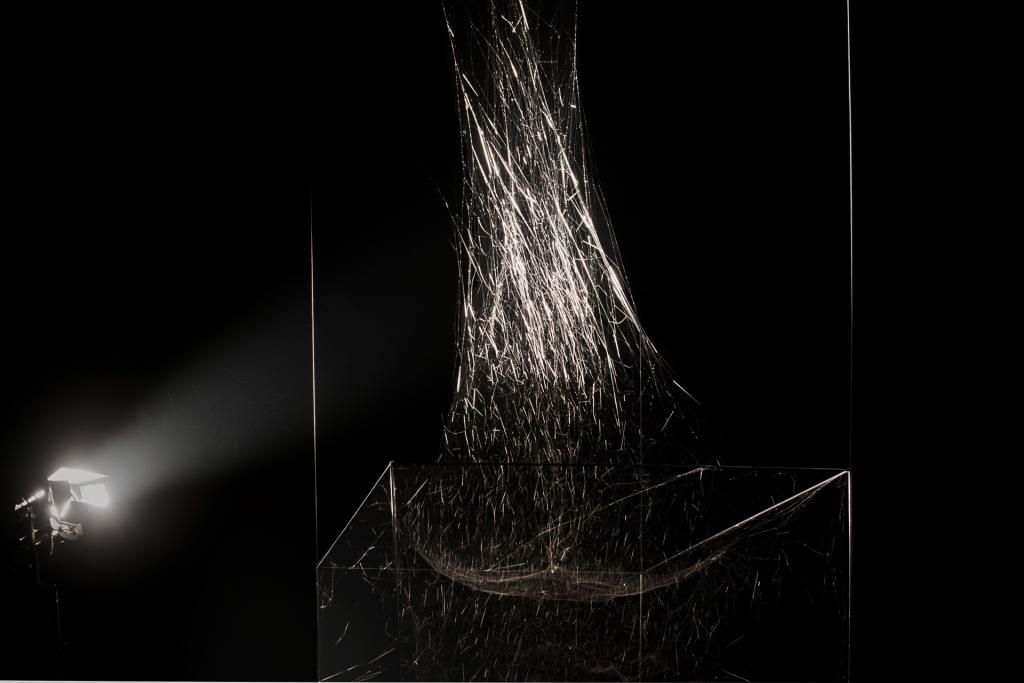
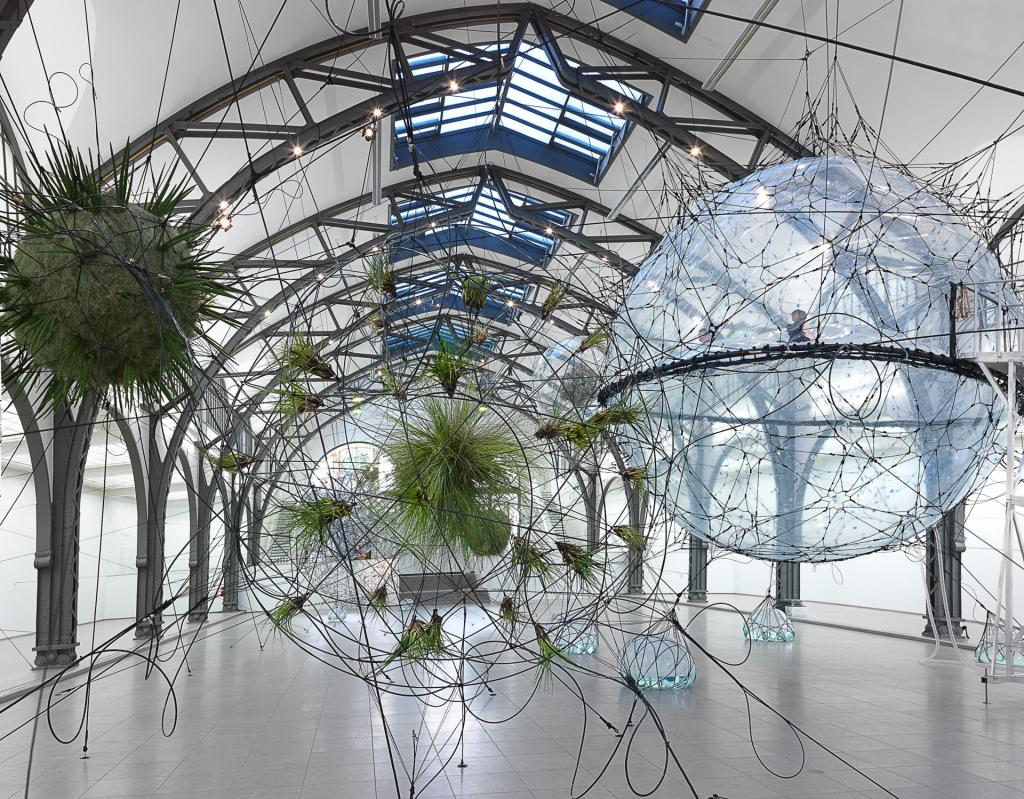
TS: As a child, I never cared about my parents' work, but there seems to be a symbiotic effect nonetheless ... At K21 we're working together with living spiders under the advice of Peter Jäger and the International Society of Arachnology. In this case, we have a Cyrtophora weaving a kind of a tent-like web throughout the entire K21 model. We will later remove the Cyrtophora and introduce a Tegenaria, which develops another type of web, usually more densly constructed and with multiple layers. The idea is to see how the Tegenaria will make her web on top of the other … We are learning from each other and have established a great workflow treating different aspects of interest and disciplines. Discovering that different species of spiders cooperate in making a new hybrid web, we are now ready to explore space! After attending the Space Studies Program at NASA Center Ames, our new team—experts in arachnology, photogrammetry, and life science—, Prof. Gilles Clement (International Space University), and myself will file an application to study spiderwebs in space without gravity. (ILSRA-2009-1049, paper on 3-D Spider Webs in Microgravity)
Daniel Birnbaum: You and I entered the Städelschule in Frankfurt at the exact same time: I was the new dean and you were a student in Peter Cook's architecture class. I guess you came to Europe to study with Cook. What does his work mean to you today?
TS: Yes, I arrived at the Städelschule through Claudio Vekstein, a great professor of mine in Argentina and also a former student of Peter Cook and Enric Miralles. I met Peter a few months ago in London following an invitation to lecture at Bartlet … encouraged by Cedric Price, he suggested to not use the word "problem" during project discussion, only OPPORTUNITY! Living in the world of opportunities … Paired with my other great artist professor at the Städelschule, Thomas Bayrle, they are truly a living network! It doesn't matter if you're speaking of buildings or concepts, their students and ideas are everywhere. In a sense, they are almost an incarnation of what Latour refers to as ANT, Actor Network Theory! … as are the engineers Bollinger and Grohmann … I still remember going to your office with their support and inquiring whether the Städelschule would pay for a patent application* for the use of Aerogel** for flying cities of the future … and from there we are now all working towards this project at K21, each in his own universe of thoughts … Rirkrit Tiravanija cooking up some gatherings, all together packing some essence with Jason Rhoades ...
* T. Saraceno N°. 202 06 527.8 German utility patent/ thermal envelope for "Lighter-than-air vehicle": free sharing ** Aerogels are the world's lightest solid materials, composed of up to 99.98 % air by volume. Transparent superinsulating silica aerogels exhibit the lowest thermal conductivity of any solid known.
Seite 1/3
-
DB: What are other sources of inspiration from this period in experimental architecture— Cedric Price, Buckminster Fuller?
TS: Well, inspiration never ends, it comes from everywhere … one of my favorite books is " Architecture Without Architects" by Bernard Rudofsky … even today, it's hard to see how a city can be built and lived in such a way. "The Hidden Dimension" by Edward T. Hall and his topologically proxemic spaces. Others are the great artists Gyula Kosice, Gordon Matta-Clark, Claudio Caveri, Ciudad Abierta in Chile, Xul Solar's beautiful paintings, Amancio Williams, Bruno Taut , Wenzel Hablik, Yona Friedman, Constants "New Babylon," and the wonderful book made by Mark Wigley … the other day he reminded me that at the time of each presentation at the Städelschule, I would start with 100 images of inspiring works by others … among many others, Frei Otto and his incredible biology-based books on bones and soap bubbles, the autopoiesis of Humberto R. Maturana and Francisco J. Varela, Ant Farm, Inflatable Utopia Group … Santos Dumont, the incredible German Zeppelins … Tsiolkovskii (pioneering ideas of greenhouse and space elevators leading, space exploration and ISS International Space Station, Krutikov, "flying cities," J. J. Grandville, Jules Verne, the cenotaph of Étienne-Louis Boullée, Stanley Kubrick's "A Space Odyssey," Dominic Michaelis, Carl Sagan, Don Davis, Rick Guidice, Arthur C. Clarke, Gerard K. O'Neill, Olafur Eliasson, Sadao, Oscar Niemeyer, Carlo Scarpa, Jantar Mantar (an observatory in Jaipur), the Nazca Lines … Metropolis, Tony Garnier's "Industrial City," Einar Thorsteinn, JP Powell … At the University of Buenos Aires I devised a program for the architecture faculty on building relationships beyond the atmosphere—the general mood was great and very encouraging, lots of good friends, and this research led to more things … we had lots of fun … they make fun of me that I never changed … Reyner Banham said that design cannot be taught, but it can be learned by socialization in tribal gatherings …
DB: Someone said that the difference between the visionary architects of the '60s and '70s and the most advanced things taught at places like the Städelschule today is that the old guys were only thinking about utopian models, and that today these things are actually being realized. What seemed utopian decades ago is now possible, thanks to new modes of production, new materials, and new knowledge about how to generate form. Do you agree?
TS: "Humanity is acquiring all the right technology for all the wrong reasons."— Buckminster Fuller.
"There is a need for dreamers who can think and thinkers who can dream. The answer will not be a neatly packaged, custom-built project. It will be a new way of looking at things."— Ignacio Ramonet.
Cederic Price said something that was repeated by Cook and Wigley in a similar tone: "So that is another rule for the whole nature of architecture; it must actually create new appetites, new hungers—not solve problems; architecture is too slow to solve problems." My experience was truly utopia for the extended-family relationships that Städelschule emanated. "Although it may seem that in an ecosystem some species are more powerful than others, the concept of power is not appropriate, because non-human species (with the exception of some primates) do not force individuals to act in accordance with preconceived goals. There is dominance, but it is always acted out within a larger context of cooperation, even in predator-prey relationships. The manifold species in an ecosystem do not form hierarchies, as is often erroneously stated, but exist in networks nested within networks."—Fritjof Capra "The Hidden Connections"
DB: I had a long discussion with Bruno Latour about your work and about the significance of networks. I know that you have a dialog with him. What interests do the two of you share?
TS: We have not yet met … here's an idea for an invitation … let's all get together have a discussion on In Orbit—right on top of the living network at K21 in Dusseldorf—or perhaps it should be more of a concert. I always thought of this installation like a huge instrument ready to be played and in need of some musical compositions. The simultaneous ripple effect on the knotted strings, the timing of vibrating strings, sounds and silences, singular and collective, a musical texture in a cosmic fabric … Alternation and repetition, rhythm is marked by the regulated succession of opposite elements, the dynamics of the strong and weak beat, the played beat and the inaudible but implied rest beat, the long and short note. In addition to perceiving the rhythm, we must be able to anticipate it, but this depends upon the repetition of a pattern short enough to memorize … How will you move? Lets meet and play and hope we met there? :-) … (this is a basic concept of rhythm which I've modified to this context; the answer doesn't need to be understood, but should resonate) … Wherever we see life, we see networks, and in reading Bruno Latour's text, I enjoy: "The notion of network allows us to dissolve the micro– macro distinction that has plagued social theory from its inception. The whole metaphor of scales going from the individual to the nation state, through family, extended kin, groups, institutions etc. is replaced by a metaphor of connections. A network is never bigger than another one, it is simply longer or more intensely connected."—Bruno Latour No more developing countries or third-world countries, no more Germany or Argentina … where are you from? I can finally say: I am from planet Earth!
DB: There is a new group of philosophers interested in what matter is capable of known as speculative realists. Are you a speculative realist?
TS: Matter and anti-matter—certainly I'm interested in what these are capable of. I sympathize with speculative realism, albeit less so with the term speculative. How about relative realist? Or even realist relativist, or real relativist? … I am now reading Stephen Hawking and Leonard Mlodinow on "model-dependent" theory of reality … "It might be that to describe the universe, we have to employ different theories in different situations. Each theory may have its own version of reality, but according to model-dependent realism, that is acceptable so long as the theories agree in their predictions whenever they overlap, that is, whenever they can both be applied. If there are two models that both agree … then one cannot say that one is more real than another. One can use whichever model is more convenient in the situation under consideration.
" They write about a city in Italy that, a few years ago, barred pet owners from keeping goldfish in curved bowls. Why? Because it is cruel, the city council argued, to give a fish "a distorted view of reality." We're quite similar to those goldfish, the authors suggest. Our perceptions are limited and warped by the kinds of lenses we see through, "the interpretive structure of our human brains." Digging deeply into quantum physics, they argue that our universe "doesn't have just a single history, but every possible history, each with its own probability."— Stephen HawkingdDB: What would you say describes your sphere of research better: forms of life or the life of forms?
TS: Both ... We simply do what we do because we assume a given form of life, which also accompanies the understanding I might have of it, myself, or the word meaning. The Drake equation, 45 which relates the possibility of extraterrestrial civilizations in our galaxy that we might come in contact with, needs to be re-written, since last year we tripled the number of the stars we previously thought existed. Or "Mission to Earth": alien life "may exist among us," while recently life was discovered in an arsenic lake requiring that the definition of life itself be re-written. Look, we know so little about the upper level of the atmosphere of planet Earth.
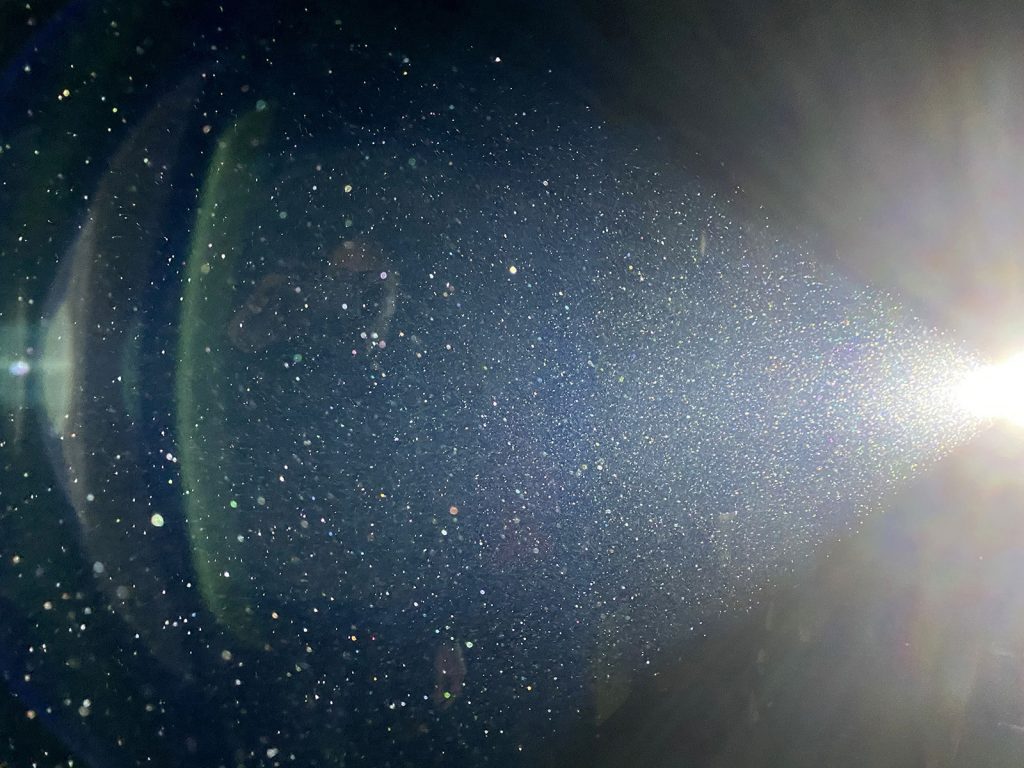
I just recently read this: Bacteria living in Cloud Cities may control rain and snow patterns. High up in the sky where clouds form, water droplets condense and ice crystals grow around tiny particles. Typically, these particles are dust, pollen, or even soot from a wildfire. But recently scientists have begun to realize that some of these little particles are alive … they are bacteria evolved to create ice or water droplets around themselves. Some of them live in clouds … and here and there they may be numerous enough to change rain and snowfall patterns, influencing the weather. Experiments such as Biosphere 2 are fundamental to understand and maintain life on this planet and others in the future—why not a flying one this time? Not necessarily as large as Biosphere 1, the planet Earth.
Hans Ulrich Obrist: What was your first museum visit as a child?
TS: Hmmmm … I do not remember, but I recall a poster in my room … a collage made by some artist still unknown to me … there was part of an airplane mixed with an airship, a car, a bus, a house, part bird, animal, and planet … I cannot remember … I also remember my grandpa's special exhibition room in their house … each wall, shelf, and so on was covered with stuff: instruments, stone arrows, beautiful colorful woven ponchos, and aboriginal art from South America …
HUO: Tell me about an exhibition that inspired you.
TS: Entering inside the endless feedback loops of Dan Graham's piece Present Continuous Past(s), and in the next room was Washing Machine by Sonic Youth …
http://www.medienkunstnetz.de/works/present-continuous-pastsHUO: What is your favorite museum?
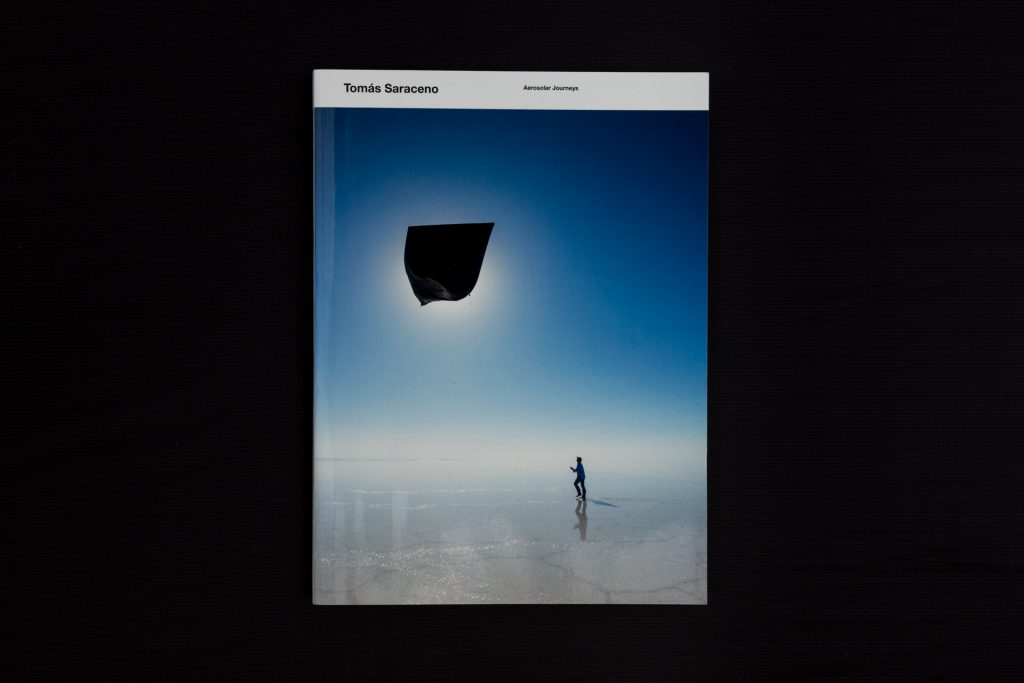
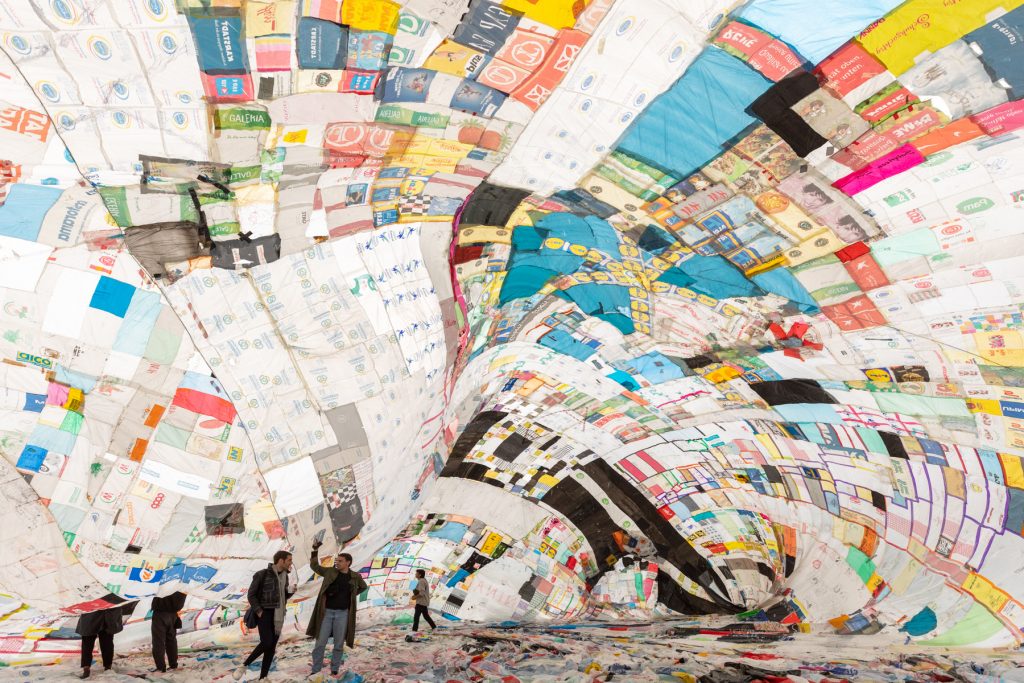
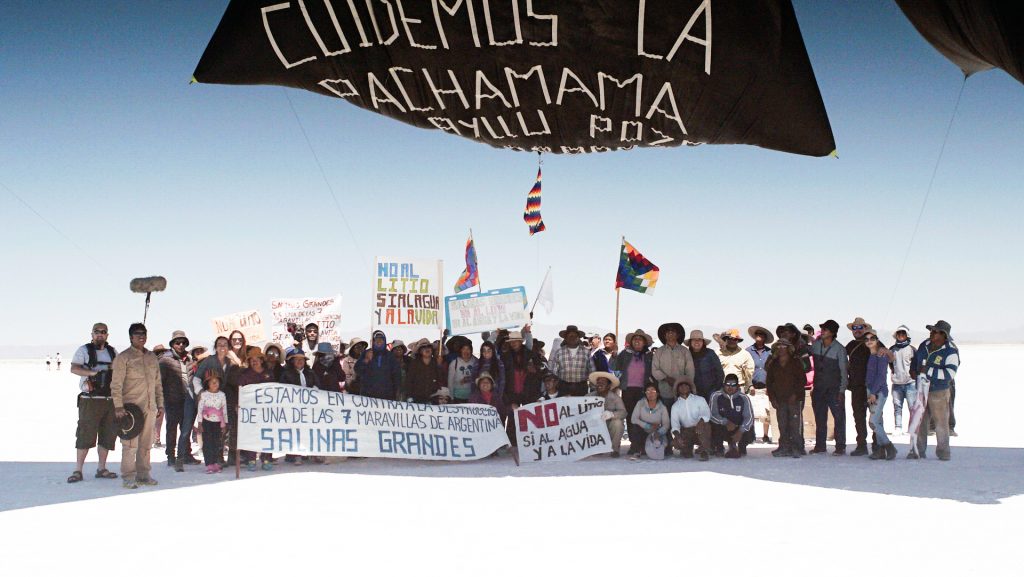
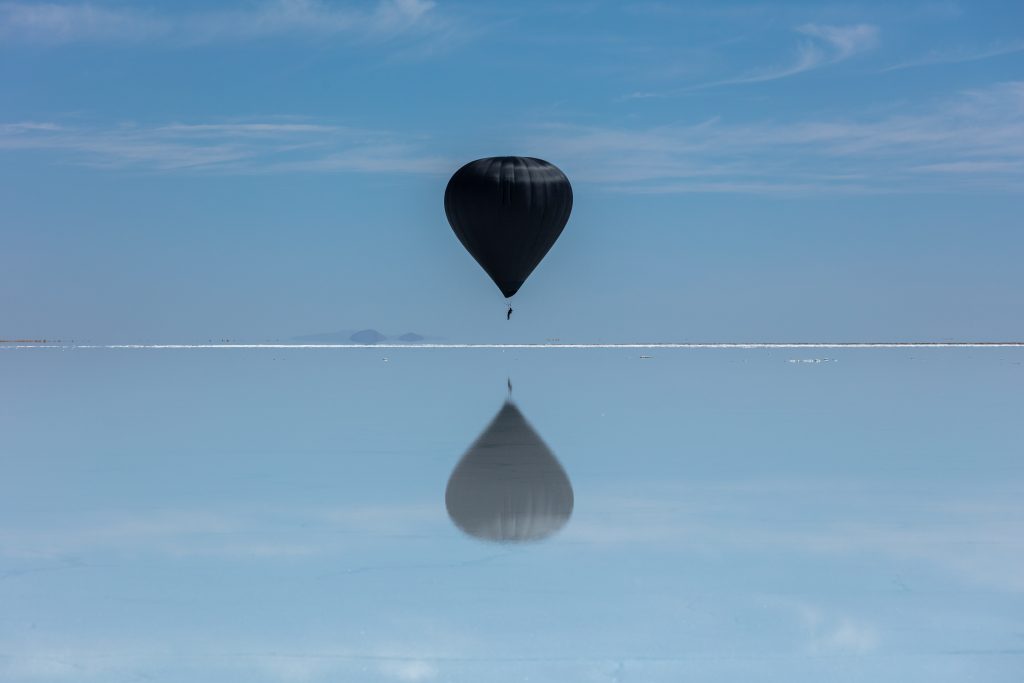
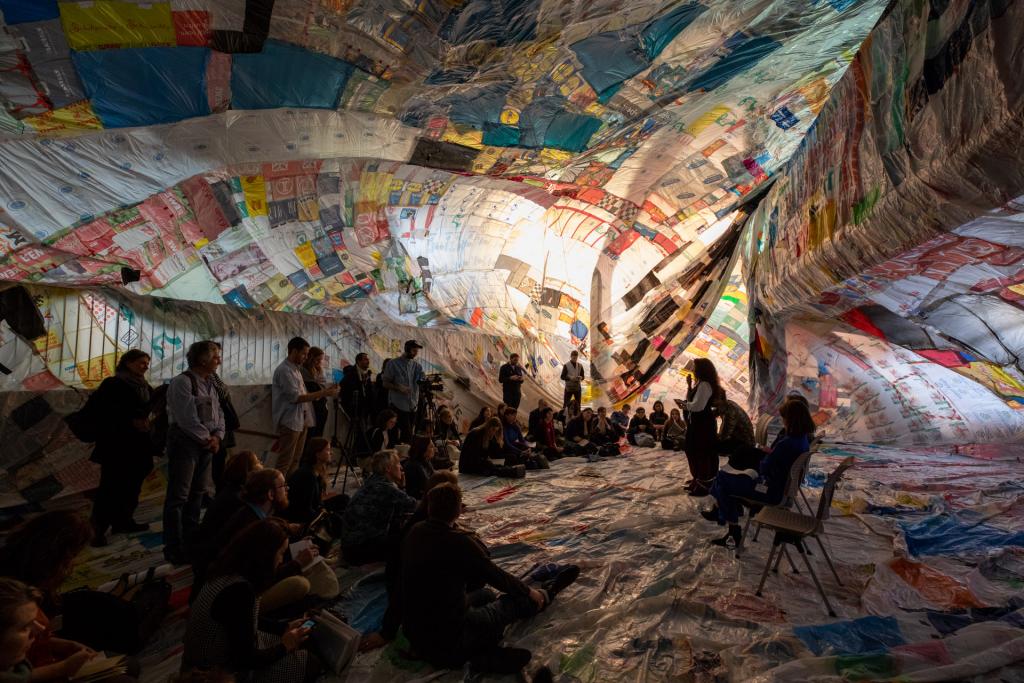
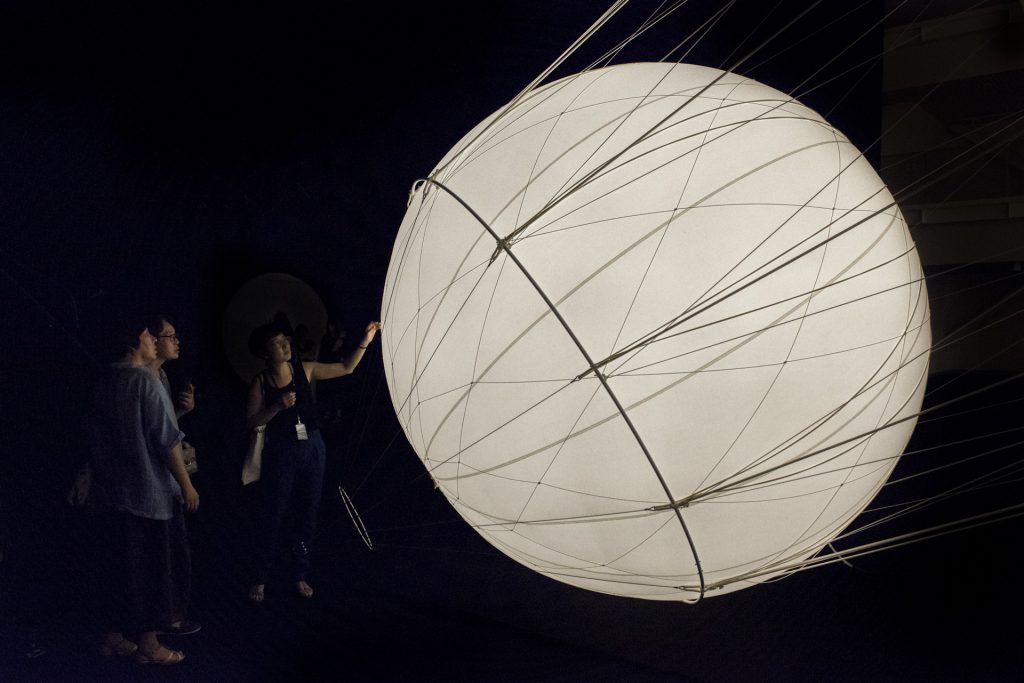
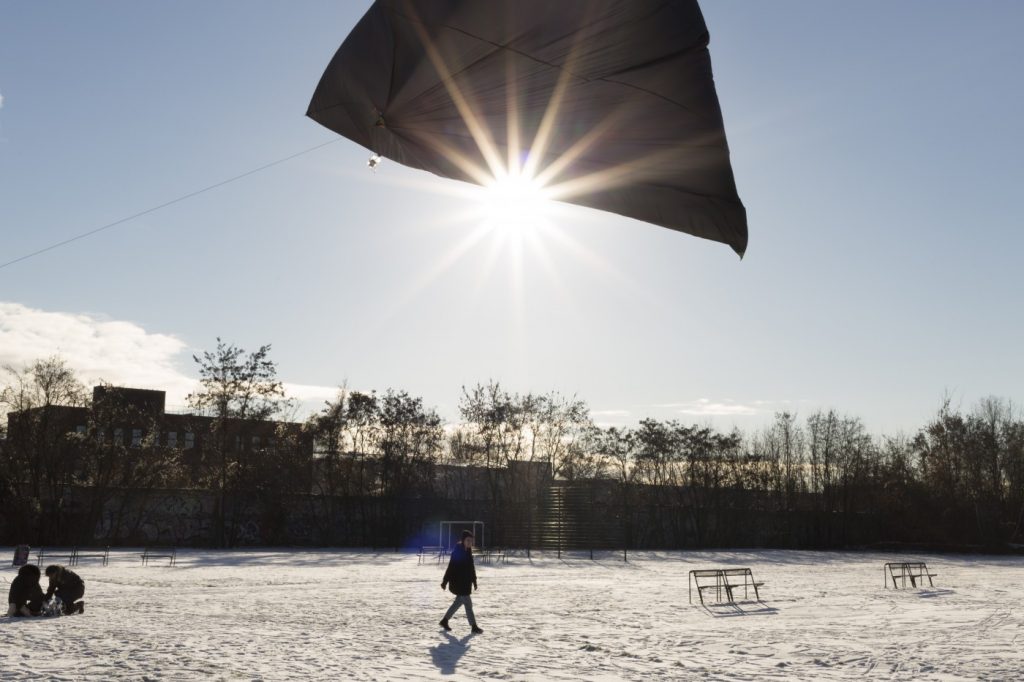
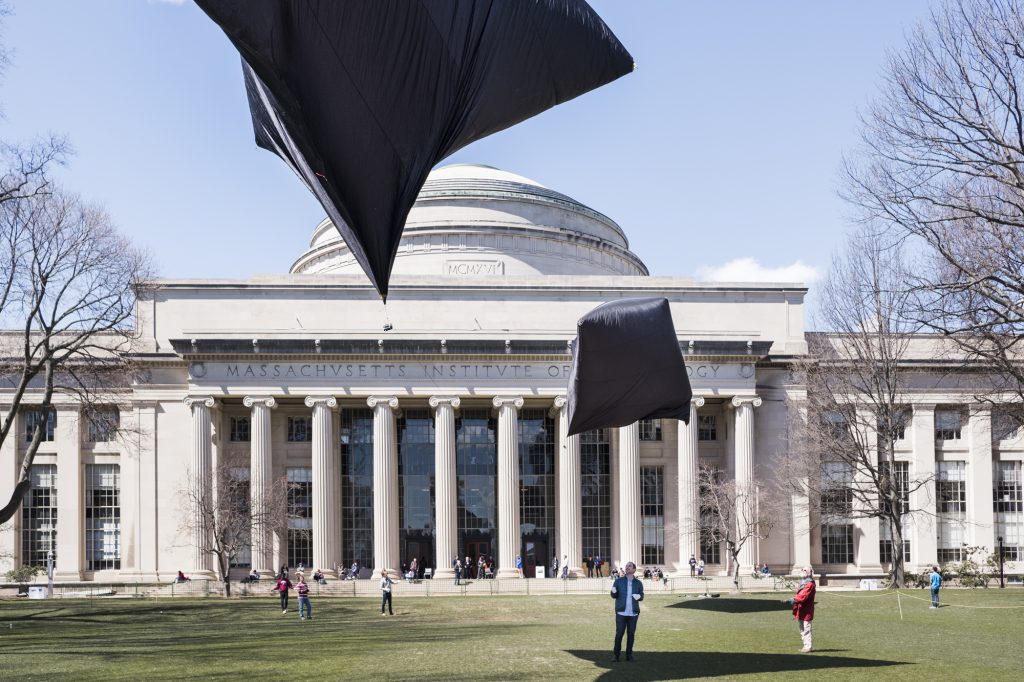
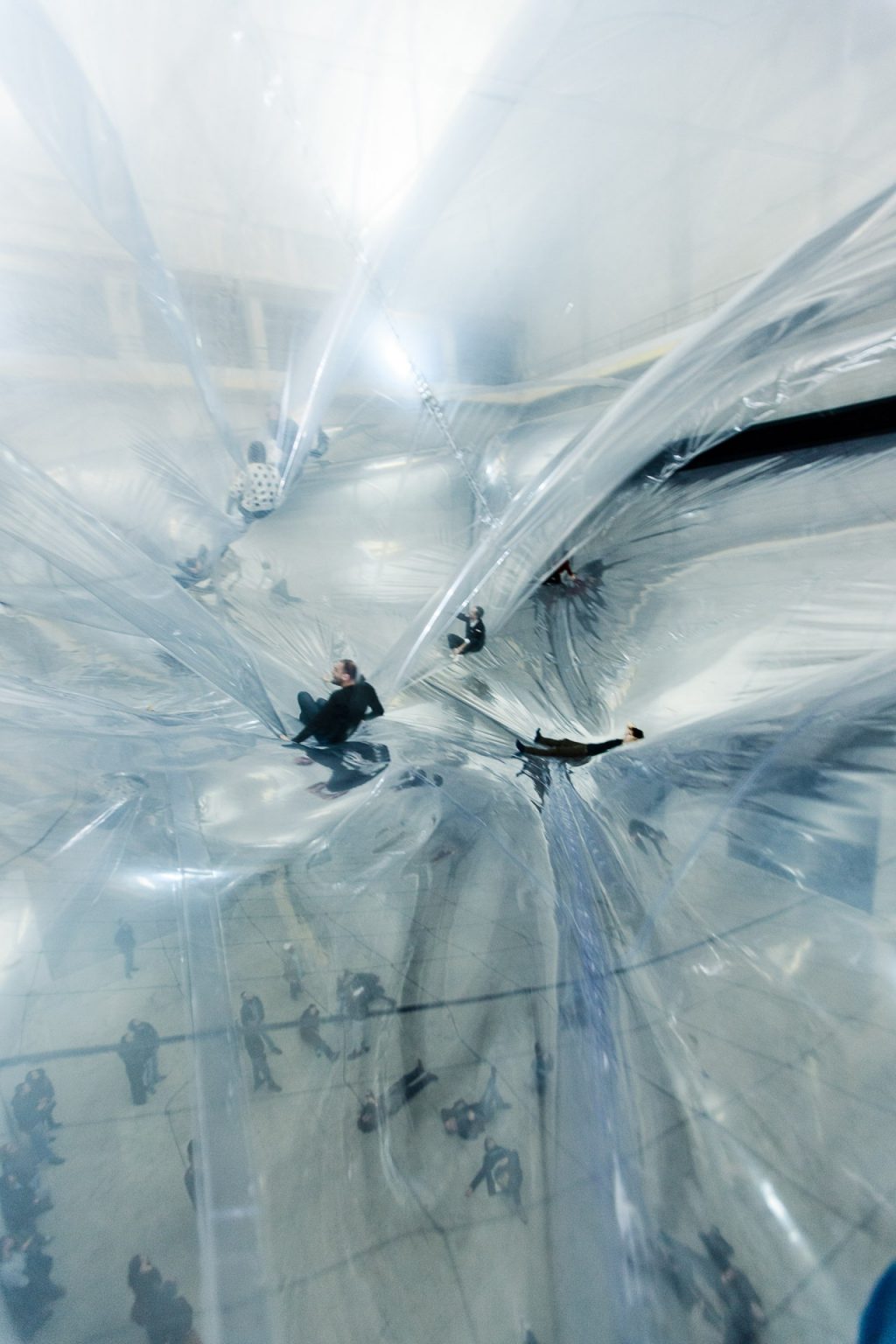
TS: Well … here's an invitation to participate in the construction of Museo Aero Solar … I still remember Bruce Sterling giving his plastic bags at Sharjah … Museo Aero Solar is a flying museum, a solar balloon completely made up of reused plastic bags. Museo Aero Solar stands for a different conception of space and energy, both anomalous and forceful at the same time. The core of the Museo resides in the inventiveness of the people participating, not in its image: among collective action and art, do-it-together technology and experimentation, it is a voyage backwards/forwards in time. A solar flying canvas. From village to village, from country to country, from continent to continent, from solar system to the unknown.
Museo Aero Solar should be understood within the concept of technical cycles; it should not spread the sense of ownership, but the service of the product that it provides. For example, it's not about new material or new methods of construction, but understanding the cycle and useful possibilities some materials have in their lifetime, a plastic bag and imagination. Please note that I am one participant among many others of Museo Aero Solar, and each participant has his own synergetic ideas and opinion. Please see also the homepage for more information.
http://museoaerosolar.wordpress.com.
HUO: What are your (as yet) unbuilt projects?
TS: Nothing is unbuilt … all is work in progress … from the Mobile HIV/AIDS Clinic in Africa to 29 Steps to Be on Air by Solar Power DIY to Museo Aero Solar DIT Together … I remember having a public discussion in favor of solar balloons with Don Piccard, one of the world masters of gas hot-air balloons … and I will tell him, when you fly in a solar balloon (and you can still count on one hand how many there are around the world), the air is heated directly by the sun, so you don't have the noise of a gas burner, as with regular balloons (don't forget that you need a sunny day, this is your burner and no wind for takeoff). And that's the best part! Once you're up, I can tell you, if you've never been in a balloon, you can never experience anything like it … you never feel the wind, but nevertheless you keep moving.
You are the wind. Think of any other open form of transportation (besides the planet Earth) … riding a bike, windsurfing, manning a boat, driving a car with open windows … you will always feel the wind … maybe there is something there … up there. I realized it was windy only because I looked down and saw the leaves rustling in the trees! Besides your senses, there's your phantom neuron blind spot ... connectome brain … (Marshall McLuhan "The Medium Is the Massage")
In a discussion with Greenpeace at Tate Modern, I proposed they use a lighter-than-air vehicle— an airship from Cloud City—rather than their gasoil-based warrior ship. It was a welcome idea. Remember we had a similar discussion at your Ever Cloud panel at the DLD conference … solar panels on solar balloons ... build one with 300 € and 2 people in one weekend and I see you up :-)HUO: What is your smallest work?
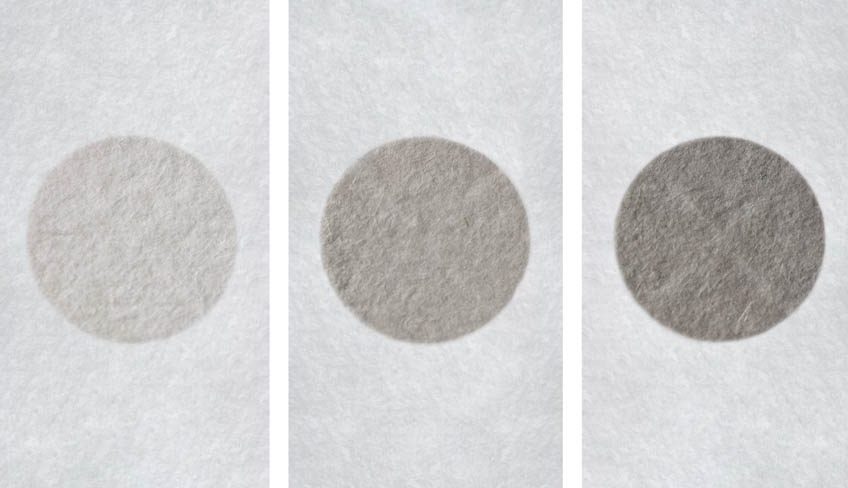
TS: Mars on Water … it's a normal A4 piece of paper covered with an invisible thin layer of aerogel on top; a glass of water sits next to it to dab your fingers in and drip a bit water on the paper … (it seems silly, but after sitting in a San Francisco bar with Arlon Hunt from Lawrence Livermore National Laboratory, a world expert on aerogel for over 20 years, he was still amazed by it) … As soon as the water touches the paper, it behaves like mercury. In accordance with the temperature of the room, which is affected by the number of people there and their activities, which can be related to the outside temperature … and on and on, entropy … the droplets evaporate sooner or later leaving behind a membrane of aerogel that had encased them. I believe that it's the lightest-volume weight membrane ever made in the world! … I like the latent states of the work, its co-dependency … invisible, solid, liquid, temperature … a process … a network of relations …
Seite 2/3
-
HUO: What is your largest work?
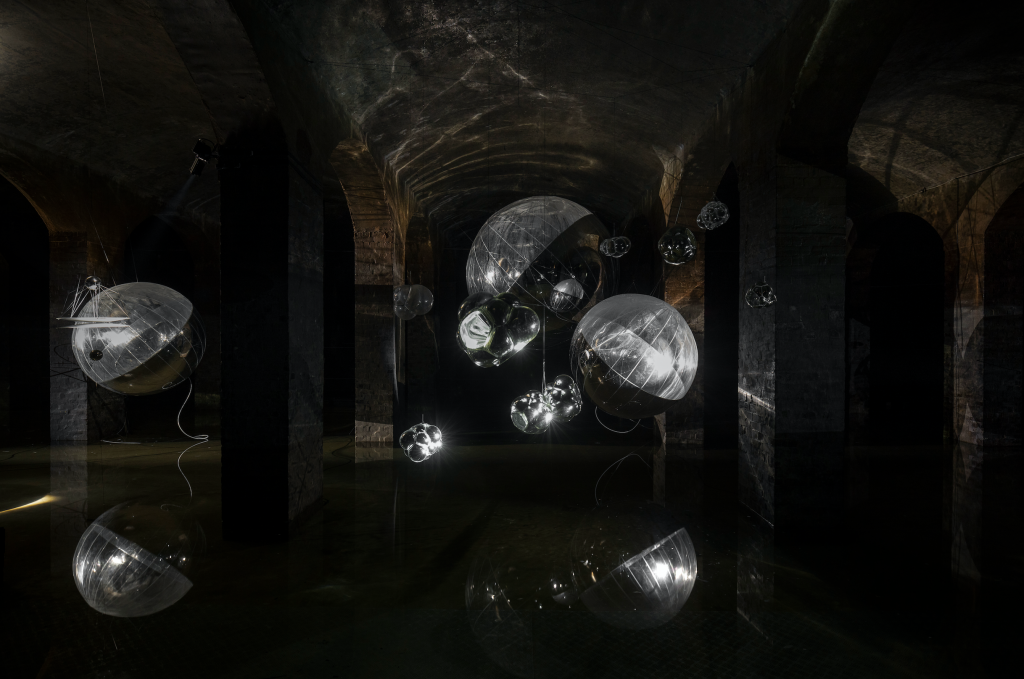
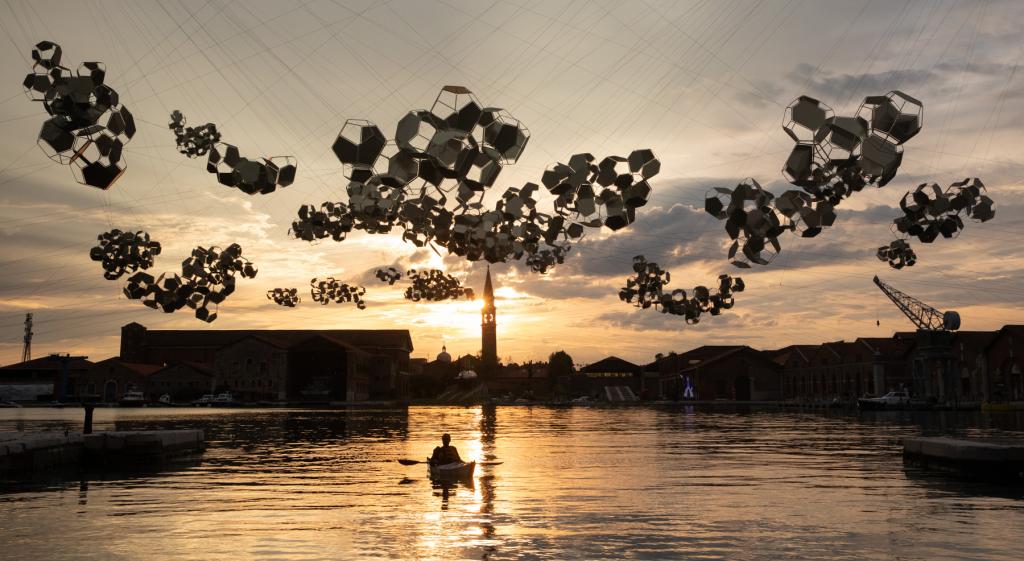
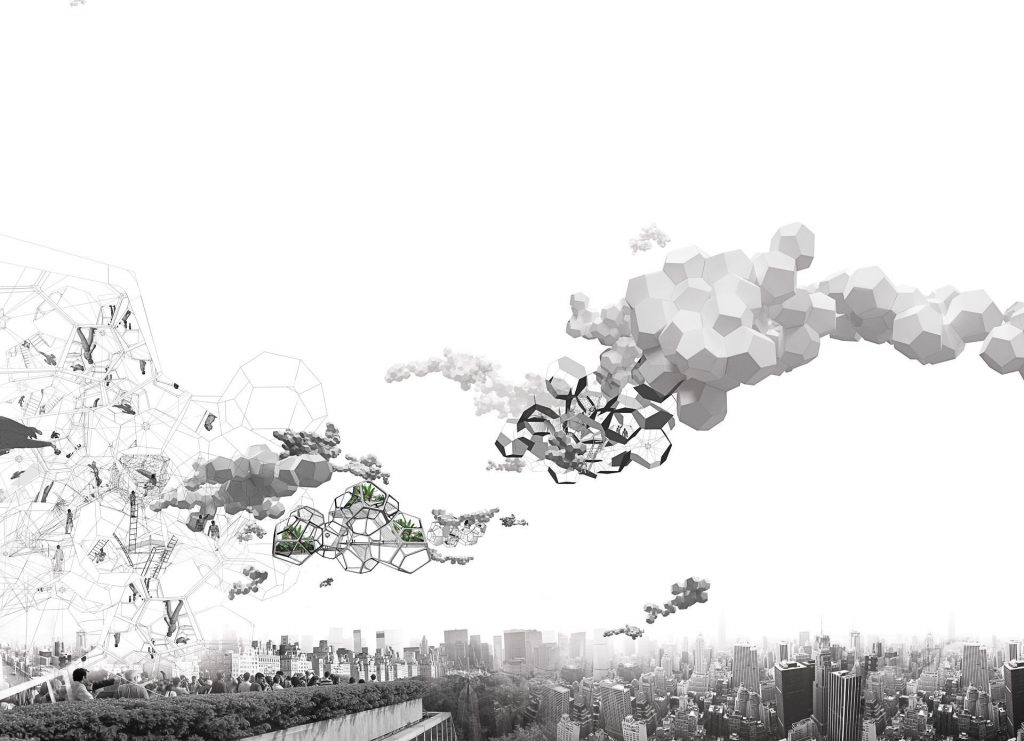
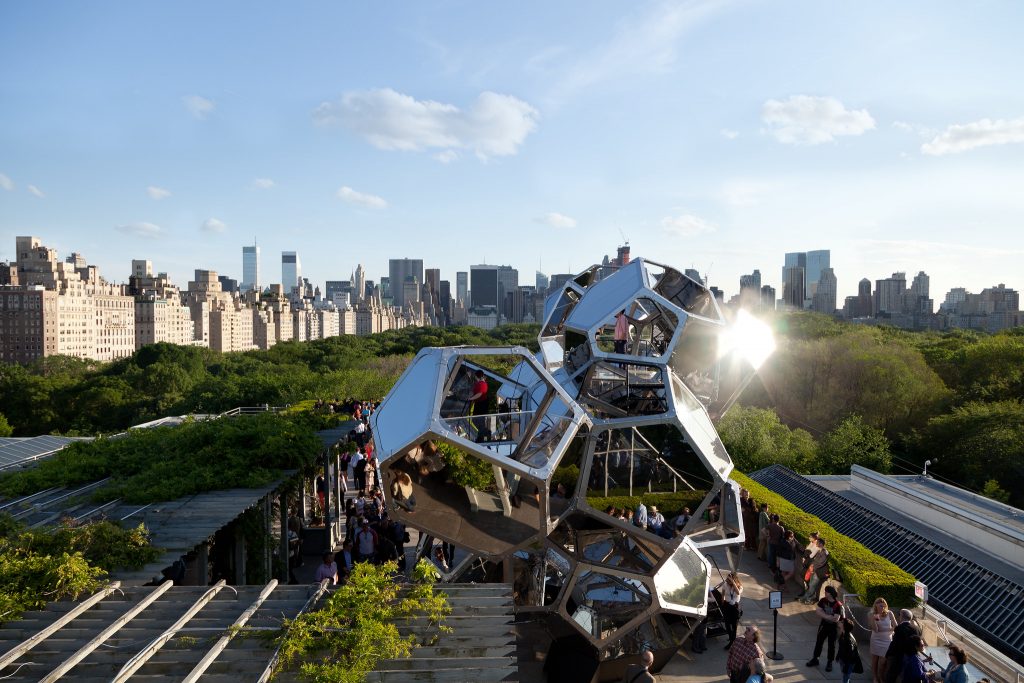
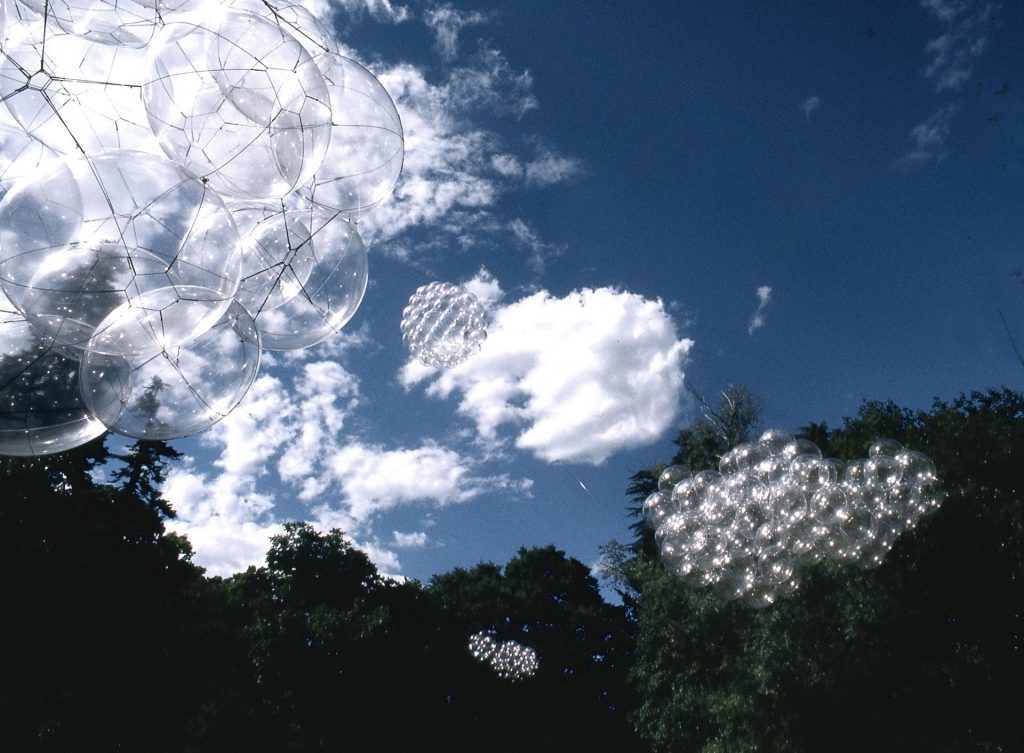
TS: Small is big and big is small … but these two big exhibitions are big … as a thought can be small and big! Cloud Cities/Air Port Cities can come in all sizes and shapes and can form near the ground or high up in the atmosphere. Cloud Cities are inhabitable droplets that are able to elevate and float in the air, or dock on the ground, or orbit in space; thanks to solar energy, they're formed by different collective processes.
Flying gardens are a new public space that can floats just above densely populated cities existing today. "But the universe can be extreme. In the central depths of a black hole, an enormous mass is crushed to a miniscule size. At the moment of the big bang, the whole of the universe erupted from a microscopic nugget whose size makes a grain of sand look colossal. These are realms that are tiny, and yet incredibly massive …" (Brian Greene "The Elegant Universe")
Udo Kittelmann: In my imagination, art museums in the future should increasingly be understood as a place for debating social concerns such as architecture, ecology, economy, and political issues— instead of merely being a place to discuss the aesthetics of art. What is your vision about museums?
TS: We should start talking about the aesthetics and ethics of the economy, social ecology, politics … I think we should learn from the principle of ecology as a system of cohabitation of different cultural areas and understand the need for a principle of cooperation. It is a system based on an entity principle of "networks" (all the living systems communicate amongst themselves and share areas of research); "cycles" (all the living organisms are fed with a continuous flux of substances and energy from their environment in order to survive, and all these organisms produce a surplus that becomes usable for other species. In this way the substance is always in circulation through this network of life); and "partnership" (the exchange of energy and resources in an eco-system is supported by a pervasive cooperation). Life on the planet is supported by the principles of cooperation, partnership, and networking: "diversity" (an ecosystem gains stability through the richness and complexity of its own ecology network. The bigger the biodiversity, the bigger the resistance), "dynamic balance" (an ecosystem is flexible, a network in continuous flux). Its flexibility is the consequence of multiple feedbacks that keep the system in a status of dynamic balance. Not a single variable is maximized; all the variables are floating around their optimal values. (according to Fritjof Capra "Principle of Ecology")
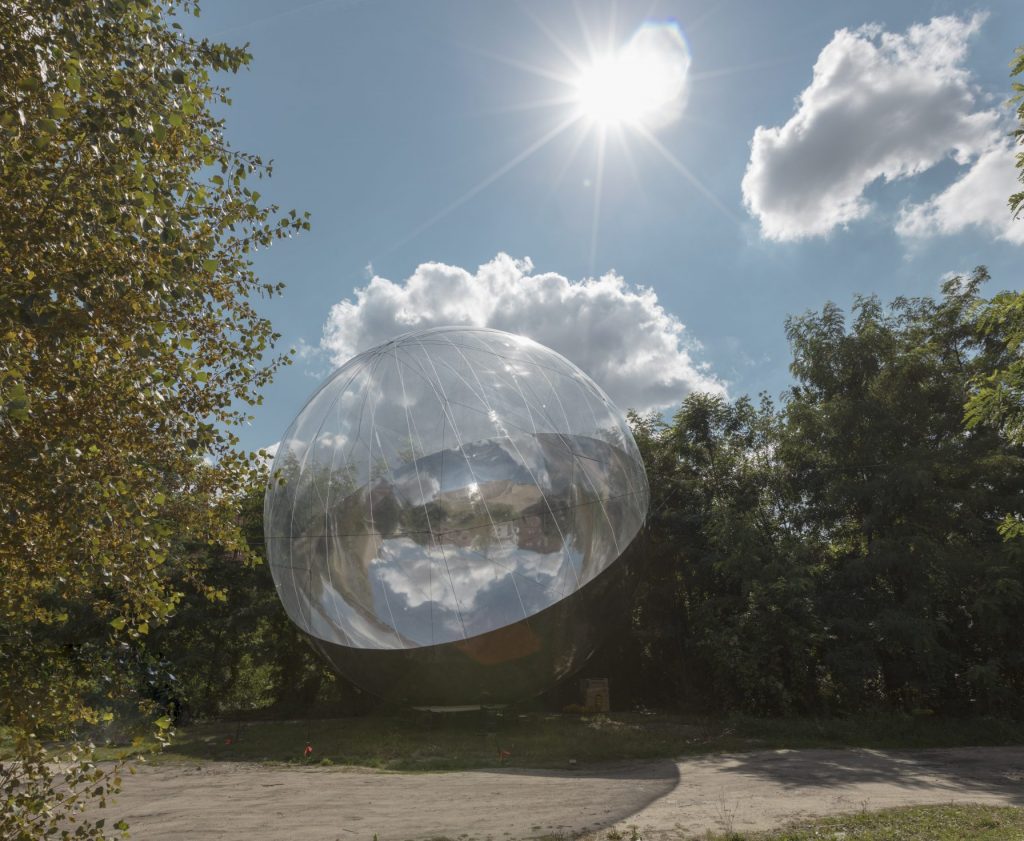
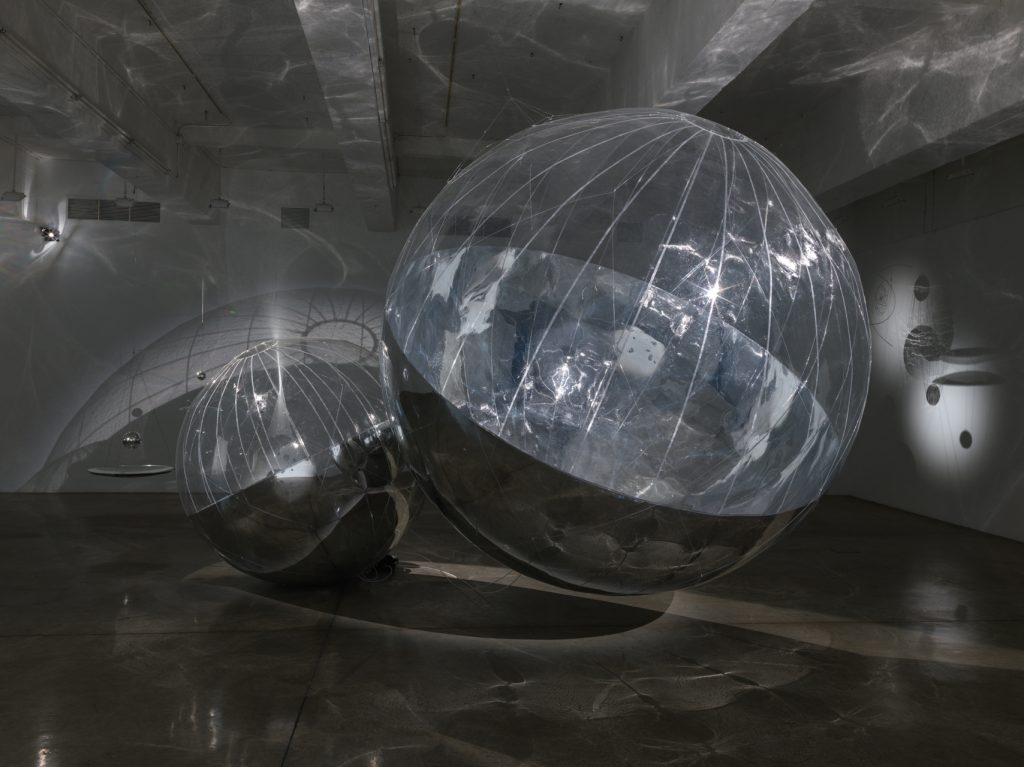
Museo Aero Solar put into discourse so many ideas of how I imagine a possible future museum to be, and many of them are being translated into other flying museums to come, as one of the many future buildings of Cloud City! Let's imagine a flying museum … the idea is easy … Let's say that if all the sphere types exhibited now at Hamburger Bahnhof were enlarged, and each with its own net is connected to one another … each sphere with its own atmosphere as rooms in a museum— these spheres could be arranged depending on the local circumstances, and instead of a traveling exhibition, the museum itself could travel, with less of a carbon footprint since the wind would move the exhibition around the planet :-)The Internet is currently accessible to only one third of the world's population … now some rooms of the floating museums by flying higher, could provide broadband Internet to remote areas using already existing technologies of High Altitude Platforms (HAP). This is a much more cost-effective alternative to the already existing satellite, enabling flood detection, weather and environmental observation, as well as seismic monitoring and disaster management.
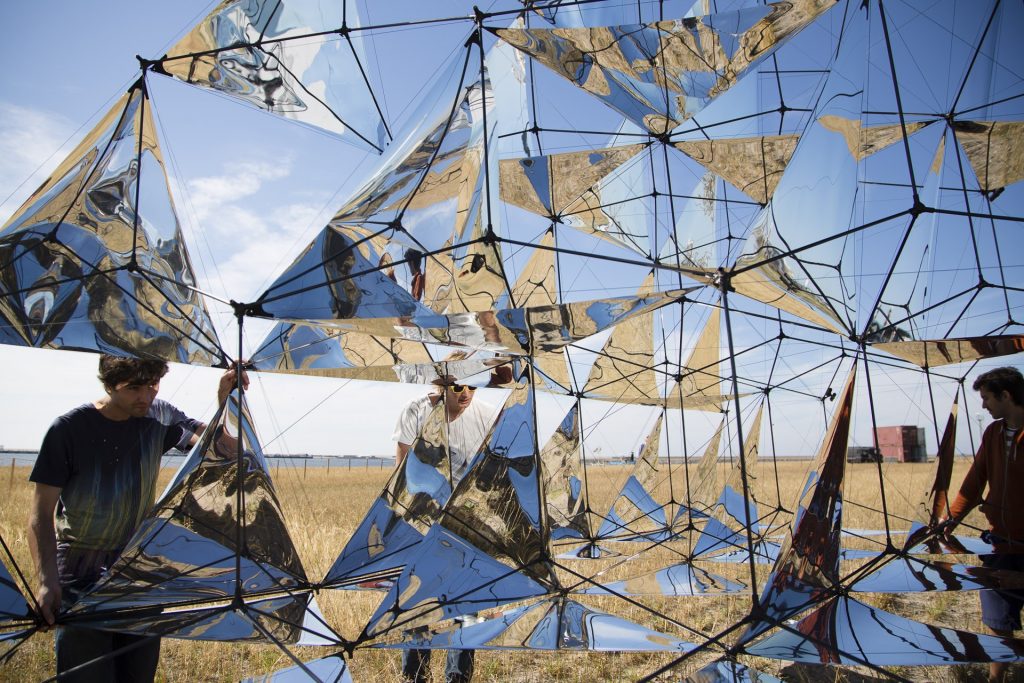
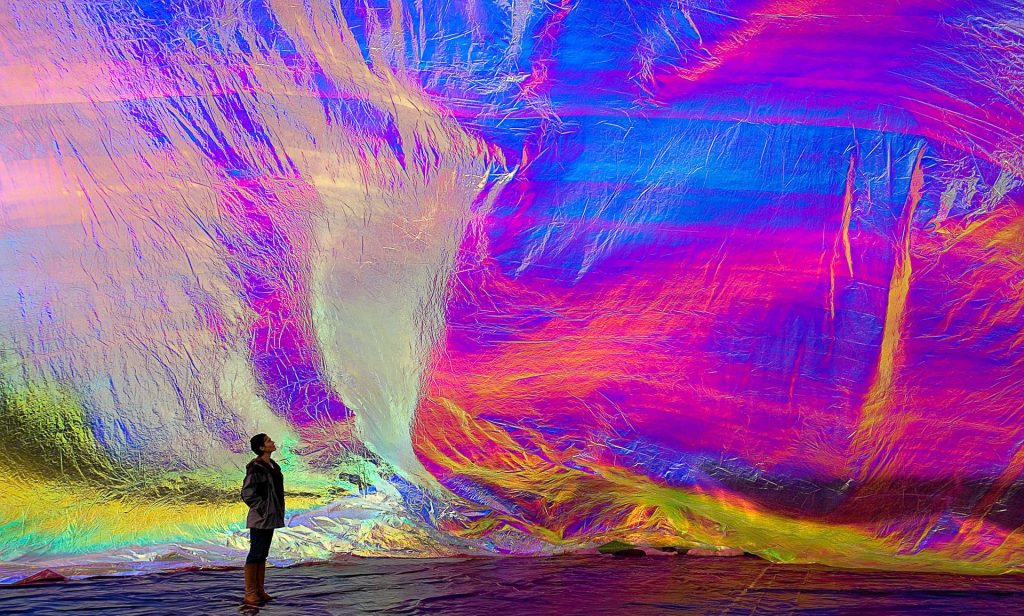
This flying museum, aside from its form and substance, will therefore also act as a receiver of content (a solar flying server). Potentially, each sphere will have a digital surface which can transform the Cloud into a floating open-air cinema elevated at 300 meters above ground that can be viewed from a distance over 20 kilometers—open to interaction from any point on the planet or other Cloud via the Internet. The flying museum will not only be visible and digitally accessible from the outside, but it will also allow people to step inside the floating platform as it is happening in many of these works here. Towards a new digital and physical experience; where data and bytes swarm about Cloud Pixel Cities in and around the stars and galaxies. The flying museum combines a range of new, advanced methods of generating energy. Iridescent flexible solar panels (T. Saraceno N° 20 2008 012 960.5 German utility patent "Iridescent foil form membrane": free sharing) that not only collect direct sunlight, but also concentrate the sun's rays through a partially mirrored surface in a solar cell placed at a focal point, thereby maximizing efficiency (T. Saraceno N° 20 2010 003 130.3 German utility patent "Flexible photovoltaic element": free sharing)Internal solar chimney and wind turbine are among the other methods not only of produce energy but to elevate the structure in the air, a mix between a Kite and a Balloon. The structure is a very lightweight construction composed of 90 % air. Each sphere is built with ETFE foil, which can bear 400 times its own weight, is self-cleaning and completely recyclable while lasting for more than 20 years. ETFE foil has been used in many building structures, including the Eden Project. Energy is also generated by the displacement of air from sphere to sphere as occupants or temperature move about the interconnected spheres. Water can be harvested directly from the humidly of the air with a net and transported while generating extra energy for uses on Earth. A natural ventilation is available during the summer, which can be closed during the winter to maintain the internal heat generated by the sun and its visitors helping the cloud to stay aloft.
At a later stage, each sphere could grow from 300 meters to 1.3 kilometers and more in diameter following the square-cube law that, as a sphere gets bigger, the volume it encloses grows much faster than the volume of the enclosing structure itself. In this case, if the air inside such a sphere was heated even by only one degree more than the outside temperature of its surroundings, the sphere could become airborne. One degree of temperature can be generated not only by the sun but simply by the respiration of its occupants, and the cloud could thus remain elevated all day and night. With the new application of materials and structures (T. Saraceno 47 N° 20 2007 007 724.6 German utility patent "Airborne vehicle": free sharing), the diameter of the spheres proposed by Buckminster Fuller/Sadao for Cloud Nine (up to 1.6 kilometers) can be substantially reduced, proceeding a step further in construction. The temperature can be regulated efficiently thanks to the application of aerogel as a thermal insulation (T. Saraceno N°. 202 06 527.8 German utility patent "Thermal envelope for lighter-than-air vehicle": free sharing). Such a sphere could support a considerable mass, and hence "mini-cities" or airborne towns of thousands of people could be built in this way. Cloud cities of this size should be free- floating and ones of much smaller scale could be used as transportation systems.
While producing something together, the meaning can also be reached together … open to endless curiosity and discovery, growing into collaborative "Wiki Cloud Cities." From cirrocumulus to cirrocumuluscity! A flying solar encourages digital and physical dialogues, providing feedback to enable a more quail/quant process of communication capable of imagining more elastic and dynamic border rules (political, geographical, etc.) for a new space/cyberspace. On the air … built by a network of people regardless of nationality, continent, cloud citizenship, a new territory in the air, a three-dimensional era of social engagement. From "Cloud Computing" to Cloud Cities, collective atmospheres in a multi-purpose disciplinary, light is more, meaning less weight equals less energy consumption, towards a new aerial lifestyle, towards an ecology of mind, a social ecology and environmental ecology. WWW stands for WIDER World Web.
UK: All these comments remind me of Saul Bellow's main protagonist in "Dangling Man" who struggles with his world and its realities. Man has always been aiming further and higher, to reach into spheres far away from our world. Just think of Zeus' Olympia as his mythological home, early visualizations of the Tower of Babyl, or the ambition to build cathedrals higher and higher in order to get closer to divine spheres: assuming that your utopian ideas could one day become reality, couldn't your work be understood as an escape from our world?
TS: Yes and no … sometimes you can be there, but your mind is somewhere else, multiple journeys in multiple dimensions. Plug into the video game "Second Life," virtual, augmented reality, it seems to be a recursive state of alternative-state-ion … but coming back to the Earth … well, yes, I hope to extend this planetary feeling of belonging. Earth still seems sometimes to be a cool planet, and yet the journey I am proposing is to a certain extent back in time … coming back from the moon also helps us to be more conscious of the way we travel there and here (4 % of all CO2 is produced by airplanes)—planetary protection is out there now, as a WWF of the cosmos. So then the journey I am proposing is: yes, let's upgrade spaceship Earth with new solar engines; airship balloons existed for a while and need to come back … back to an inner outer space, moving slower on a faster consciousness. It is no longer about reaching the stars at any costs, but more importantly the steps necessary to keep traveling … and on a more intimate level, I honestly would love to have a flying studio. When the grey sky of Berlin invades this exhibition hall, remember that just a few kilometers above your head (and not nearly as many kilometers as to the sunny weather in …)—not very far away— just about the distance from Mitte to Kreuzberg but vertically, you will find a full sunshiny day with clear blue skies above you …
UK: I have to admit that after learning more about your ideas and seeing your work, I ask myself to what extent your work is actually to be considered art in terms of the "fine arts" as opposed to sociological and philosophical studies that find their expression in three-dimensional appearance. What is your view on this?
TS: I like to keep adding layers or nodes in a web of relations of diverse understanding, more consciousness of the unconscious. If my works continue to make me and others more curious, then there is more dialogue, and even more real/ity will be there … don't forget also to talk with your plants and dogs.
Actor Network Theory is a disparate family of material-semiotic tools, sensibilities, and methods of analysis that treat everything in the social and natural worlds as a continuously generated effect of the webs of relations which they are located within. It assumes that nothing has reality or form outside the enactment of those relations. Its studies explore and characterize the webs and the practices that carry them. Like other material-semiotic approaches, the actor network approach thus describes the enactment of materially and discursively heterogeneous relations that produce and reshuffle all kinds of actors including objects, subjects, human beings, machines, animals, "nature," ideas, organizations, inequalities, scale and sizes, and geographical arrangements. (according to Prof. John Law)
UK: Are you preoccupied with the question of how the world will look 100 years from now? I ask this especially in regard to our experiences in recent history, in which our political, economical, and ecological models have proven to be faulty.
TS: I receive an automatic text message on my cell phone every day at 23:45 that simply reads "tomorrow"—it started as a mistake, but I decided to keep it. Maybe it is the moment right before you fall asleep, when yesterday, today, and tomorrow … I am in favor of saying that we are currently in the year 13.73 ± 0.12 billion, listed as the age of the universe, rather than 2011 … I like the imprecision … ± 12 … To understand the age and evolution of the Universe and where humans fit into it, imagine that the entire history of the Universe is compressed into one year, with the Big Bang occurring on the first second of 1 January, and today being the last second of 31 December. If we imagine the Universe as a single year, each month equals around a billion years, which means the cosmic microwave background radiation remnant formed in January. Our Galaxy formed around 1 May, the solar system around 9 September, and Earth around 14 September. The first signs of life on Earth appeared around 25 September. Dinosaurs appeared on 24 December but by 29 December they became extinct. All recorded human history takes place on 31 December, most of which from the first cave paintings discovered in Europe to the present day occurred in the final minute. (according to Carl Sagan)
Maybe I can answer it very simply: I have a few friends I can take care of, I know how they feel, how they are, and independently of any distributed and available technology, we manage to keep in touch. The truth is that even though now I can call for free with Skype, I neither call more nor less than before. The great changes are in our minds, in our capability to share and care more. I like to think that if I managed to have one more friend each year, then that's a great goal. What if all 7 billion people on Earth would manage to do this? It is so easy, but at the same time so difficult. Damn human egoism, how to share more values? … I remain positive that quantity and quality might be able to improve also … and I hope this answers your question of politics, ecology, and economic systems on a larger scale, as well … From the very small to the very big and back again … no big no small …HUO: The future is …?
TS: Beautiful.
The interview was held via email during the summer months of 2011; the interviewers sent their collected questions to the artist, who in turn answered them.
Seite 3/3