on space time foam / curated by andrea lissoni : hangar bicocca di milano
from 26.10.2012 to 03.02.2013
tomás saraceno :/ on space time foam ++ gallery :/ on the roof: cloud city ++ gallery :/ cloud cities :/ contact :/ imprint
.... on planet earth ... now between frankfurt and berlin
studio tomás saraceno
Hohenstaufenstrasse 13-25
60327 Frankfurt am Main
Germany
Invalidenstrasse 50 - 51
10557 Berlin
Germany
Contact:
Tanya Bonakdar
Andersen's Contemporary Art
Pinksummer Contemporary Art
Esther Schipper
imprint
© 2011 Tomás Saraceno All rights reserved.
The copyright for any material published on this website is reserved.
Any duplication or use of objects such as images, videos, sound files, diagrams and texts is not permitted without Tomás Saraceno's written agreement.
Tomás Saraceno is not responsible for any contents linked or referred to from his website.
The contents will not be checked and are subject to control and liability of the responsible
provider. The use of published postal addresses, telephone or fax numbers and
email addresses for marketing purposes is prohibited.
.... on planet earth ... now between frankfurt and berlin
studio tomás saraceno
Hohenstaufenstrasse 13-25
60327 Frankfurt am Main
Germany
Invalidenstrasse 50 - 51
10557 Berlin
Germany
Contact:
Tanya Bonakdar
Andersen's Contemporary Art
Pinksummer Contemporary Art
Esther Schipper
imprint
© 2011 Tomás Saraceno All rights reserved.
The copyright for any material published on this website is reserved. Any duplication or use of objects such as images, videos, sound files, diagrams and texts is not permitted without Tomás Saraceno's written agreement.
Tomás Saraceno is not responsible for any contents linked or referred to from his website. The contents will not be checked and are subject to control and liability of the responsible provider. The use of published postal addresses, telephone or fax numbers and email addresses for marketing purposes is prohibited.
- http://www.domusweb.it/en/interview/where-is-everybody/
- On Space Time Foam / By Andrea Lissoni
- close the text
-
on space time foam
by andrea lissoni
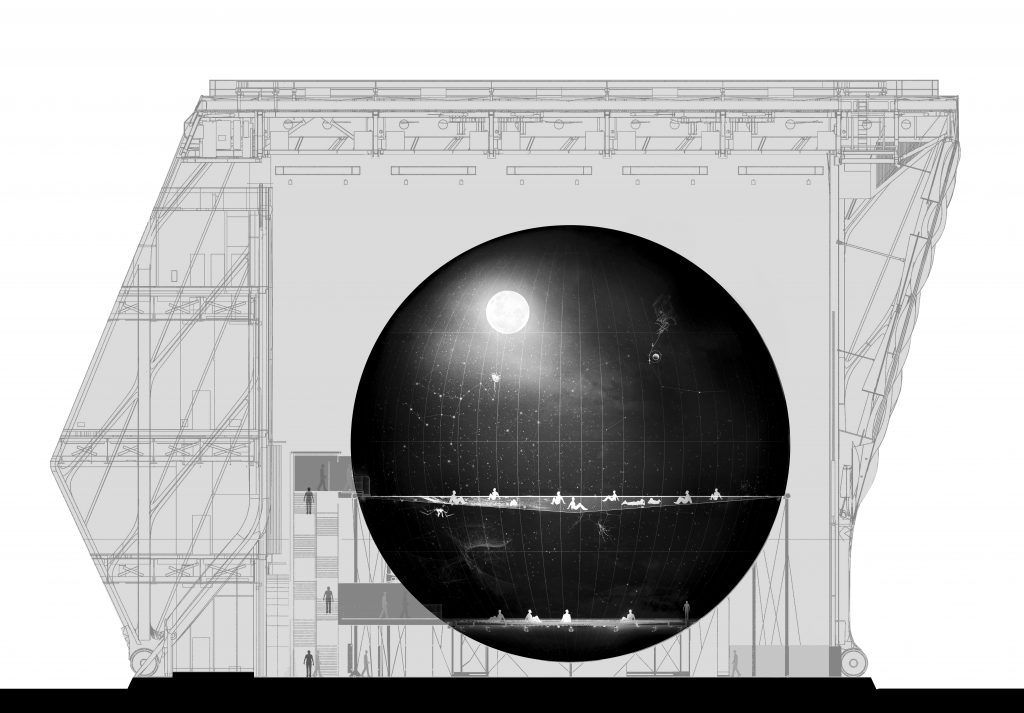
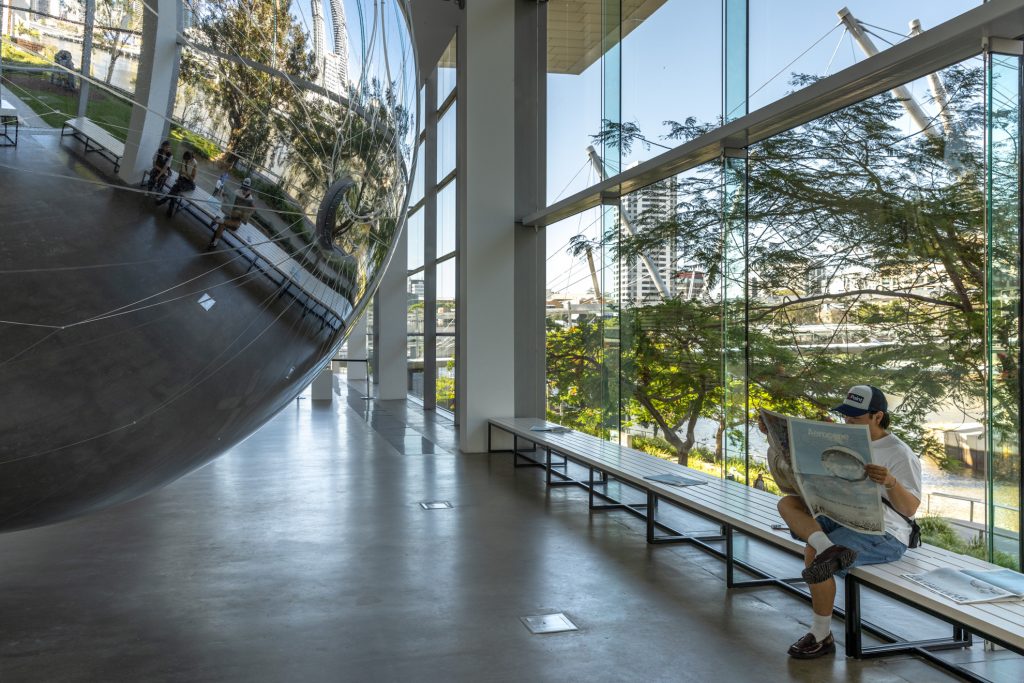
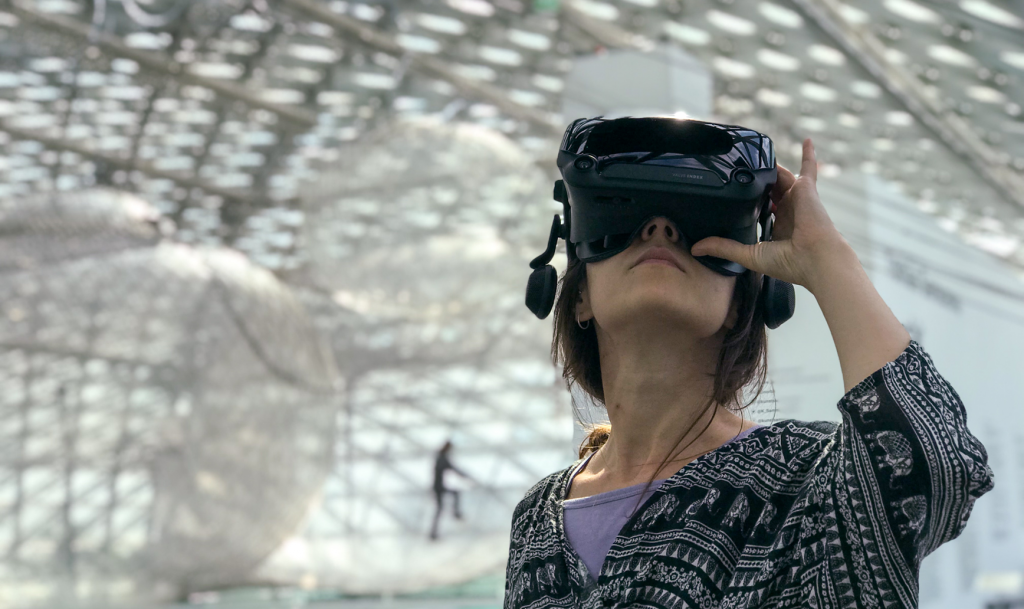
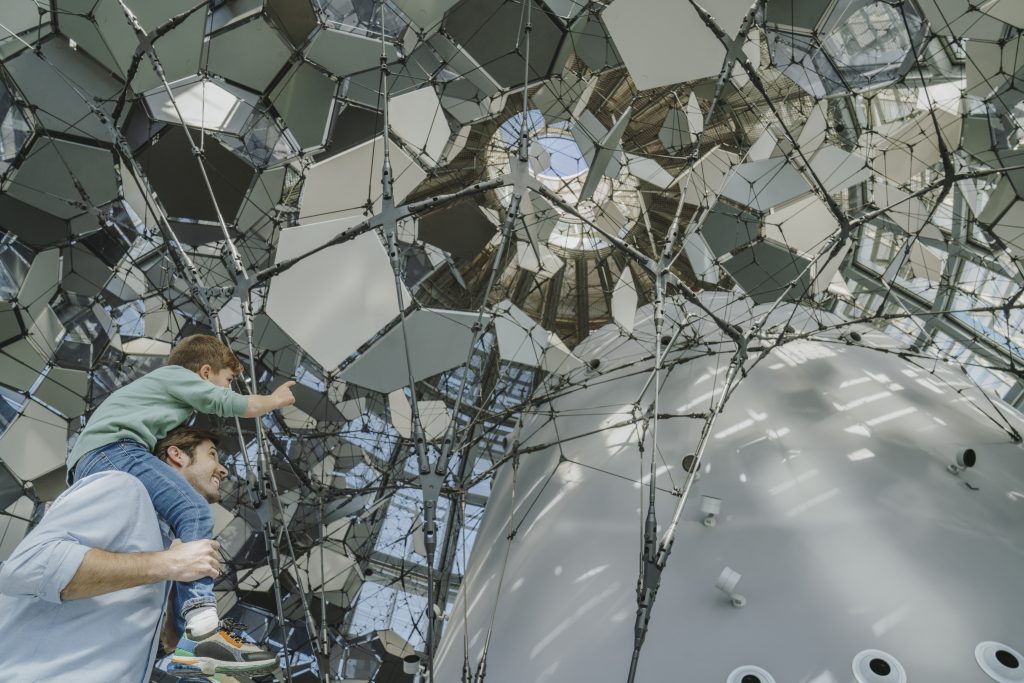
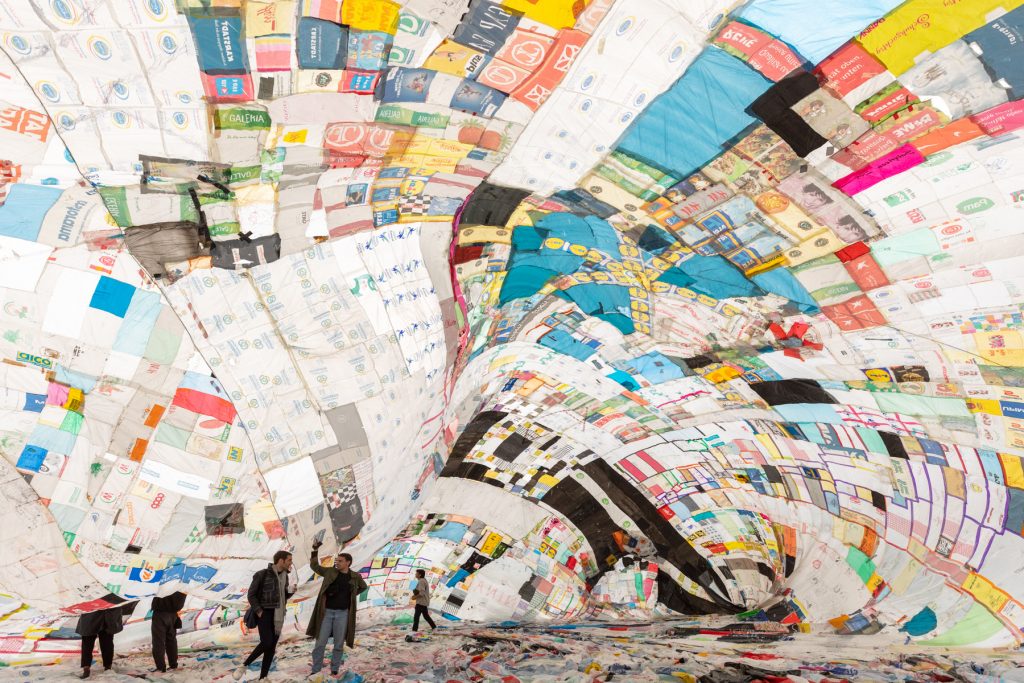
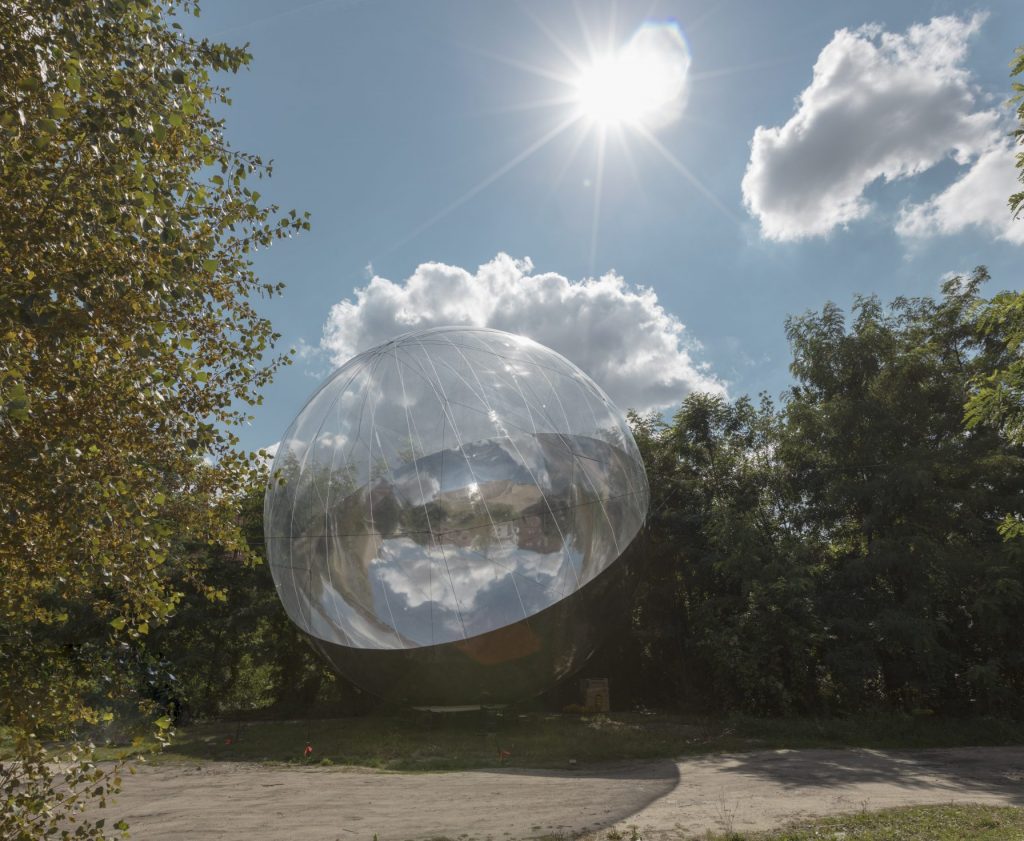
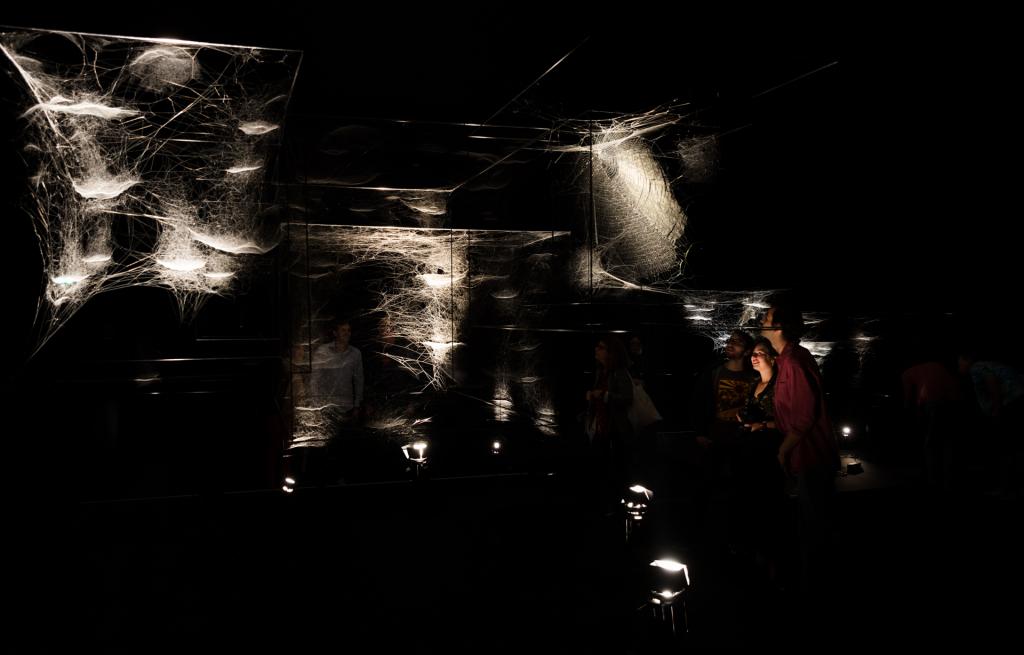
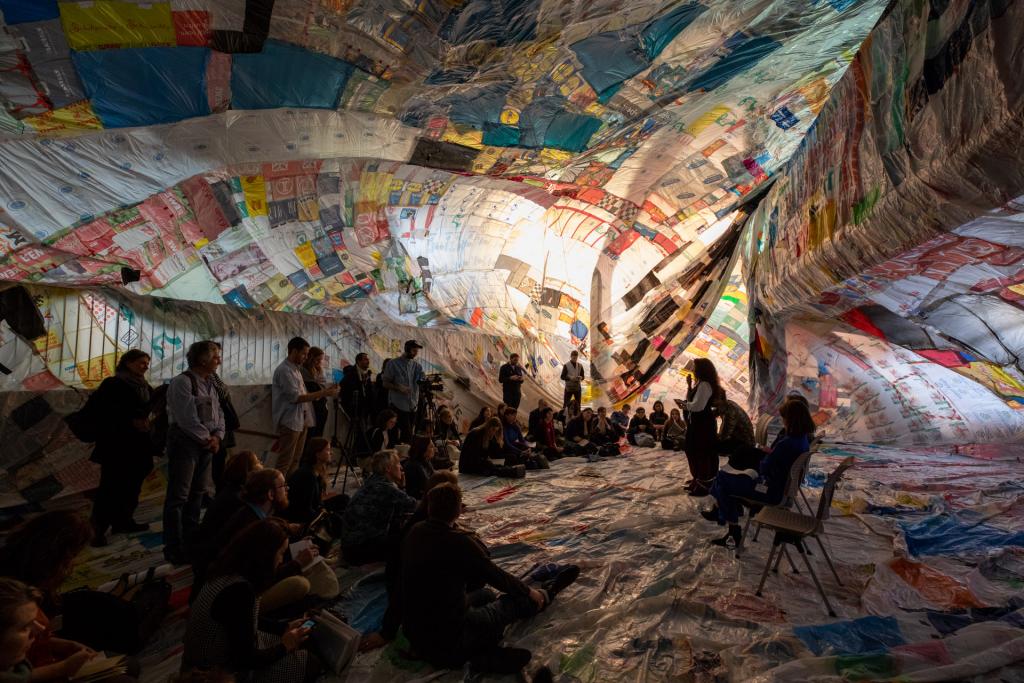
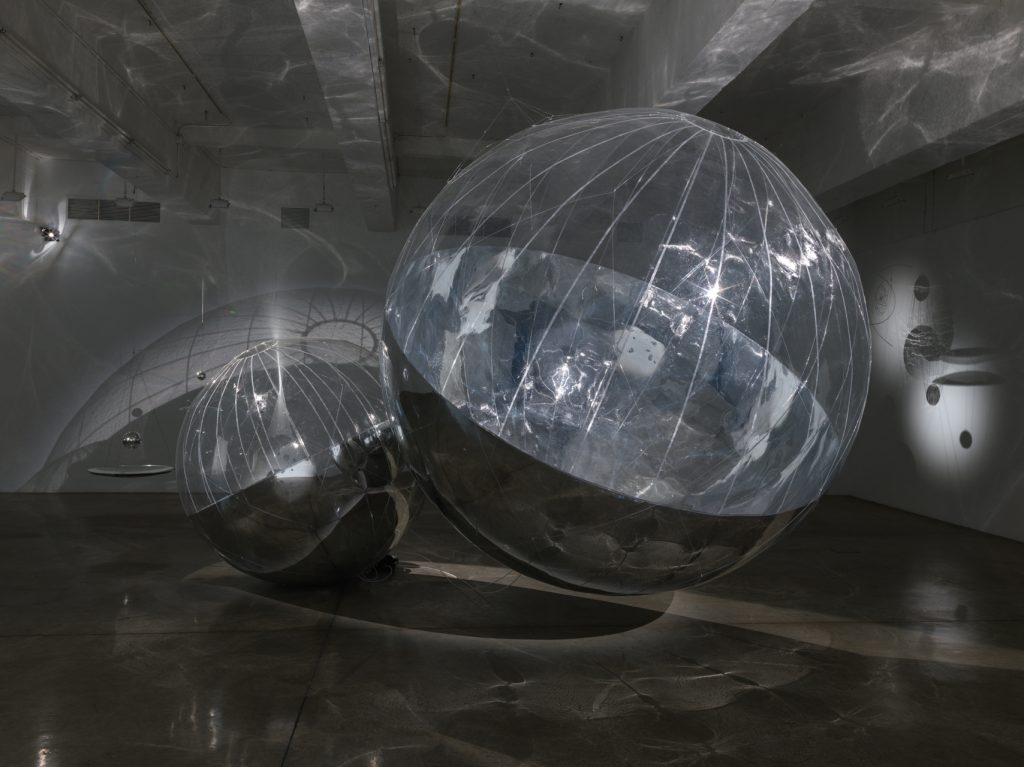
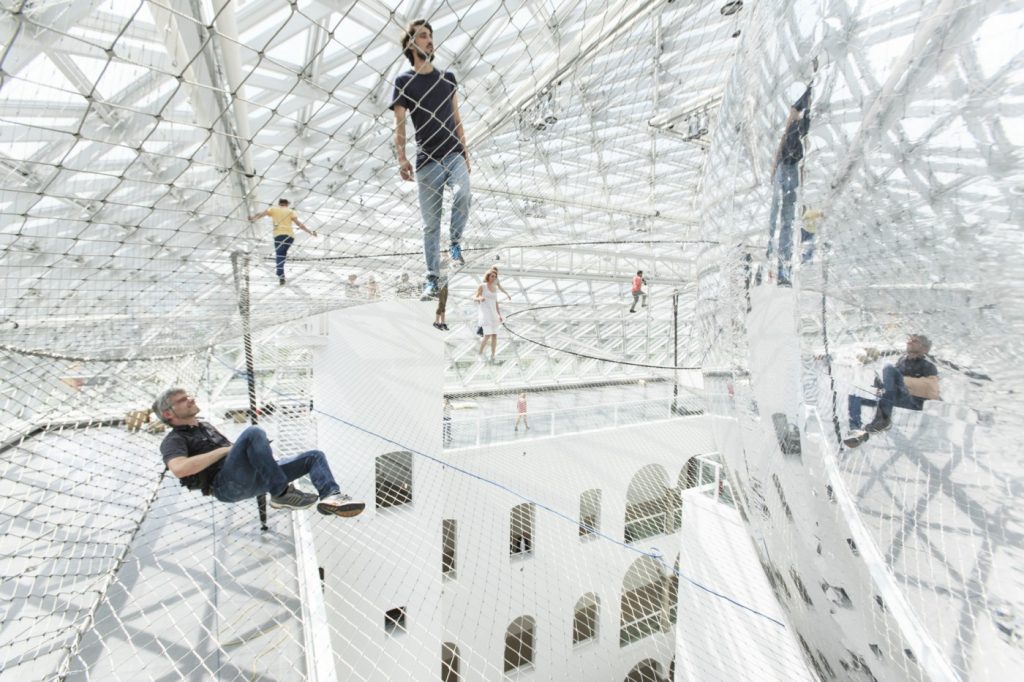
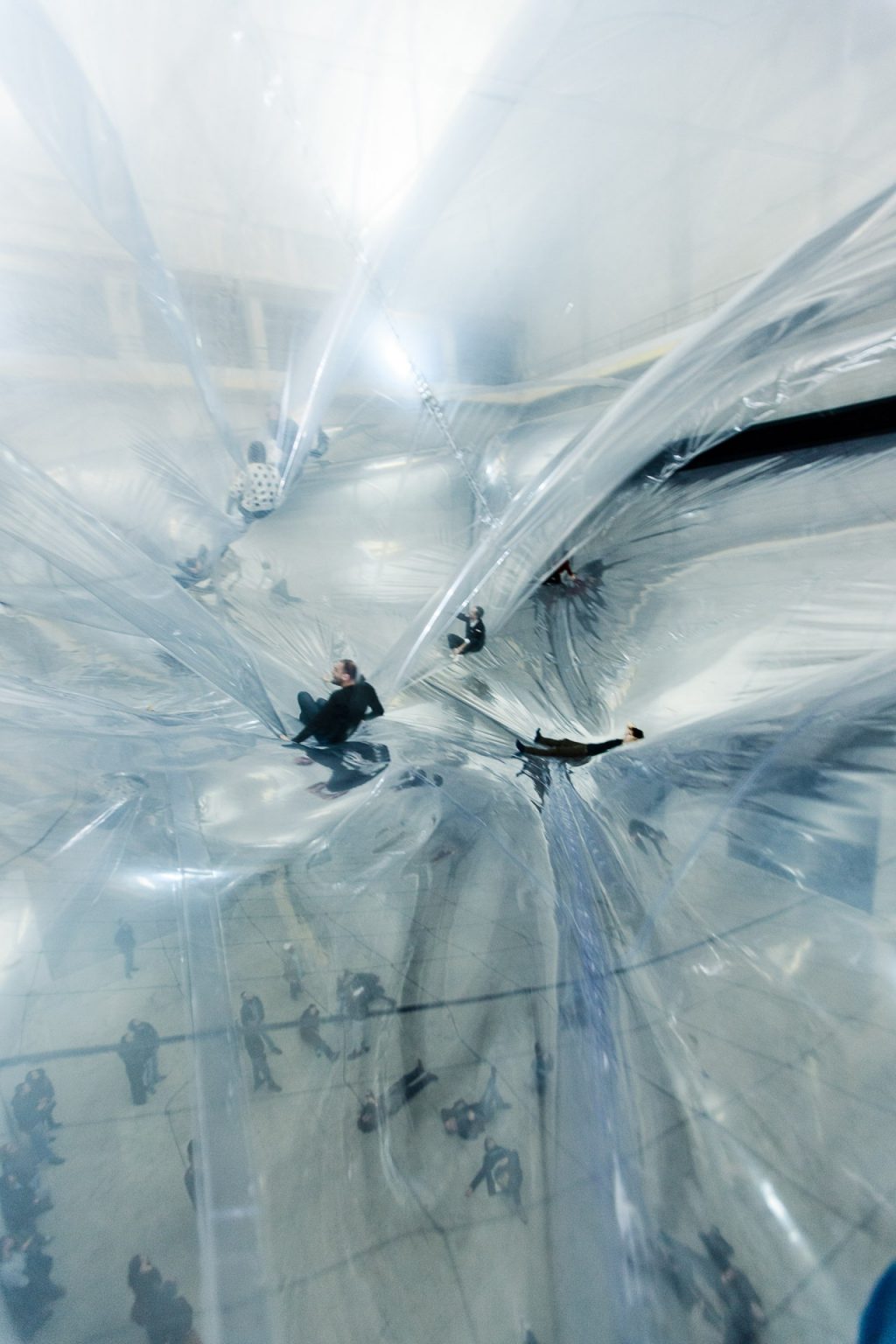
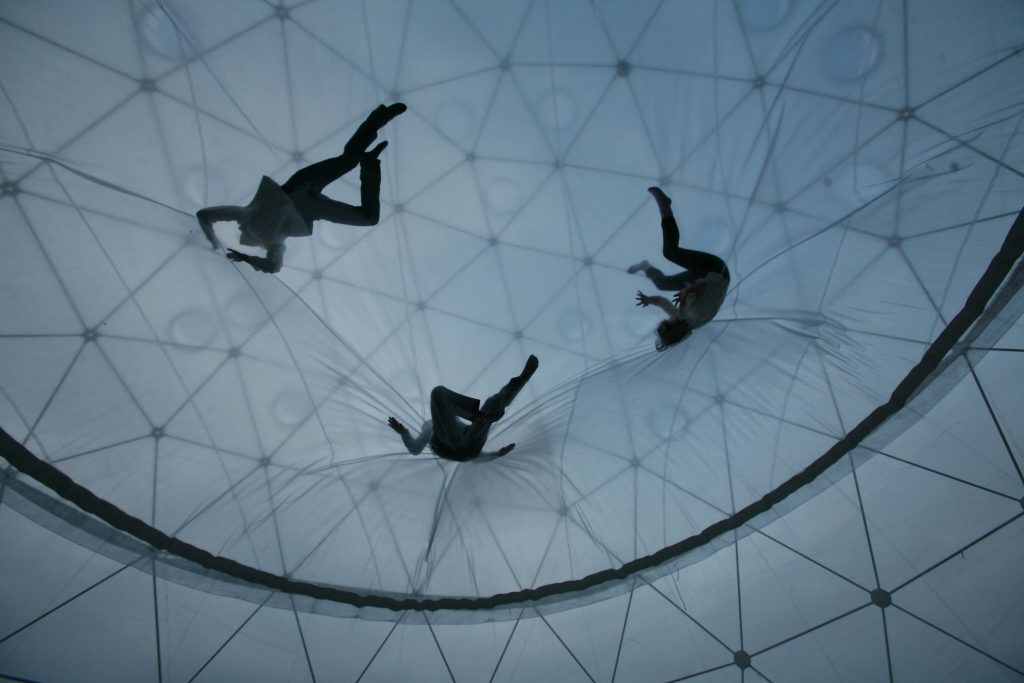
When Tomás Saraceno first visited the “Cubo” space at HangarBicocca, he imagined that it could hold a huge sphere suspended mid-air entirely with cables.The project evolved rapidly, then contemplating two spheres and, little by little, no trace of the original idea was left:the “Cubo” was ready to house the largest inflatable surface accessible to the public that the artist had ever made.The project continued to change, finally acquiring its definitive appearance, that of a transparent membrane hooked to the walls of the “Cubo”, sustained by air and accessible on three levels.
The title also changed and instead of the original idea, Airship, it became On Space Time Foam, a definition that sounds familiar yet distant, like the scientific concepts we study and read carefully but that – in time – seem to lie suspended in a remote area of our memory.
Saraceno often launches extremely intriguing and graspable ideas that can be interpreted personally as desired, thanks to their great evocative power.Therefore, the most obvious question to ask was why he chose the title On Space Time Foam, above and beyond its specific reference to quantum physics and theories on the evolution of the universe.
Tomás spoke to us about the membranes of kettledrums and about people crossing them; about a space in which interior and exterior react to each other; about the “Cubo” at HangarBicocca like a huge musical instrument that vibrates, crossed by the flow of air that is circulating.And he gave us three images to help us understand what he was talking about.He sent us a series of videos in which people from all walks of life (teenagers, sound engineers, dubstep fanatics, scientists and enthusiasts of all kinds) make a bowl of cornmeal gruel dance – at various frequencies – on top of overturned speakers.The sound vibration seems to make flight possible, and time seems to shrink and expand before our very eyes. On Space Time Foam becomes an impeccable, astonishing and entertaining experiment.Amorphous little beings swarm about and rejoice to the beat of music; some take off and seem to soar, contradicting the Newtonian laws of physics.
Saraceno then suggested the image of the taut drumhead, in which everything has repercussions, as if it were a huge ecosystem of balanced relationships.
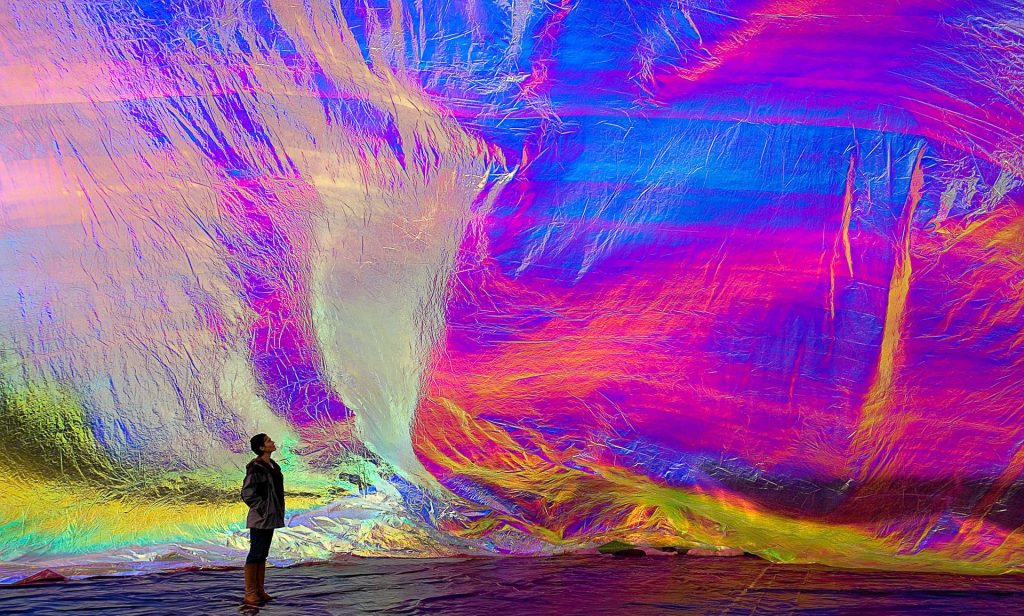
Lastly, changing perspective entirely, he evoked Yves Klein’s obsession with air and proposed On Space Time Foam as a work made 99% of air:air is the material, the medium and the message.The membrane vibrates like a kettledrum thanks to the air that inhabits the space of the “Cubo”.In the space-time of the work, even a nonverbal language can emerge, because what is experienced goes beyond any form of description or narration.
Working with Saraceno means travelling the path of an artist who integrates artistic and scientific research with a transdisciplinary, collaborative and experimental approach, doing this in dialogue and continuity with an important artistic and historical tradition founded in our territory in the early 1960s.
On Space Time Foam dramatically expands Saraceno’s work.On the one hand, it underscores and amplifies his heterodox world of reference, but at the same time it crosses spatial, temporal and conceptual limits and boundaries that go far beyond the work itself.
On Space Time Foam overturns the impositions and modernist hierarchies of sculpture, starting with the very materials that are used.Indeed, it does not mark space, but “is” space; it seems transparent, light and entirely visible, but it is also changeable and, inevitably, very heavy.It is an installation that incorporates the space for which it was designed, altering its form and function, and it “happens” only upon activating the dual opportunity of being observed from below and accessed from above.It is monumental, but it does not bear witness to something memorable that occurred in the past.Instead, it strives to be a place where something will happen in the future.
The relationship with the public (and among the public) constitutes the work; what it offers – but also demands at the same time – is that visitors acquire not only a position but also a form of behaviour and interaction.In this sense, On Space Time Foam allows us to gauge ourselves against it, but it can also be crossed physically and experienced.
Any entertaining elementsare certainly not part of its characteristics but, rather, an option.This must be viewed as an aspect triggered by the way each person uses and relates to it.On Space Time Foam permits the straightforward, classic and potentially contemplative conditions of vision, but also the experience of the dynamics of relations.One can crawl on all fours, slither, sink down and try to assume aposition individually and with respect to the others around him, above and below.Since the surface is soft and unstable, one is necessarily involved in a game of mutual dependence.
We have gone from the Airship of the original title, which expressed the desire for a hypothetical journey in a dirigible temporarily suspended in HangarBicocca, to the reality of a space-time-foam in which roles, functions and possibilities are called into question and are open to any hypothesis of the eruption of an unforeseen event.
Saraceno imagines forms on a large scale that, from the very moment they are conceived and shared, involve and influence everyone.
Ultimately, On Space Time Foam opens up the opportunity for representation and encounter. It is the demonstration of the potential of art:the form is strange, and is certainly not spectacular or revolutionary.It does not produce an event in itself and can never be photographed in its entirety.Entering it does not spark enchantment or sudden revelations, but as a whole it creates experience.
When Saraceno flopped onto On Space Time Foam shortly before leaving the work to the public, he indubitably didn’t recall the first time he saw the “Cubo” at HangarBicocca from the top of the gallery, which he climbed at his own risk.Looking at the people below him, he must have thought that the work was inevitably open to the future.And it has only just begun.
- read less ....
- Tomás Saraceno is the inaugural Visiting Artist at MIT’s new Center for Art, Science & Technology
- some experiments in art and politics/ bruno latour
- close the text
-
some experiments in art and politics
bruno latour
The word "network" has become a ubiquitous designation for technical infrastructures, social relations, geopolitics, mafias, and, of course, our new life online.1 But networks, in the way they are usually drawn, have the great visual defect of being "anemic" and "anorexic," in the words of philosopher Peter Sloterdijk, who has devised a philosophy of spheres and envelopes.2 Unlike networks, spheres are not anemic, not just points and links, but complex ecosystems in which forms of life define their "immunity" by devising protective walls and inventing elaborate systems of air conditioning. Inside those artificial spheres of existence, through a process Sloterdijk calls "anthropotechnics," humans are born and raised. The two concepts of networks and spheres are clearly in contradistinction to one another: while networks are good at describing long-distance and unexpected connections starting from local points, spheres are useful for describing local, fragile, and complex "atmospheric conditions"— another of Sloterdijk's terms. Networks are good at stressing edges and movements; spheres at highlighting envelopes and wombs.
Of course, both notions are indispensable for registering the originality of what is called "globalization," an empty term that is unable to define from which localities, and through which connections, the "global" is assumed to act. Most people who enjoy speaking of the "global world" live in narrow, provincial confines with few connections to other equally provincial abodes in far away places. Academia is one case. So is Wall Street. One thing is certain: the globalized world has no "globe" inside which it could reside. As for Gaia, the goddess of the Earth, we seem to have great difficulty housing her inside our global view, and even more difficulty housing ourselves inside her complex cybernetic feedbacks. It is the globe that is most absent in the era of globalization. Bad luck: when we had a globe during the classical age of discoveries and empire, there was no globalization; and now that we have to absorb truly global problems…
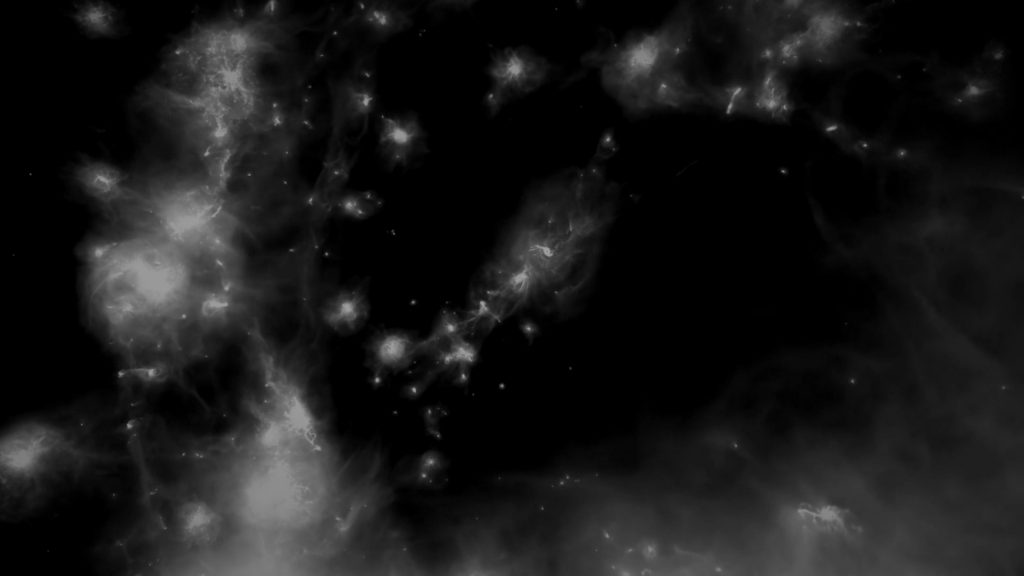
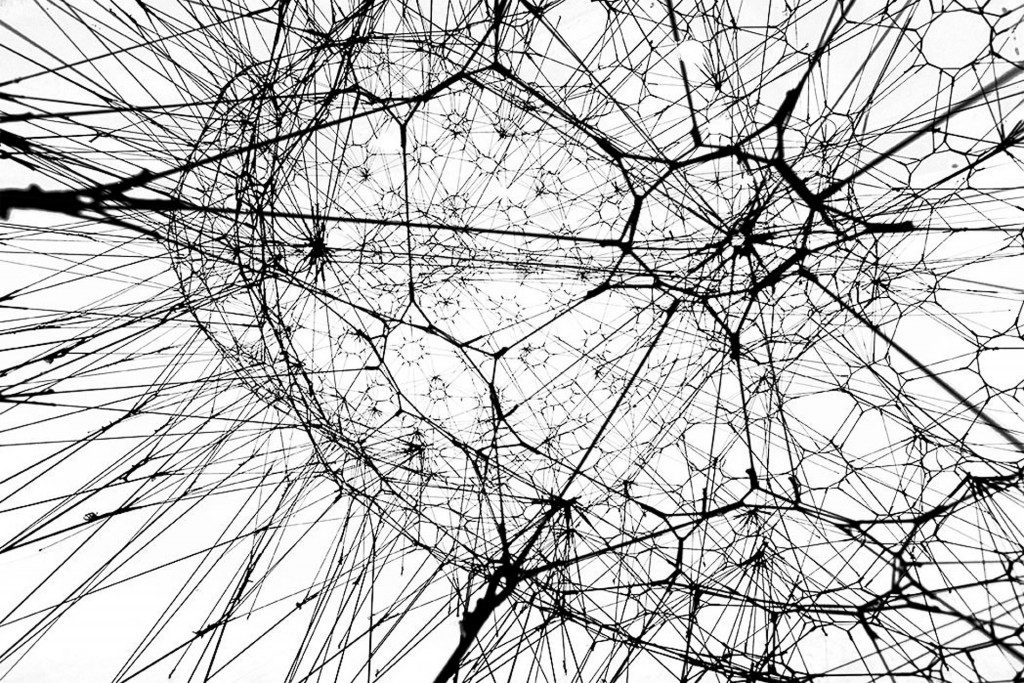
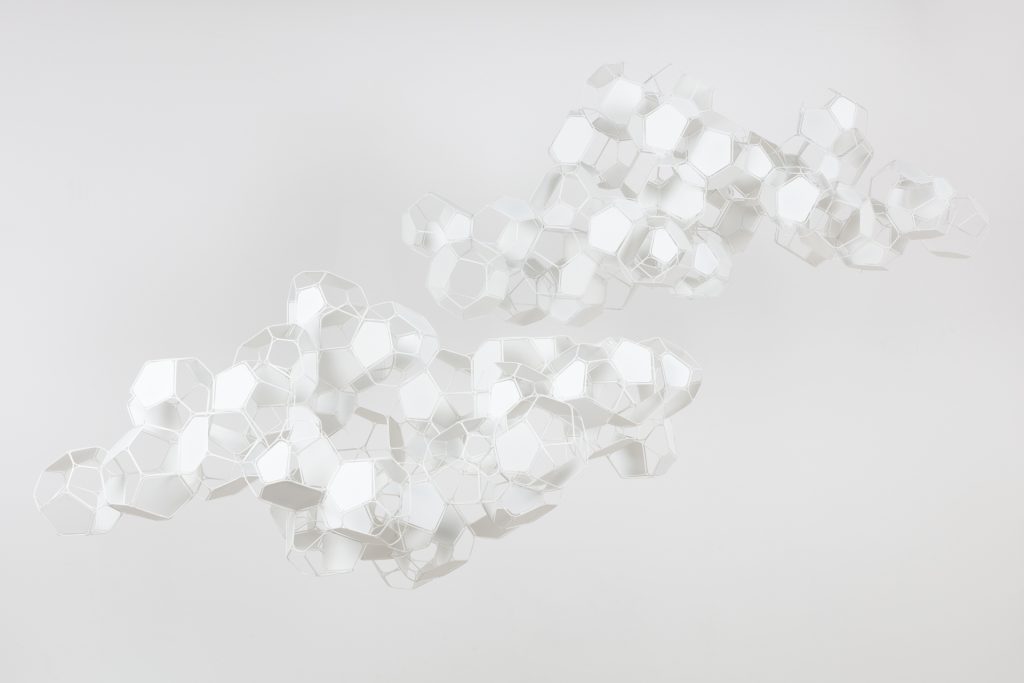
1. saraceno's galaxies forming along filaments
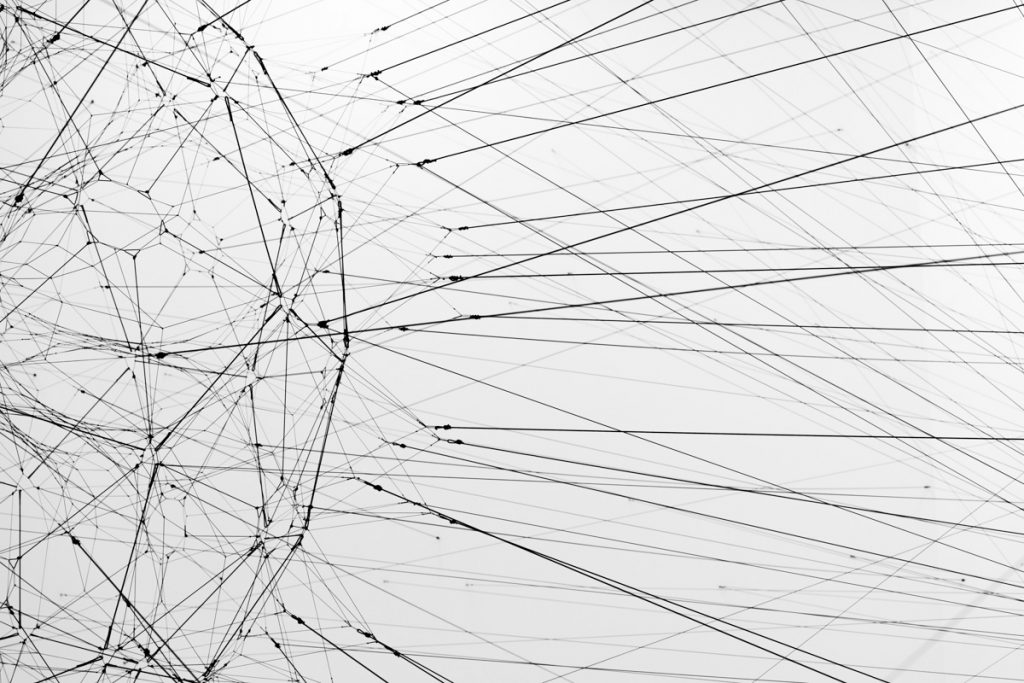
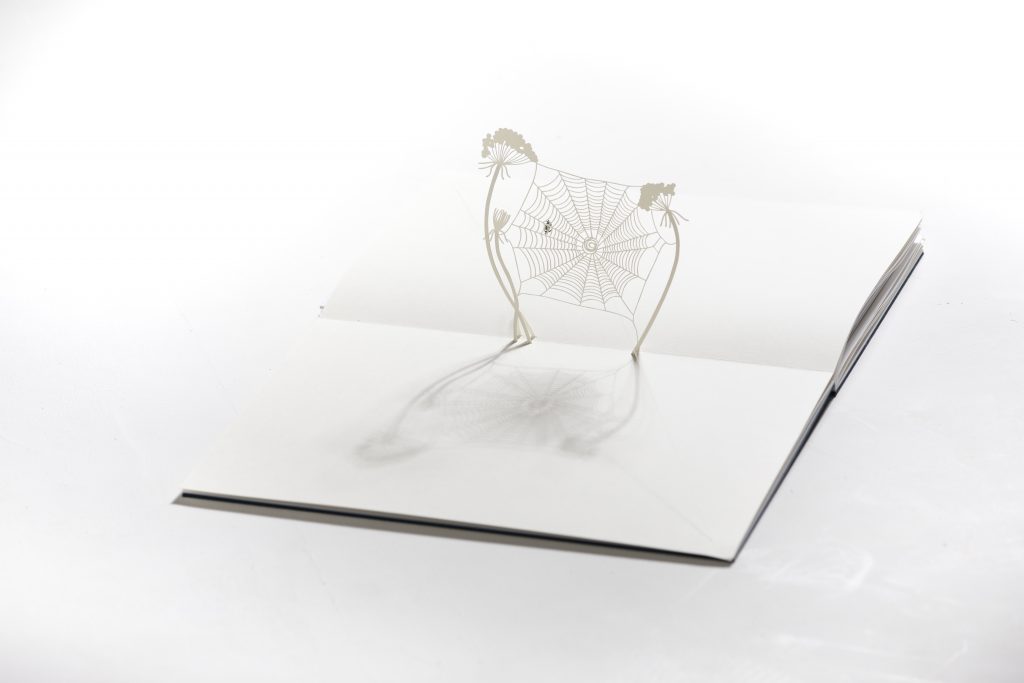
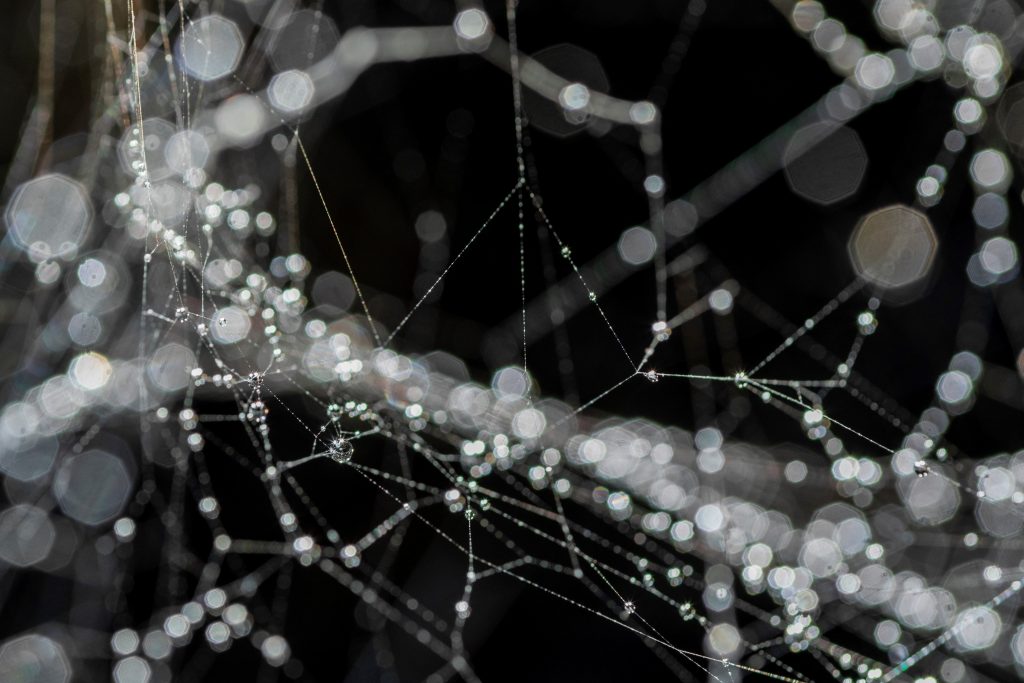
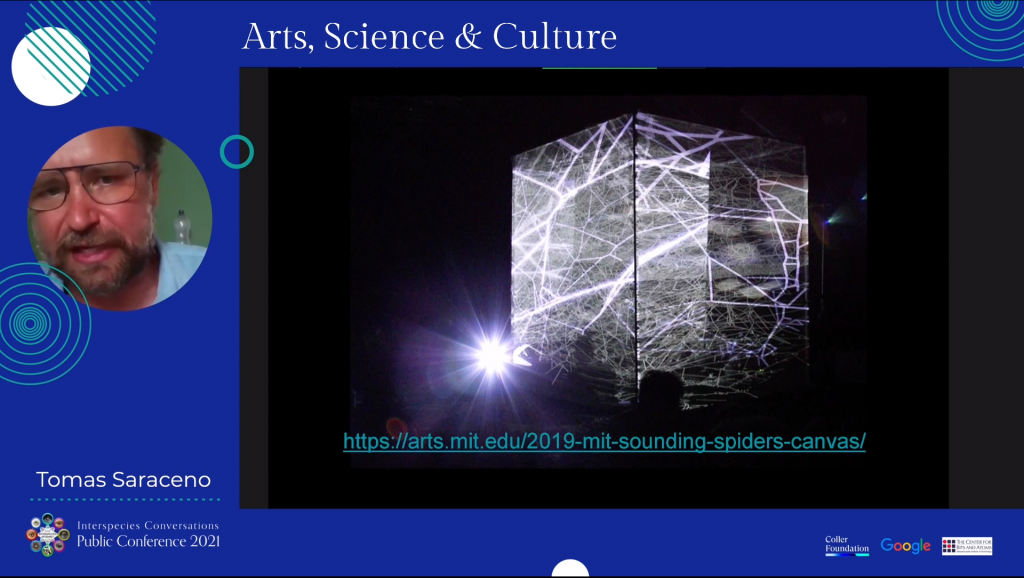
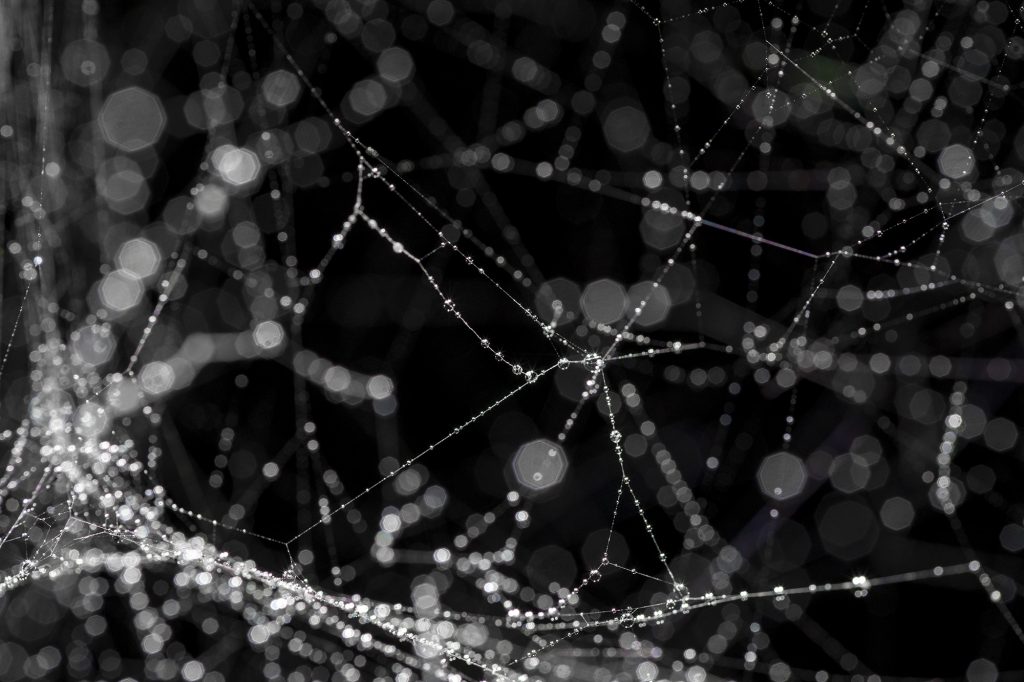
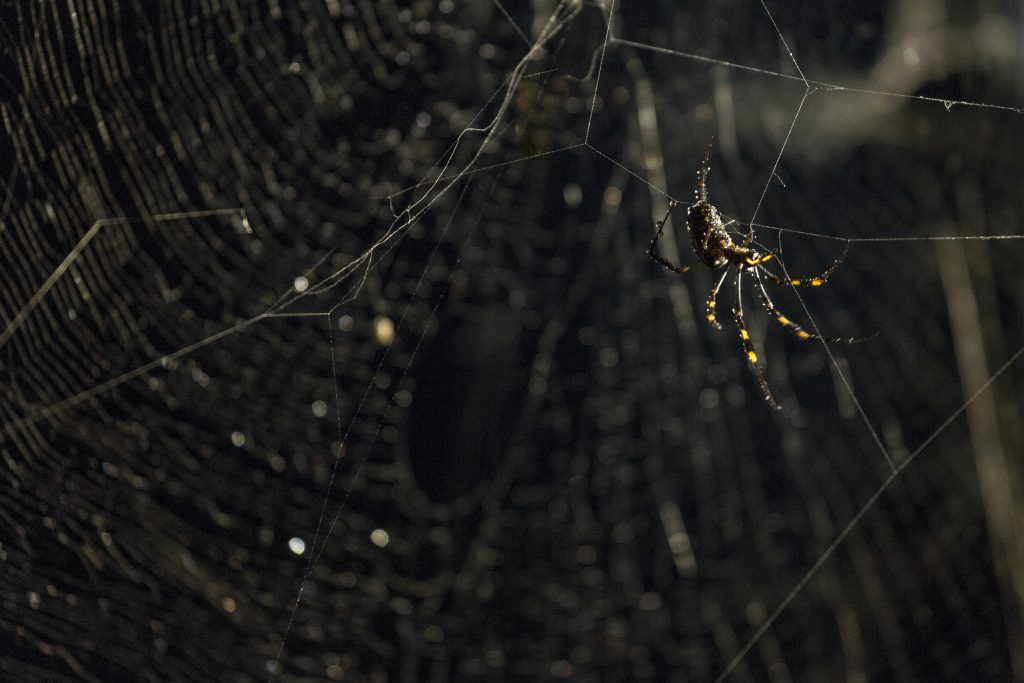
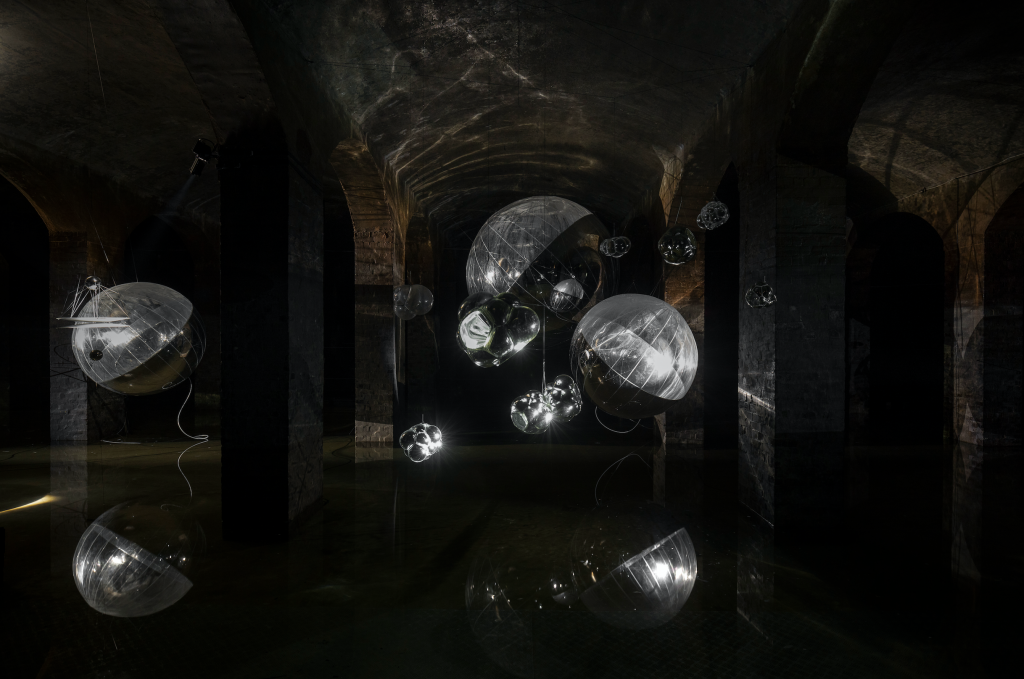
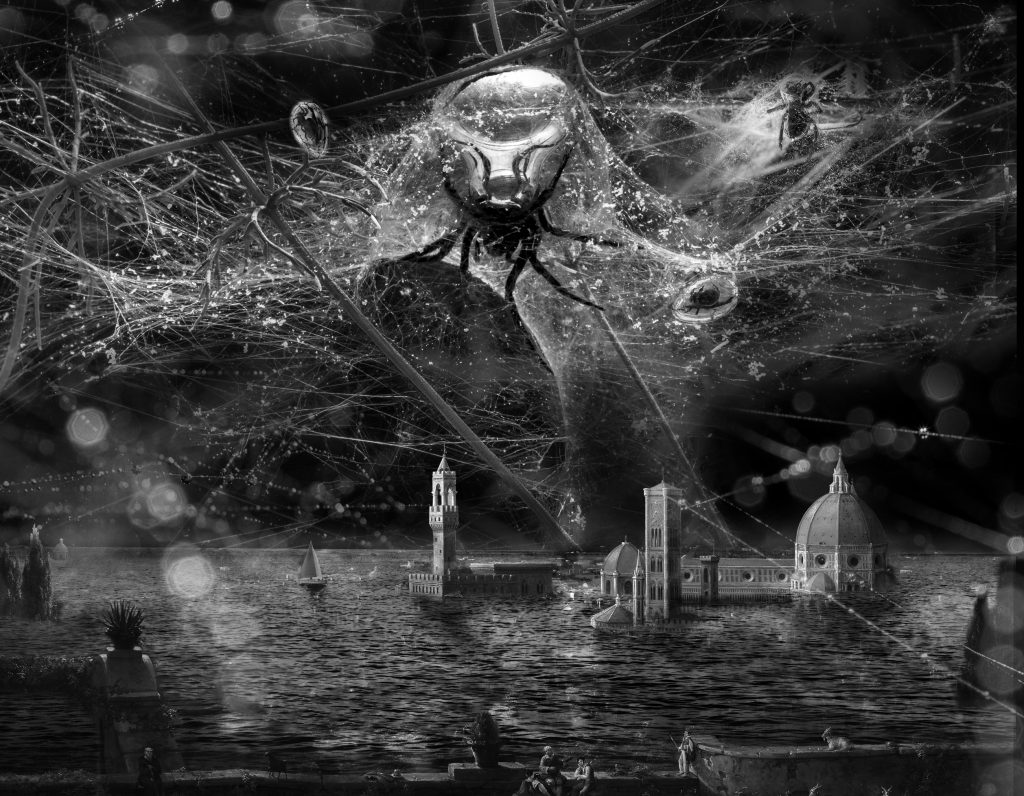
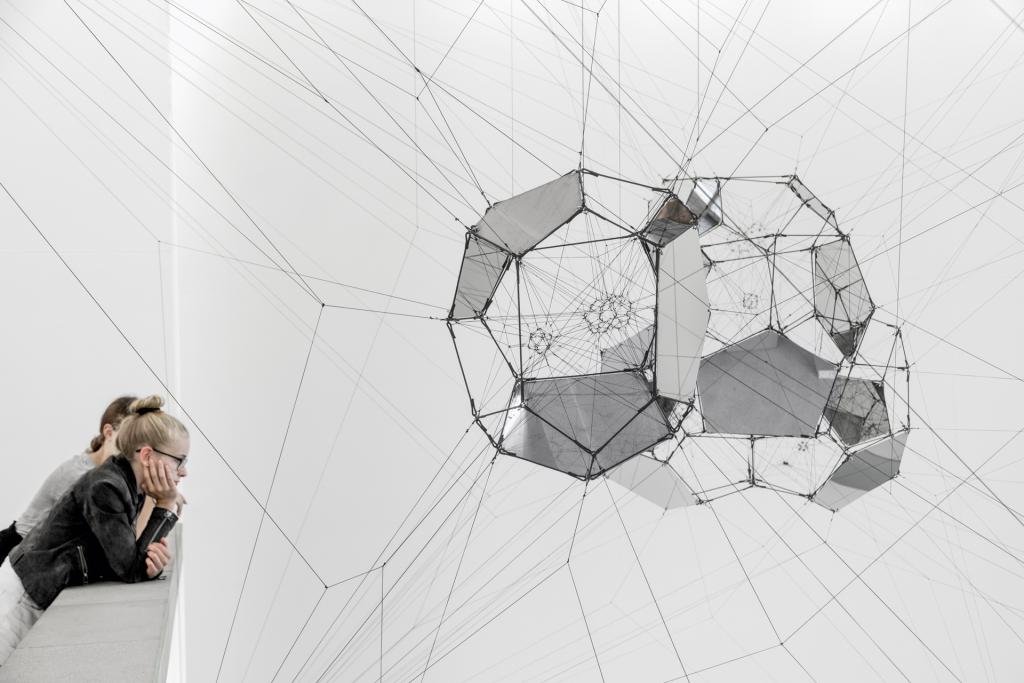
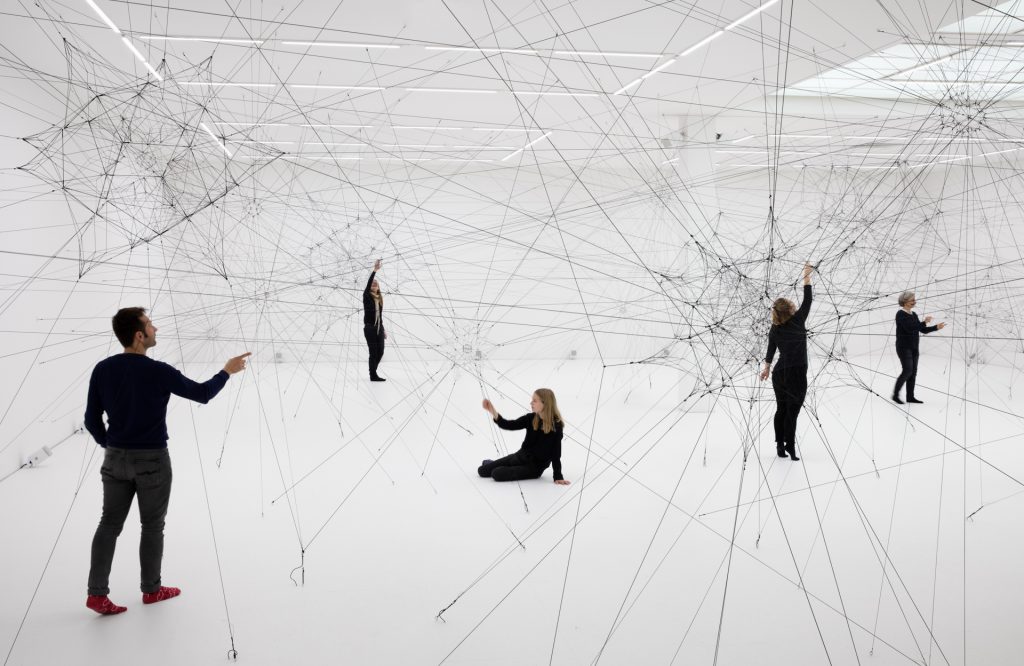
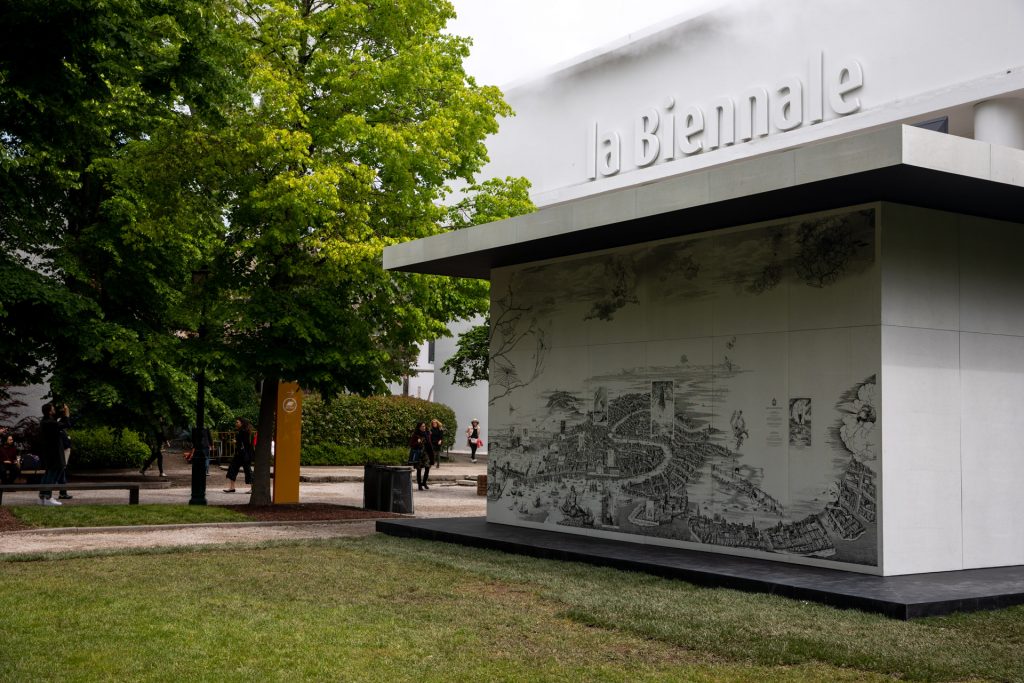
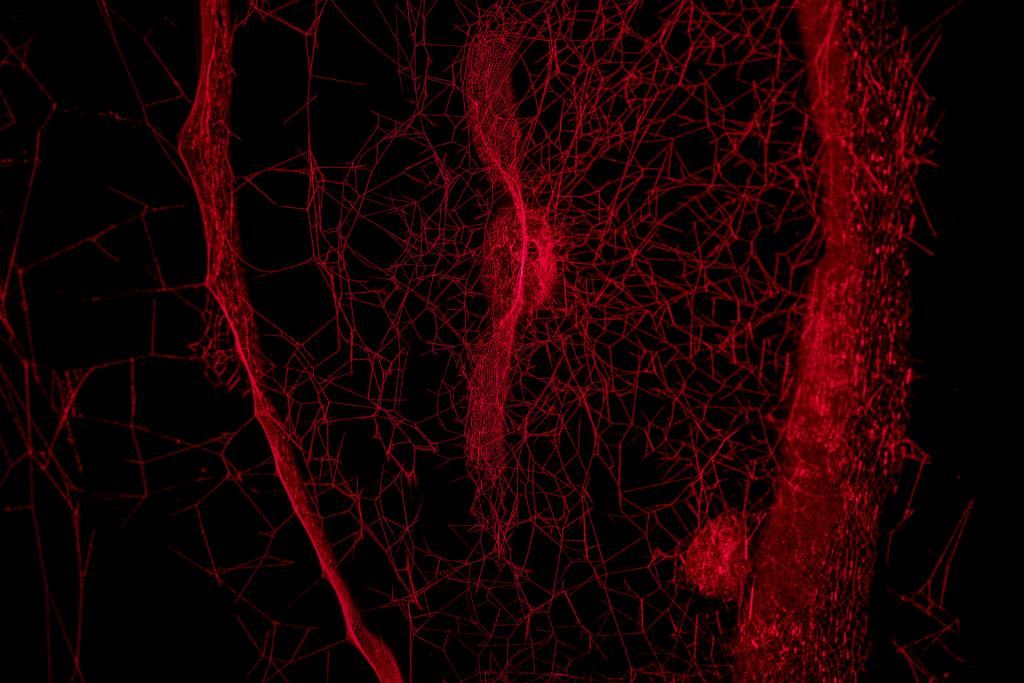
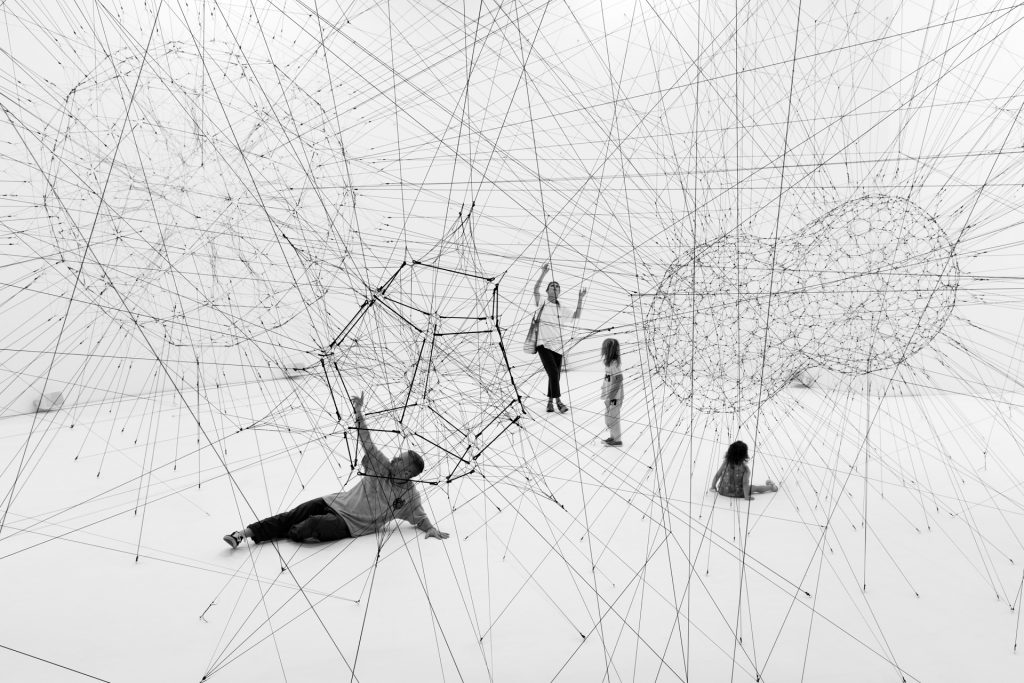
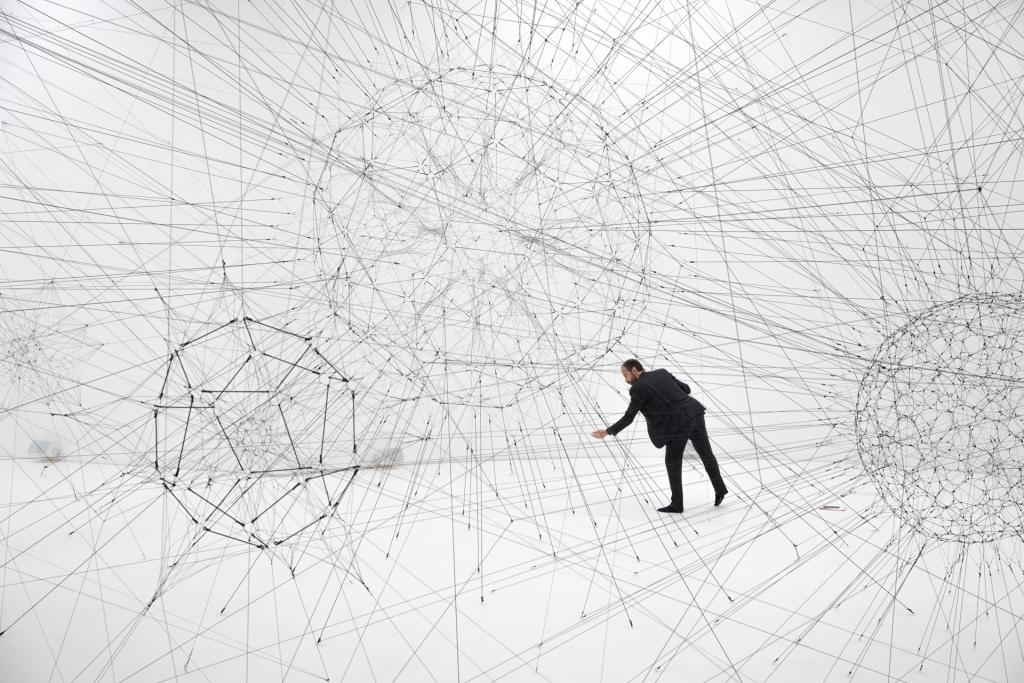
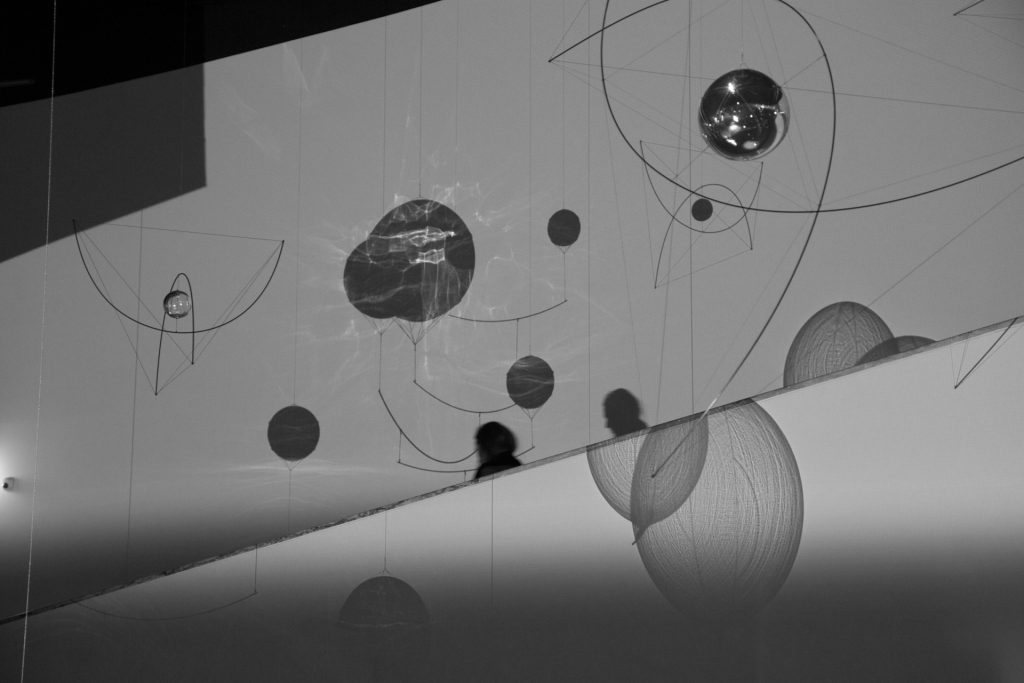
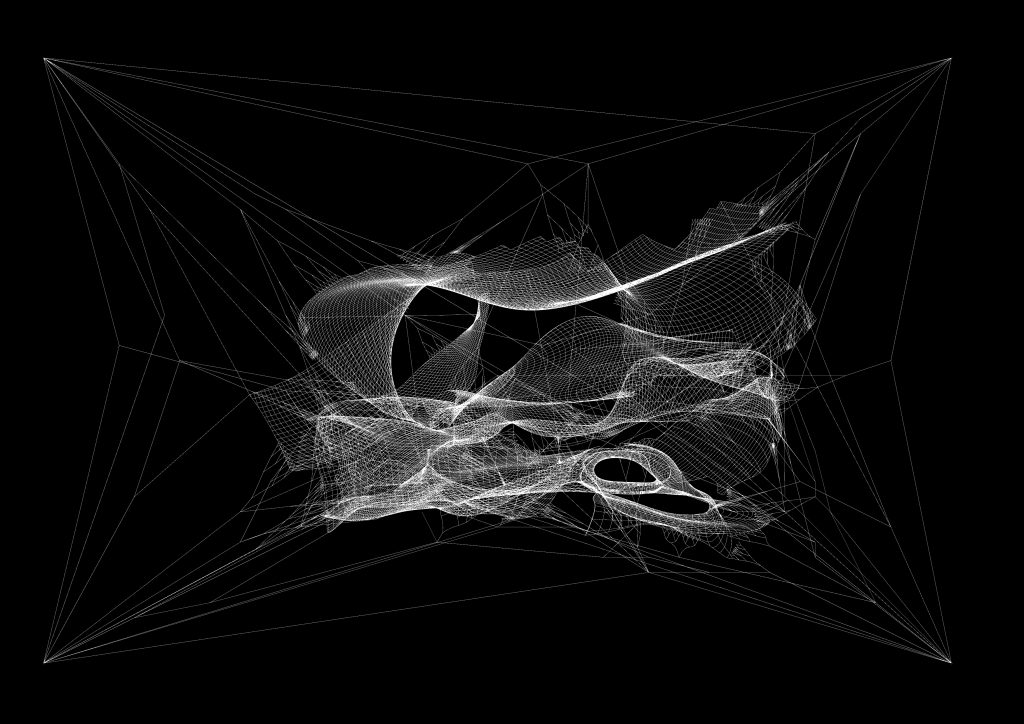
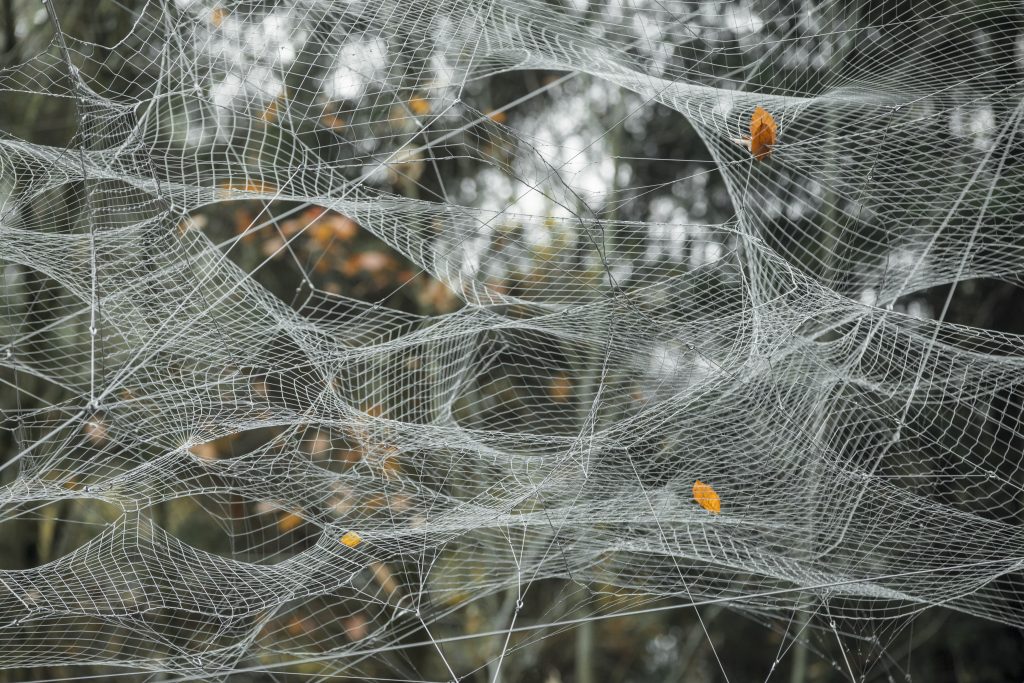
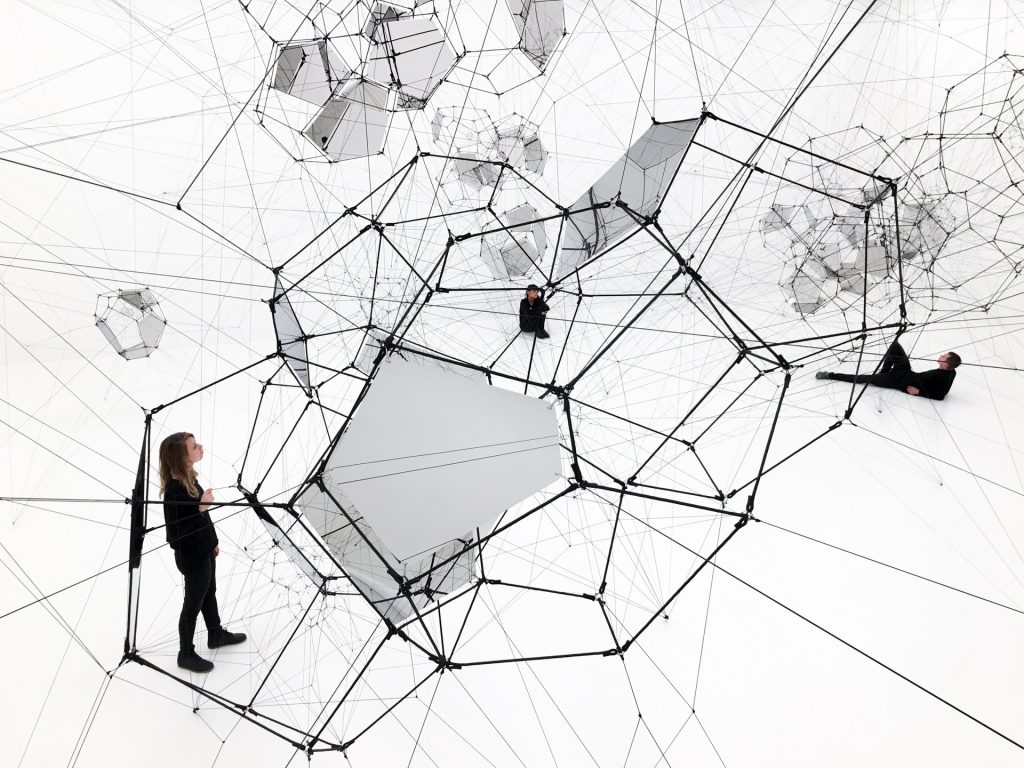
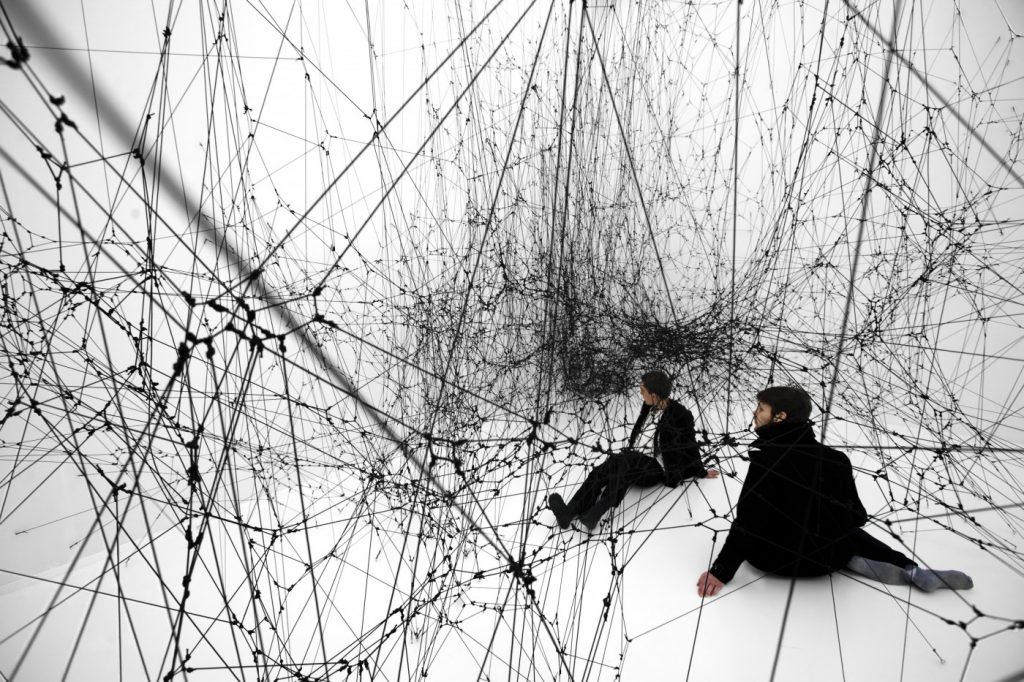
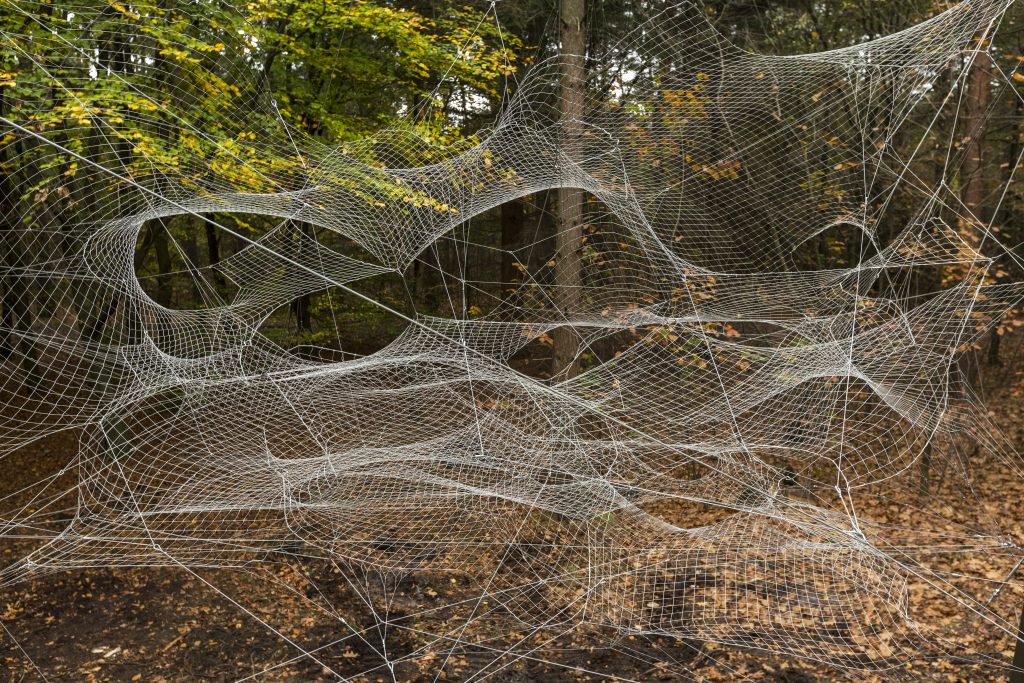
So how can we have both networks and spheres? How do we avoid the pitfalls of a globalization that has no real globe in which to place everything? In a work presented at the Venice Biennale in 2009, Tomás Saraceno provided a great, and no doubt unintended, metaphor for social theory. In an entire room inside the Biennale's main pavilion, Galaxies Forming along Filaments, Like Droplets along the Strands of a Spider's Web (2008) consisted of carefully mounted elastic connectors that produced the shape of networks and spheres. If you were to avoid the guards' attentive gaze and slightly shake the elastic connectors—strictly forbidden—your action would reverberate quickly through the links and points of the network paths, but much more slowly through the spheres. This is not to say that spheres are made from different stuff, as if we must choose between habitation and connection, between local and global, or indeed between Sloterdijk and, let's say, actor-network theory. What Saraceno's work of art and engineering reveals is that multiplying the connections and assembling them closely enough will shift slowly from a network (which you can see through) to a sphere (difficult to see through). Beautifully simple and terribly efficient.
We should have known this all along: a cloth is nothing but a finely-woven network, with a clear transition between one thread and the next, depending on the density of the stitching. By deploying this "obvious" truth within the main exhibition space of the Italian Pavilion, Saraceno performed precisely the task of philosophy according to Sloterdijk, namely of explicating the material and artificial conditions for existence. The task is not to overthrow but to make explicit. As Deleuze and Guattari have shown, a concept is always closely related to a percept.3 By modifying our percept, Galaxies Forming along Filaments allows those who try to redescribe the loose expression of globalization to explore new concepts. Instead of having to choose between networks and spheres, we can have our cake and eat it too. There is a principle of connection—a kind of movement overlooked by the concepts of networks and spheres alike—that is able to generate, in the hands of a clever artist, both networks and spheres; a certain topology of knots that may thread the two types of connectors in a seamless web.
More interesting still is the theory of envelopes—the concept implied by this percept. In this proposition, walls or quasi-walls are supported by both external and lateral linkages. Again, we all know, or should know, that identities—the walls—are made possible only through the double movement of connecting distant anchors and stitching together local nodes. If you believe that there are independent bubbles and spheres that can sustain themselves, you are clearly forgetting the whole technology of envelopes. But it is one thing to say it, for instance in political philosophy—that no identity exists without relations with the rest of the world—and it is quite another to be reminded visually and experientially of the way this could be done.
Standing in the middle of Saraceno's work, the experience is inescapable: the very possibility of having an envelope around a local habitat is given by the length, number, and solidity of the connectors that radiate out in all directions. I would have loved to see, when the exhibition was dismantled, how quickly the spherical patterns would have collapsed once a few of their outside links had been severed. A powerful lesson for ecology as well as for politics: the search for identity "inside" is directly linked to the quality of the "outside" connection—a useful reminder at a time when so many groups clamor for a solid identity that would "resist globalization," as they say. As if being local and having an identity could possibly be severed from alterity and connection.
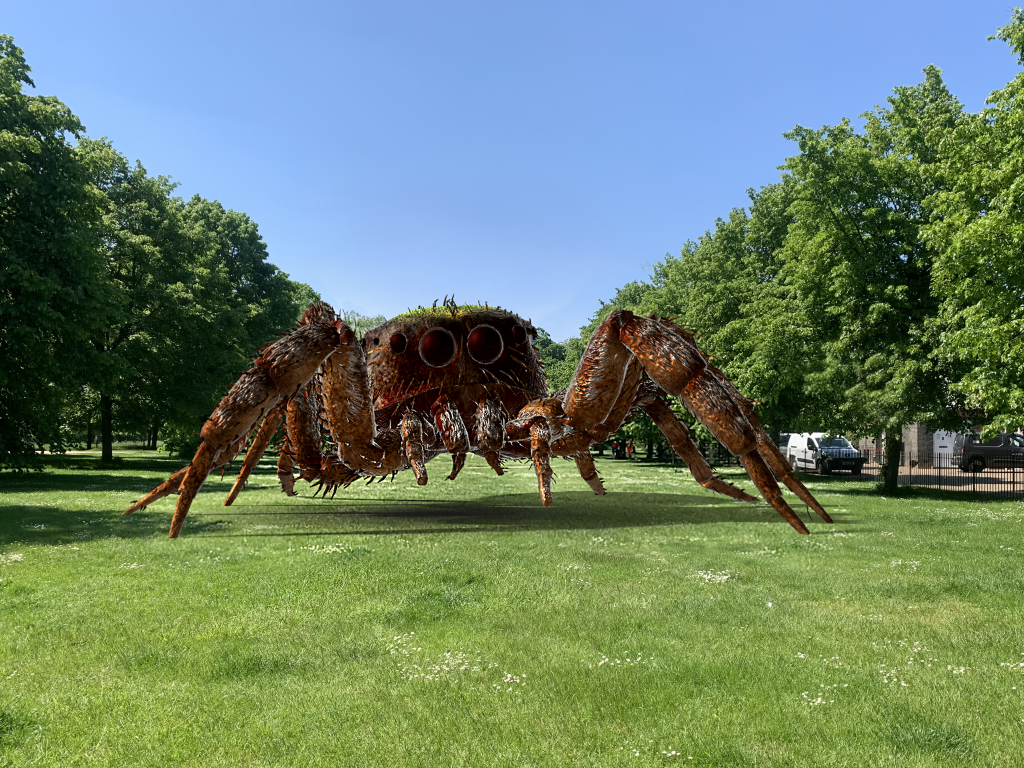
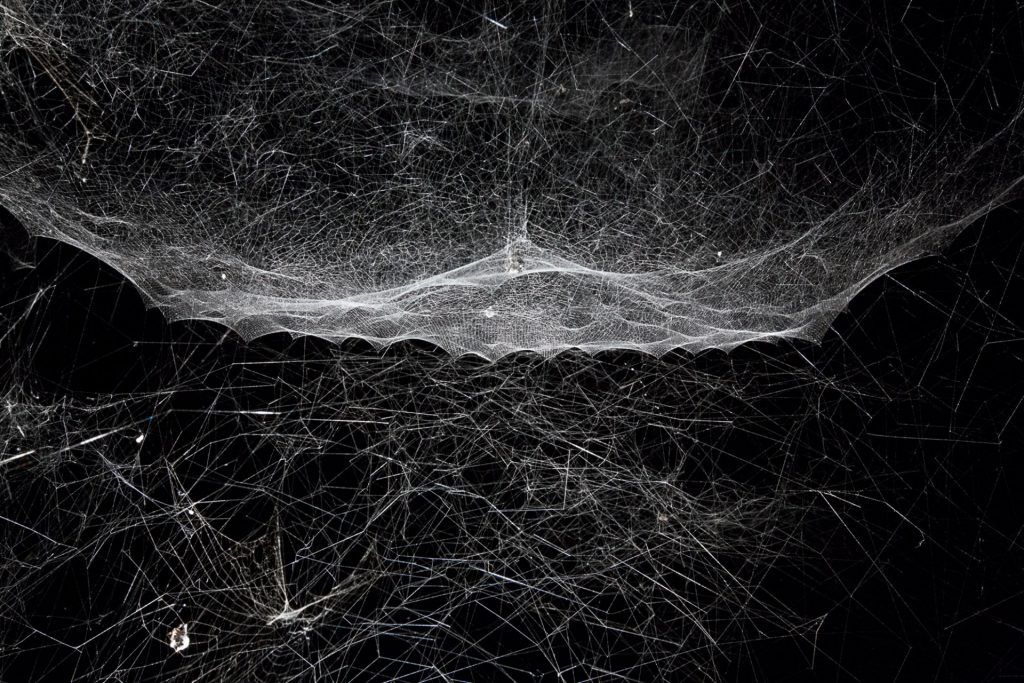
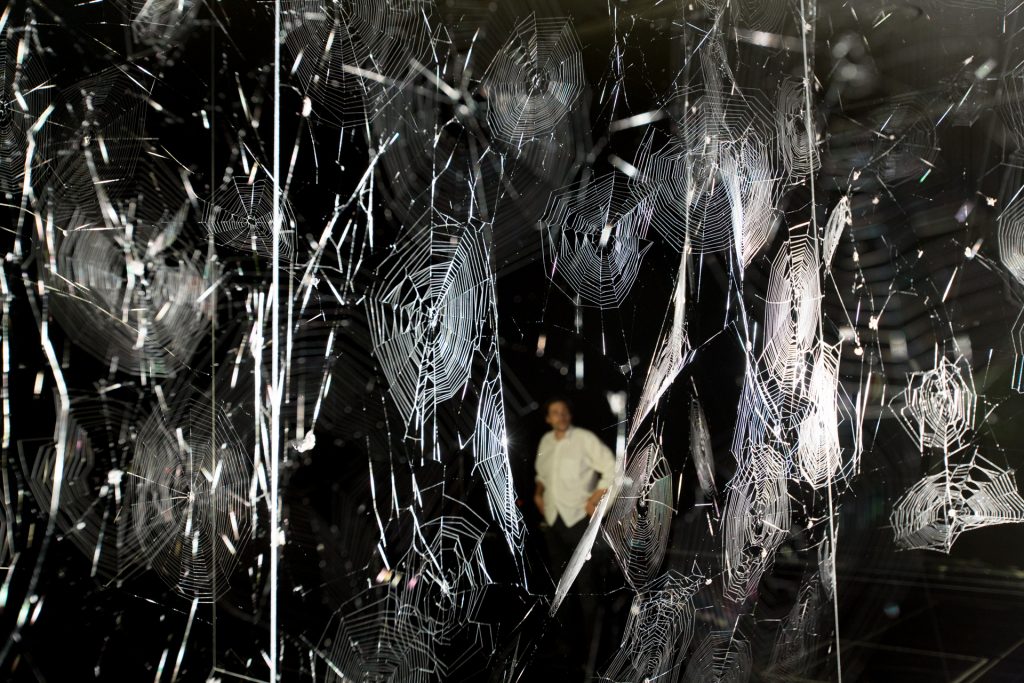
Another remarkable feature of Saraceno's work is that such a visual experience is not situated in any fixed ontological domain, nor at any given scale: you can take it, as I do, as a model for social theory, but you could just as well see it as a biological interpretation of the threads that hold the walls and components of a cell, or, more literally, as the weaving of some monstrously big spider, or the utopian projection of galactic cities in 3D virtual space. This is very important if you consider that all sorts of disciplines are now trying to cross the old boundary that has, until now, distinguished the common destiny of increasing numbers of humans and non-humans. No visual representation of humans as such, separated from the rest of their support systems, makes any sense today. This was the primary motive for Sloterdijk's notion of spheres, as well as for the development of actor-network theory; in both cases the idea was to simultaneously modify the scale and the range of phenomena to be represented so as to renew what was so badly packaged in the old nature/society divide. If we have to be connected with climate, bacteria, atoms, and DNA, it would be great to learn about how those connections could be represented.
The other remarkable feature of the work is that although there are many local orderings— including spheres within spheres—there is no attempt at nesting all relations within one hierarchical order. There are many local hierarchies, but they are linked into what appears visually as a heterarchy. Local nesting, yes; global hierarchy, no. For me, this is a potent attempt at shaping today's political ecology—by extending former natural forces to address the human political problem of forming livable communities. Too often, when ecologists—whether scientists or activists—appeal to nature, they speak as if it were the big global container inside which all other entities are arrayed in order of importance, from, let's say, the climate system to the earthworms and the bacteria, while humans meanwhile are situated somewhat in between. This gives a youthful image to the old image of the scala naturae, the great chain of being from the Renaissance.
But this is not the representation that Saraceno explores, as there is no overall container to his work. (Well, there is one, obviously, but it is only the physical quadrilateral of the Italian Pavilion's great hall. If you speak metaphorically, and to borrow another metaphor from Sloterdijk, this container must necessarily be the Crystal Palace of the international art market in which the artist's creation is "embedded.") In his work, every container or sphere is either inside another local one or "inside" the network of outside connections. But that's the point: networks have no inside, only radiating connectors. They are all edges. They provide connections but no structure. One does not reside in a network, but rather moves to other points through the edges.
To think in these terms is to find a way to avoid modernism—in which case the hierarchy moves from bigger to smaller elements from a central point—but to also avoid, if I dare say, postmodernism—in which case there would be no local hierarchies and no homogeneous principle by which to establish the connections (in this case the elastic tensors that provide the language for the whole piece). For me, that is the beauty of Saraceno's work: it gives a sense of order, legibility, precision, and elegant engineering, and yet has no hierarchical structure. It is as if there were a vague possibility of retaining modernism's feeling of clarity and order, but freed from its ancient connection with hierarchy and verticality.
2. Who Owns Space and Time?
To explore the artistic, philosophical, and political questions raised by Saraceno's work, it might be useful to turn to another locus classicus—not the sphere versus network debate, but the debate over who owns the space in which we live collectively. There is no better way to frame this question than the bungled dialog (well, not really a "dialogue," but that's the point) between Henri Bergson and Albert Einstein in Paris in 1922. Bergson had carefully studied Einstein's theory of relativity and wrote a thick book about it, but Einstein had only a few dismissive comments about Bergson's argument.4 After Bergson spoke for thirty minutes, Einstein made a terse two-minute remark, ending with this damning sentence: "Hence there is no philosopher's time; there is only a psychological time different from the time of the physicist." While Bergson had argued that his notion of space and time had a cosmological import that was to be carefully meshed within Einstein's remarkable discoveries, Einstein argued that there was only one time and space—that of physics—and that what Bergson was after was nothing more than subjective time—that of psychology. We recognize here the classical way for scientists to deal with philosophy, politics, and art: "What you say might be nice and interesting but it has no cosmological relevance because it only deals with the subjective elements, the lived world, not the real world." The funny thing is that everyone—including, in a way, Bergson—was convinced that he had lost, and that indeed the whole question was another episode in the gigantomachy of objective reality versus subjective illusion. To the scientists, the cosmos, and to the rest of us, the phenomenology of human intentionality. So the answer to the question "Which space do we live in?" is clearly: we live in a subjective world with no reality for physics. Einstein: winner.
But this was the beginning of the twentieth century. Can we do better at the beginning of the twenty-first century? In other words, is it possible to give Bergson another chance to make his case that, no, he is not talking about subjective time and space, but is rather proposing an alternative to Einstein's cosmology? To explore such a possibility, I decided to rely on the fascinating genre of the reenactment. As many artists have shown, especially Rod Dickinson in the amazing staging of Milgram's experiment, reenactment is not a mere facsimile of the original but a second version, or a second print of the first instance, allowing for the exploration of its originality.5 This is why, in a series of lectures at the Pompidou Center in June 2010, I invited, among many others, the artist Olafur Eliasson and two scholars, a historian of science, Jimena Canales, and a philosopher, Elie During, to reenact the famous debate by allowing the conclusion to shift somewhat, thus reopening a possibility that had been closed in the twentieth century.6
Who owns the concepts of space and time? Artists? Philosophers? Scientists? Do we live in the space-time of Einstein without realizing it, or, as Bergson vainly argued, does Einstein, the physicist, live in the time of what Bergson called duration? Those questions, it seemed to me, were just as important for physicists, historians, and philosophers as they are for an artist like Eliasson, who has populated museums and cities around the world by publicly demonstrating, through many artful connections between science, technology, and ecology, that there are many alternatives to the visual experience of common sense. The art form—or forum—that I chose consisted of asking the three of them to conjoin their forces in presenting films and photographs to set the stage for this famous debate, with Eliasson "refereeing" the debate through his own work.7
It may seem silly to ask an artist to adjudicate a debate between a philosopher and a physicist—especially a debate whose pecking order had been historically settled once and for all: the physicist speaks of the real world, and the philosopher "does not understand physics"; the artist is irrelevant here. But that was precisely the point, a point shared by Saraceno's heterarchy: that it is now possible to complicate the hierarchy of voices and make the conversation between disciplines move ahead in a way that is more representative of the twenty-first century than of the twentieth. No discipline is the final arbiter of any other.
That is exactly what Elie During did in a brilliant piece of philosophical fiction in which he entirely rewrote the 1922 dialogue as if Einstein had actually paid attention to what Bergson had told him. In the end, Zweistein—that is, the Einstein of 2010—was not, of course, convinced (that would have been a falsification, and no longer a fiction), but he had to admit that there might be more philosophy in his physics than he had claimed in 1922. Where Einstein had won, Zweistein had to settle for a draw.8 So now we have a more balanced situation: the space and time in which we live—experientially, phenomenologically—might not be a mere mistake of our subjective self, but might have some relevance for what the world is really like. Instead of accepting the divide between physics and philosophy, this reenactment was a means of answering Alfred North Whitehead's famous question: "When red is found in nature, what else is found there also?"9 Likewise, is it possible to imagine a world where scientific knowledge is able to add to the world instead of dismissing the experience of being in the world?
3. Composition?
One could object that such a reenactment, no matter how intriguing in its own right, does not have much to do with politics. The question has been asked many times by the public, especially when, during one of the keynote lectures I had organized to launch a new master's program in arts and politics, I invited Donna Haraway and Isabelle Stengers to present their understanding of "the political arts."10 To the total dismay of many politically-minded French citizens, Haraway spoke mainly about learning how to behave politically anew from her dog.11 "From her dog! What does this have to do with politics? Tell us more about domination, inequalities, power struggles, elections, and revolutions." And yet, as Isabelle Stengers quietly but forcefully explained, the new vocabulary of politics—what, for this reason, she calls "cosmopolitics"—will come precisely from a new attention to other species and other types of agencies.12 Here again, art, philosophy, ecology, activism, and politics exchanged their repertoire in order to redefine the actors, the aims, the forums, and the emotions of political involvement. I have come to use the word "composition" to regroup in one term those many bubbles, spheres, networks, and snippets of arts and science.13 This concept plays the same role as Saraceno's percept of elastic tensors. It allows us to move from spheres to networks with enough of a common vocabulary, but without a settled hierarchy. It is my solution to the modern/postmodern divide. Composition may become a plausible alternative to modernization. What can no longer be modernized, what has been postmodernized to bits and pieces, can still be composed.
http://www.e-flux.com/journal/some-experiments-in-art-and-politics/
© 2011 e-flux and the author
- close the text
- http://www.hangarbicocca.org/exhibitions/On-Space-Time-Foam-Tomas-Saraceno/